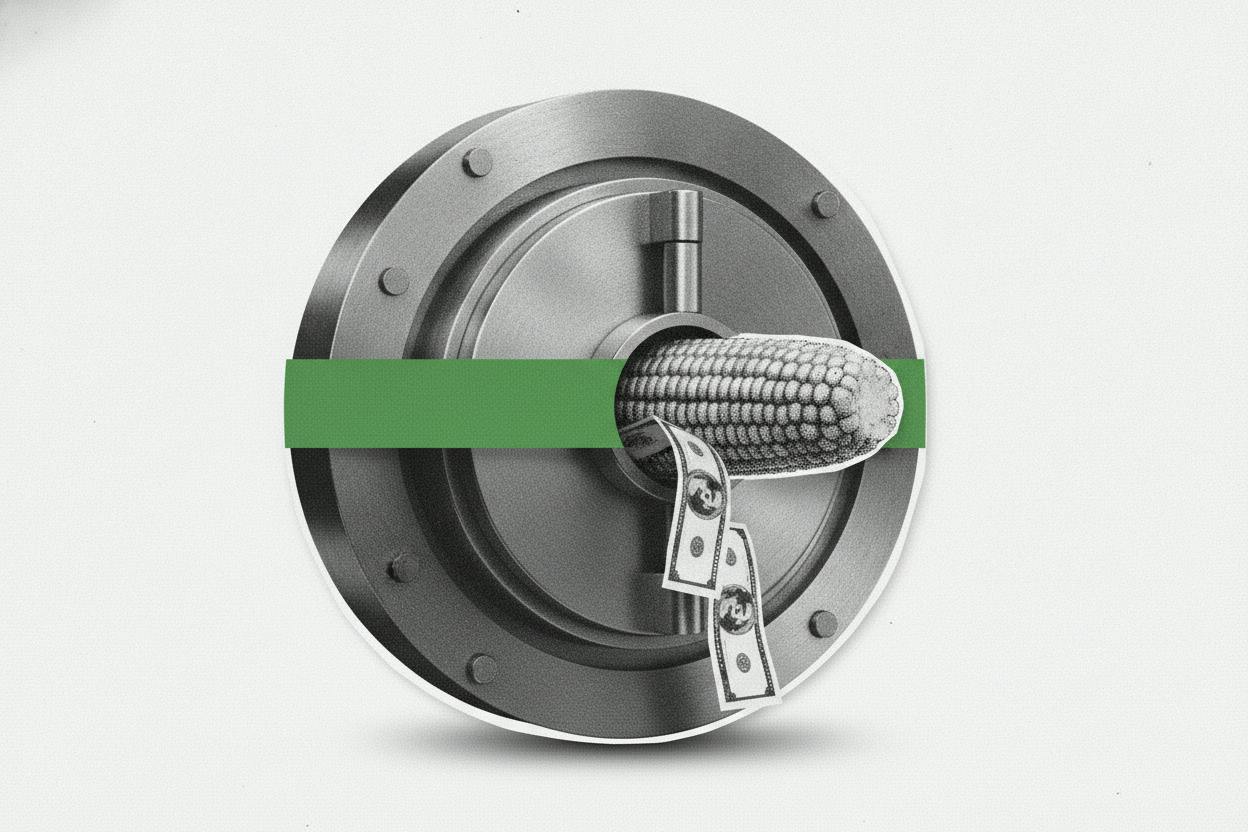
Banco do Brasil, one of Latin America's largest banks, has sharply reduced its profit expectations for 2026, citing rising delinquencies in its agribusiness loan portfolio. The state-controlled lender now expects adjusted net profit of 9 billion to 11 billion reais (roughly $1.6 billion to $2 billion) for 2026, down from its previous forecast of 18 billion to 22 billion reais. It also cut this year's shareholder payout to 25% of profits, down from an earlier commitment.
The move comes after a difficult third quarter. Adjusted net profit for the July-to-September period came in at 1.27 billion reais, a 66.5% drop from the same period last year and well below the 3.47 billion reais that analysts had expected, according to LSEG data.
Why farm loans are hurting
Banco do Brasil is a major lender to Brazil's agricultural sector, which is a cornerstone of the country's economy. But a combination of falling commodity prices, adverse weather, and high borrowing costs has squeezed many farmers' ability to repay loans. As a result, the bank has seen a rise in non-performing loans in its agribusiness book.
The bank had hoped that a government-backed program allowing rural borrowers to renegotiate their debts would ease the strain. However, fewer farmers than expected took advantage of the program, leaving the bank to absorb more losses than it had planned.
This is not just a problem for Banco do Brasil. Banks that lend heavily to agriculture often face cyclical downturns when crop prices fall or weather disrupts harvests. But because Banco do Brasil is state-run, its struggles also have a public dimension: the government is both a major shareholder and a backstop for the sector.
What it means for investors
For shareholders, the reduced profit forecast and lower payout are a double blow. The dividend cut means investors will receive less cash this year, and the halved profit outlook suggests the bank expects the pain to continue into 2026.
Investors should watch a few things in the coming months. First, whether agribusiness delinquencies continue to rise or start to stabilize. Second, whether the government expands or adjusts its debt-relief programs for farmers. Third, how the bank manages its capital and loan-loss provisions.
It's also worth noting that Banco do Brasil's troubles are part of a broader trend in emerging markets, where agricultural lenders are facing similar headwinds. In Brazil, the situation is particularly acute because the central bank has kept interest rates relatively high to combat inflation, making borrowing more expensive for farmers and other businesses.
For everyday investors, this is a reminder that even large, state-backed banks can be vulnerable to sector-specific shocks. Diversification across industries and regions remains a key principle for managing risk.
Broader market context
The news from Banco do Brasil comes as other companies in the region are also adjusting their outlooks. For instance, coffee prices have slid to a six-week low as Brazil's supply outlook improves, which could help some farmers but also signals continued volatility in agricultural markets.
Meanwhile, Alcon's narrowed outlook dragged its shares in Switzerland, showing that profit warnings are not limited to emerging markets. And Avio's flat outlook weighed on its stock despite higher earnings, underscoring how investors react to guidance changes.
Banco do Brasil's announcement is a significant event for the Brazilian banking sector and for investors with exposure to Latin American financials. The bank's shares are likely to remain under pressure until there are clearer signs that its agribusiness loan problems are easing.
As always, it's important for investors to look beyond the headline numbers and understand the underlying drivers. In this case, the key is the health of Brazil's agricultural economy and the effectiveness of government support programs.