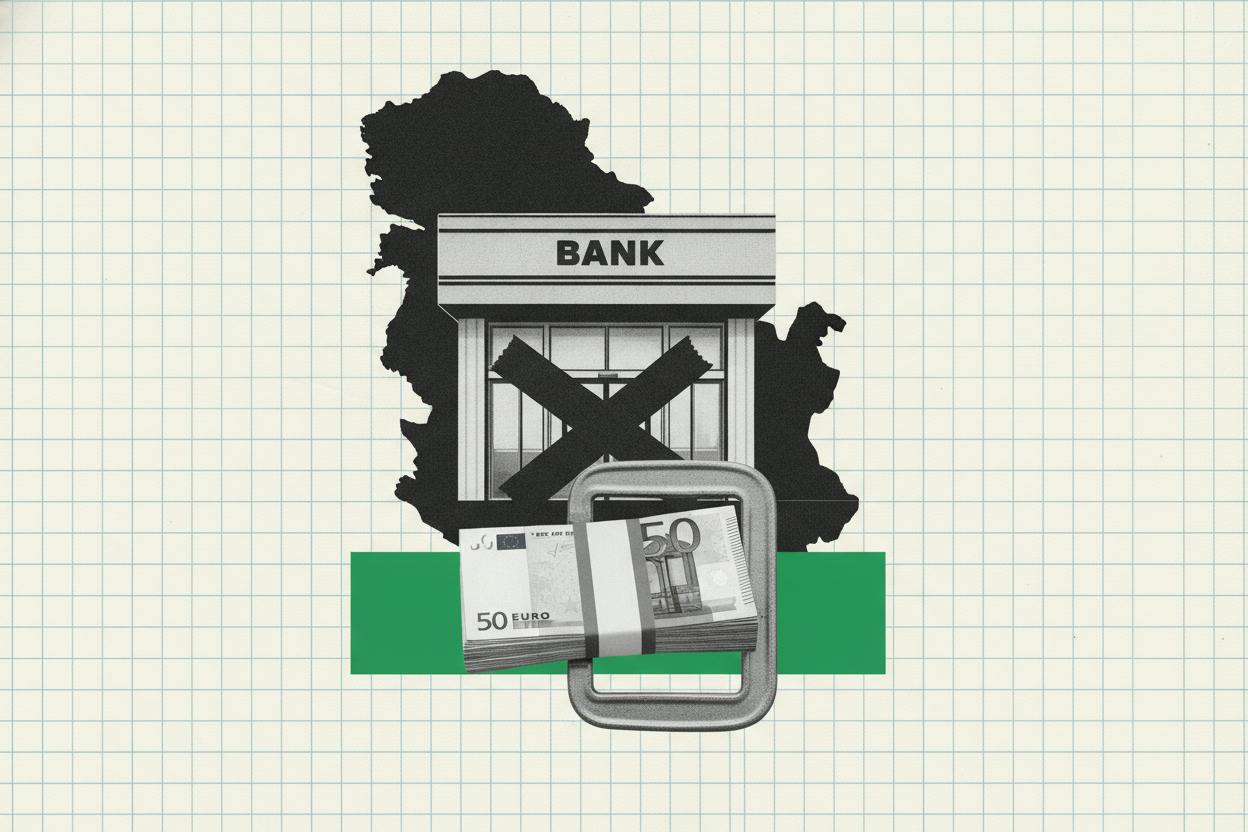
Serbia's central bank has pulled the license of Alta Banka, a fast-growing lender, after its financial health deteriorated sharply. The move, announced on Saturday, freezes the bank's operations and sets the stage for a likely bankruptcy, leaving customers and small businesses facing a period of uncertainty over access to their money.
What happened
The National Bank of Serbia (NBS) said it had tried to impose "liquidity controls" — measures designed to keep a bank stocked with enough ready cash to meet withdrawals and payments. But the regulator said Alta Banka continued to weaken, raising the risk that it could not honor customer withdrawals or other obligations.
The bank's accounts have been blocked since Friday, and insolvency proceedings have begun. The NBS said Serbia's Deposit Insurance Agency will be appointed as bankruptcy administrator, and that insured deposits are protected up to €50,000 per depositor. Those payouts should be made within seven working days after a court decision, according to the central bank.
Why Alta Banka's collapse matters
Alta Banka had been one of Serbia's more aggressive lenders. At the end of 2025, it was the country's ninth-largest bank by assets, holding a 2.77% market share. That position came after nearly 60% asset growth in 2025 and more than tripling in size over four years. Rapid expansion can sometimes mask underlying weaknesses, and regulators often watch such lenders closely for signs of strain.
For everyday depositors, the key takeaway is that deposit insurance does not always mean immediate access to your cash. Once a bank's license is revoked, operations can stop abruptly: cards may stop working, transfers can fail, and balances can become inaccessible even if the money is ultimately protected. In Alta Banka's case, accounts have been frozen since Friday.
Serbia's deposit insurance scheme is designed to cap losses for most savers, but it operates on a legal timetable. The NBS says payouts for the insured portion — up to €50,000 per depositor — will come within seven working days after the relevant court decision. That leaves a short-term cash-access gap for households and small businesses that rely on their bank accounts for daily expenses or payroll.
Any amount above the €50,000 cap typically becomes a bankruptcy claim. That means repayment depends on how much the bank can recover and where depositors sit in the insolvency "waterfall" — the order in which creditors get paid. In many cases, uninsured depositors recover only a fraction of what they are owed, and it can take months or years.
What it means for investors
For investors, the episode is a reminder that even fast-growing financial institutions can fail when liquidity runs dry. It also highlights the importance of understanding deposit insurance limits in any country where you hold cash. The €50,000 protection is standard in many European jurisdictions, but it is not a guarantee of immediate access.
The broader context is that central banks across the region and beyond are watching banking stability closely. While this is a single bank failure, it comes amid a period of tighter monetary policy and economic uncertainty. For example, Colombia's central bank recently held rates at 12.25% while buying reserves, and Egypt's central bank surprised with a rate hike as its currency slid. These moves show how central banks are juggling inflation and financial stability.
For investors with exposure to Serbian banks or the broader Balkan financial sector, the key thing to watch is how the insolvency process unfolds and whether other lenders show similar signs of stress. The NBS's decision to act suggests it is willing to step in early, which may help contain contagion, but it also means depositors at Alta Banka will have to wait for their money.
In the meantime, the lesson for everyday investors is straightforward: know your deposit insurance limits, keep emergency funds in institutions that are well-capitalized, and be aware that even insured deposits can take time to access after a bank failure.