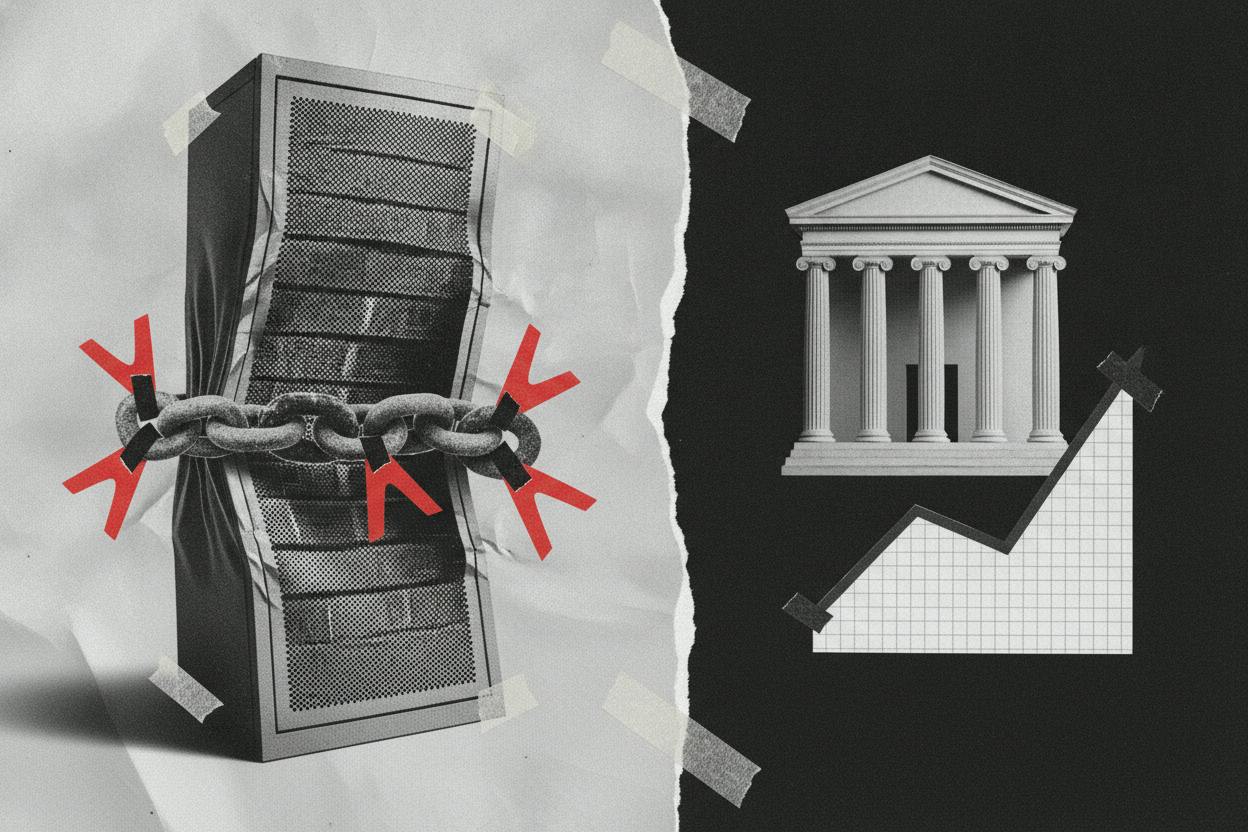
Friday's market told two very different stories. On one side, bank stocks climbed, pushing the Dow Jones Industrial Average to its highest level in a month. On the other, chipmakers and so-called “neocloud” companies — cloud providers built specifically to rent out AI computing power — took a beating, dragging the Nasdaq lower.
The split screen highlights a growing divide in investor sentiment: optimism about the broader economy and financial sector, versus mounting skepticism about the pace and cost of the artificial-intelligence buildout.
CoreWeave's bond troubles spook the AI trade
The clearest sign of strain came from CoreWeave, an AI cloud company backed by Nvidia. Its stock fell 7.6% on the week, and its bonds sold off hard enough to push yields above 15%. For context, a bond yield is essentially the interest rate a company pays to borrow money in the open market. When yields spike, it means lenders are demanding a much higher return to take on the company's debt — usually because they see more risk.
For a fast-growing company like CoreWeave, that jump in borrowing costs matters a lot. Building and filling data centers requires enormous upfront cash. If lenders start charging 15% or more, the company may have to slow construction, raise money by selling new shares, or accept thinner profits on future projects. It also makes other lenders more cautious about the whole niche, which can tighten financing for similar firms.
That worry rippled through the sector. Micron, a major memory-chip maker, fell 3.9%, and AMD dropped 3.3%. Investors are questioning whether the debt-fueled expansion of AI infrastructure can keep ramping at the pace many had priced in.
Why bond yields matter for AI infrastructure
Bond yields are basically a company's real-world interest rate. The higher they go, the more expensive it is to borrow and the harder it is to refinance old debt on friendly terms. For AI infrastructure operators, that's a big deal because their business model depends on heavy borrowing to build out capacity before the revenue arrives.
When financing costs jump, the math changes. Operators may have to slow construction, issue more shares (which dilutes existing shareholders), or accept lower returns on new projects. And because these firms buy huge quantities of chips and memory, tighter financing can ripple outward. Pressure on CoreWeave can weigh on neocloud peers like Nebius Group and Iren, and it can also cool expectations for parts of the AI hardware supply chain that depend on cheap credit.
This is not just a one-company story. The AI trade has been a major driver of market gains over the past year, and any sign that the buildout is hitting financial friction tends to hit the whole sector. As big tech earnings approach, investors are already bracing for a reality check on how quickly AI spending translates into profits.
Banks lift the Dow
While AI stocks stumbled, financials were the quiet winners. Bank shares rose broadly, enough to lift the Dow to a one-month high. The move suggests investors are feeling more confident about the economy and the lending environment, even as tech-heavy names wobble.
Banks tend to do well when interest rates are stable or when the economic outlook improves, because that supports loan demand and keeps default risks low. Friday's gains in financials helped offset the drag from tech, keeping the overall market from a sharper decline.
The divergence also reflects a rotation: some money is moving out of high-flying AI names and into more traditional sectors that have lagged. That can be a healthy sign for the broader market, but it also signals that investors are becoming more selective about where they put their money.
What it means for investors
For everyday investors, the key takeaway is that the AI trade is no longer a one-way bet. When a company like CoreWeave sees its borrowing costs spike, it's a reminder that rapid growth often depends on cheap credit. If that credit gets more expensive, the whole ecosystem — from chipmakers to cloud providers — can feel the pinch.
That doesn't mean AI is doomed, but it does mean investors should pay attention to how these companies are funding their expansion. A company that can generate cash and grow without piling on debt is in a stronger position than one that relies heavily on borrowing.
At the same time, the strength in banks shows that not every part of the market is struggling. A diversified portfolio that includes financials and other value sectors can help cushion the blow when one hot area cools off.
As always, it's worth watching what happens next: whether CoreWeave's bond yields stabilize, how other neocloud companies fare, and what big tech earnings reveal about the sustainability of AI spending. For now, the market is sending a clear message: growth is good, but only if it's financed sensibly.