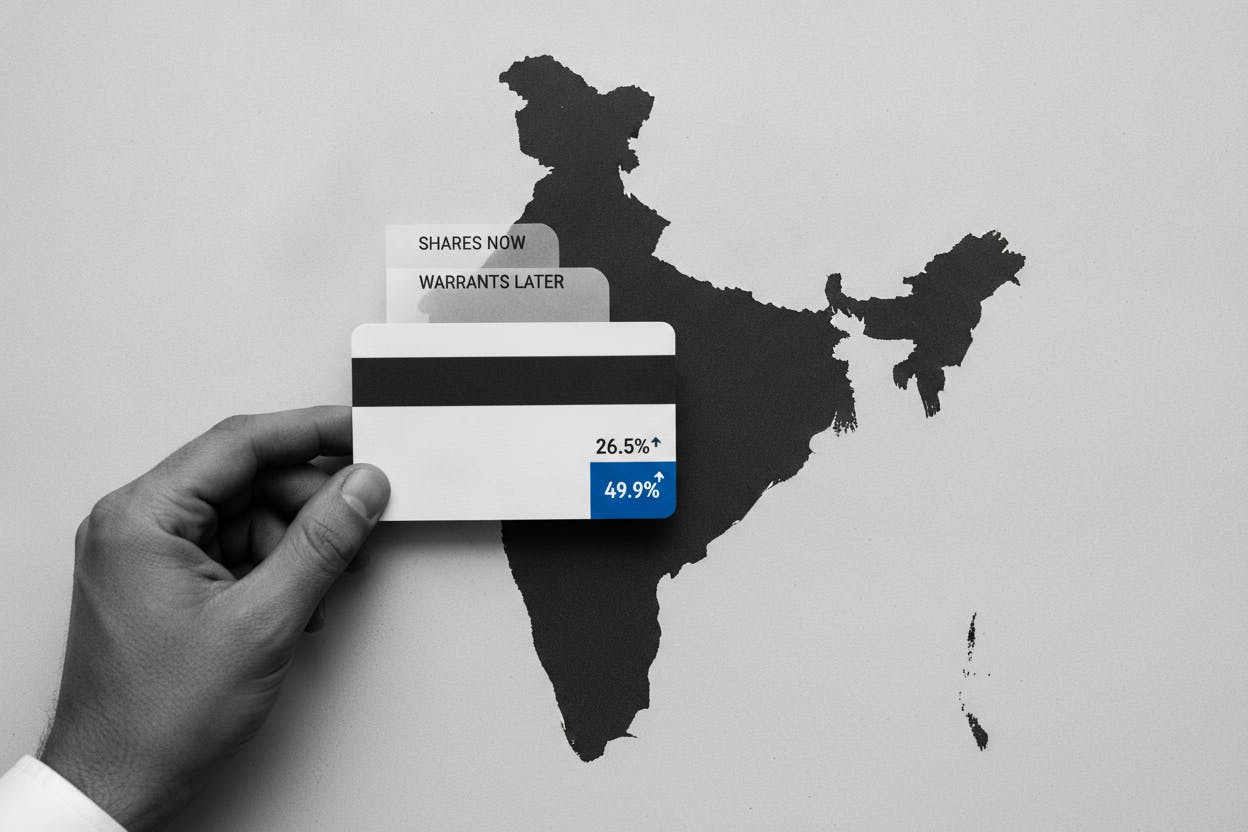
Bank of America is making a major move into India's fast-growing consumer credit market by taking a significant stake in Jio Credit, the non-bank lending subsidiary of Jio Financial Services. The deal, valued at 182.68 billion rupees (about $1.92 billion), will initially give the U.S. banking giant a 26.5% ownership stake, with the potential to increase that to 49.9% if certain conditions are met.
The transaction is structured as a two-step process. First, Bank of America will acquire the initial 26.5% stake. Then, subject to regulatory approvals and the exercise of warrants, the stake could rise to just under half of the company. Warrants are financial instruments that give the holder the right to buy shares at a set price in the future, and in this case, they provide a clear path for Bank of America to deepen its involvement.
What is Jio Credit?
Jio Credit is the lending arm of Jio Financial Services, which itself is part of the sprawling Reliance Industries conglomerate, one of India's largest companies. Jio Financial Services was spun off from Reliance in 2023 and has been building out a range of financial products, including consumer loans, insurance, and payments. Jio Credit focuses on providing credit to individuals and small businesses, a segment that has been growing rapidly in India as digital adoption expands.
For Bank of America, this investment is a strategic bet on India's financial services sector. The country has a large unbanked and underbanked population, and digital lending platforms are increasingly filling the gap. By partnering with Jio, which has deep ties to Reliance's vast customer base, Bank of America gains access to a potentially huge market for consumer loans.
Why this deal matters
This is not just another investment; it's a signal of confidence in India's economic trajectory. Foreign banks have been looking for ways to expand their presence in India, but regulatory hurdles and local competition have often made it challenging. By taking a minority stake in an established local player, Bank of America can participate in the growth without having to build a full-scale banking operation from scratch.
The deal also highlights the growing importance of non-bank financial companies (NBFCs) in India. These institutions, which include Jio Credit, are not traditional banks but offer many of the same services, often with more flexibility and lower costs. They have become a key source of credit for millions of Indians, and their growth has attracted attention from global investors.
For everyday investors, this deal is a reminder of the opportunities in emerging markets. While the U.S. stock market often dominates headlines, companies like Jio Financial Services are part of a broader trend of financial inclusion and digital transformation in countries like India. Investments like this can provide diversification and exposure to faster-growing economies, though they also come with higher risks, including currency fluctuations and regulatory changes.
What happens next
The deal is still subject to regulatory approvals, which could take several months. In India, foreign investments in financial companies often require clearance from the Reserve Bank of India and other government bodies. If approved, the initial 26.5% stake will be transferred, and Bank of America will have the option to exercise warrants to increase its holding to 49.9%.
Investors will be watching to see how the partnership develops. Jio Financial Services has been expanding its lending operations, and having a global banking partner like Bank of America could help it access cheaper funding and international expertise. For Bank of America, the deal is part of a broader strategy to grow its presence in Asia, a region that is expected to drive much of the world's economic growth in the coming decades.
This move also comes at a time when credit risk is a growing concern in some parts of the financial system, but India's consumer credit market is still relatively underpenetrated, offering room for expansion. The deal is a bet that Indian borrowers will increasingly turn to digital lenders like Jio Credit for their financing needs.
What it means for your portfolio
For most retail investors, this deal is unlikely to have a direct impact on their holdings unless they own shares in Bank of America or Reliance Industries. However, it's a useful reminder of how global banks are positioning themselves for future growth. Bank of America's willingness to invest nearly $2 billion in an Indian lender suggests that it sees long-term value in the region.
If you're invested in emerging market funds or ETFs, this deal could be a positive sign, as it reflects growing foreign interest in Indian financial assets. It also underscores the importance of understanding the regulatory environment in emerging markets, where deals can take longer to close and may face unexpected hurdles.
As always, it's wise to keep an eye on how such investments perform over time. While the potential for high returns exists, so do risks, including political instability, currency depreciation, and changes in local regulations. For now, the deal is a notable development in the global financial landscape, and one that investors may want to monitor as it progresses.