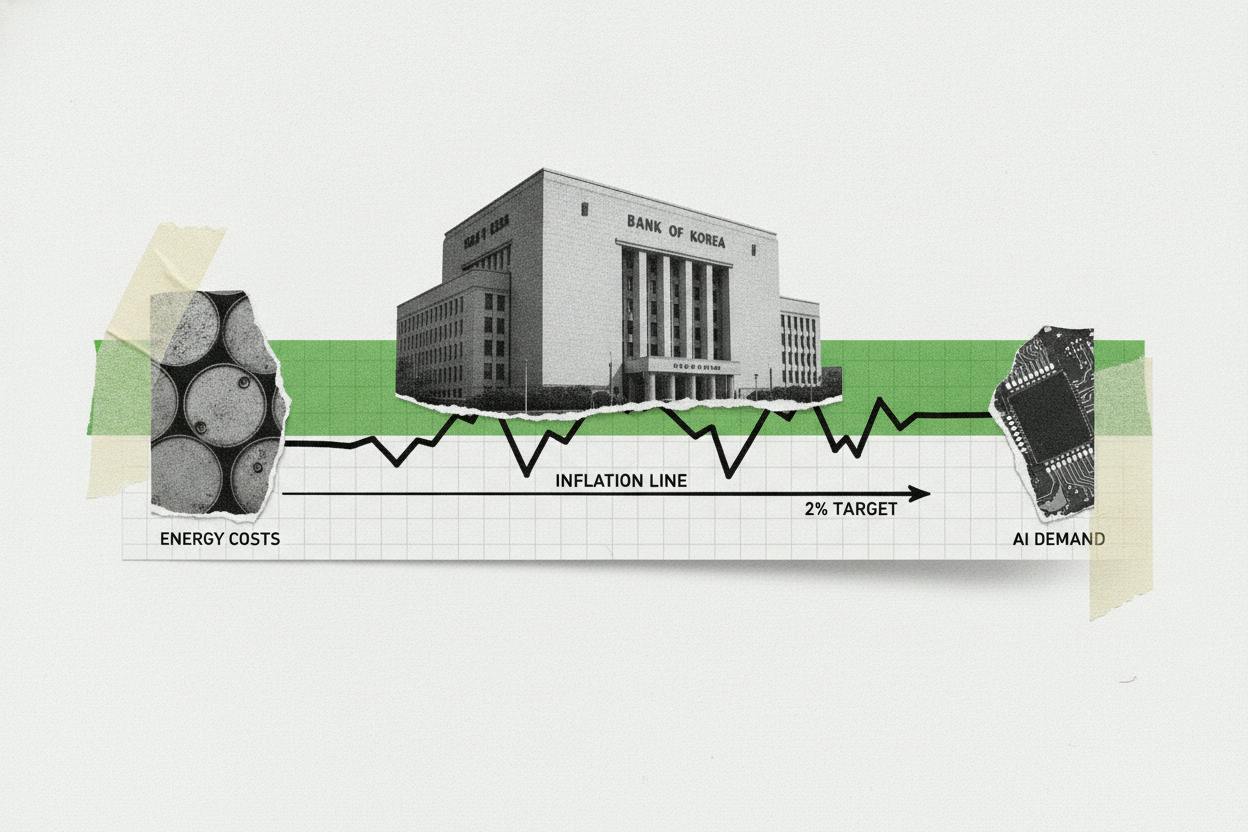
South Korea's central bank is signaling that it is in no hurry to cut interest rates, even as inflation has cooled from its peaks. Bank of Korea Governor Shin Hyun Song said inflation is likely to remain above the bank's 2% target for "some time," keeping the door firmly shut on near-term rate cuts.
Speaking at an event during the IMF and World Bank annual meetings in Bangkok, Shin pointed to two forces pushing prices up: higher energy costs linked to conflict in the Middle East, and demand tied to the artificial intelligence boom, where South Korea's chip-heavy economy plays a central role. Inflation eased to 2.9% in September, but Shin's message was that "good" growth from AI can keep demand strong even if geopolitics weighs on the broader outlook, making it harder to declare victory on prices.
Why the Bank of Korea is staying hawkish
The Bank of Korea has kept its benchmark rate at 3.00% after raising it in July and August. Governor Shin praised those hikes as having a "desirable" effect, but he stopped short of promising any easing at the upcoming October 22 policy review. The central bank is clearly trying to prevent inflation expectations from settling above 2%, even if that means keeping borrowing costs higher for longer.
This stance is not unique to South Korea. Central banks around the world are grappling with the same dilemma: inflation has fallen from multi-decade highs, but it remains sticky in many economies. The Federal Reserve's Waller has argued that higher Treasury yields reflect growth, not inflation, but the Bank of Korea is taking a more cautious view, focusing on the persistent price pressures from energy and technology demand.
For South Korea, the AI boom is a double-edged sword. The country is home to some of the world's largest memory chip makers, and surging demand for AI-related chips has boosted exports and economic growth. But that same demand can also fuel inflation, as companies invest heavily and consumers spend more. The central bank's challenge is to let the economy benefit from the AI tailwind without letting prices run away.
What it means for investors
For everyday investors, the Bank of Korea's decision to hold rates at 3.00% means that borrowing costs are likely to stay elevated for a while. When a central bank keeps its policy rate high, banks' own funding costs tend to remain high too, and that often shows up in what households and small businesses pay on floating-rate or frequently resetting loans. So even though inflation has slowed, relief on variable-rate mortgages, credit lines, and small-business borrowing can take longer to arrive.
The practical takeaway is that debt payments can keep squeezing monthly cash flow until officials are confident inflation is heading back toward 2%. For investors in South Korean assets, the hawkish tone could also affect stock market sentiment. South Korean stocks look cheap, but technical charts signal a sell, and the central bank's stance may add to the caution. Meanwhile, the chip sector, which has been a key driver of the market, could see continued volatility as investors weigh the benefits of AI demand against the risk of higher rates.
The Bank of Korea's next move will be closely watched. If inflation continues to ease and global energy prices stabilize, the central bank may eventually pivot to a more dovish stance. But for now, the message is clear: patience is needed, and rate cuts are not on the near-term agenda.



