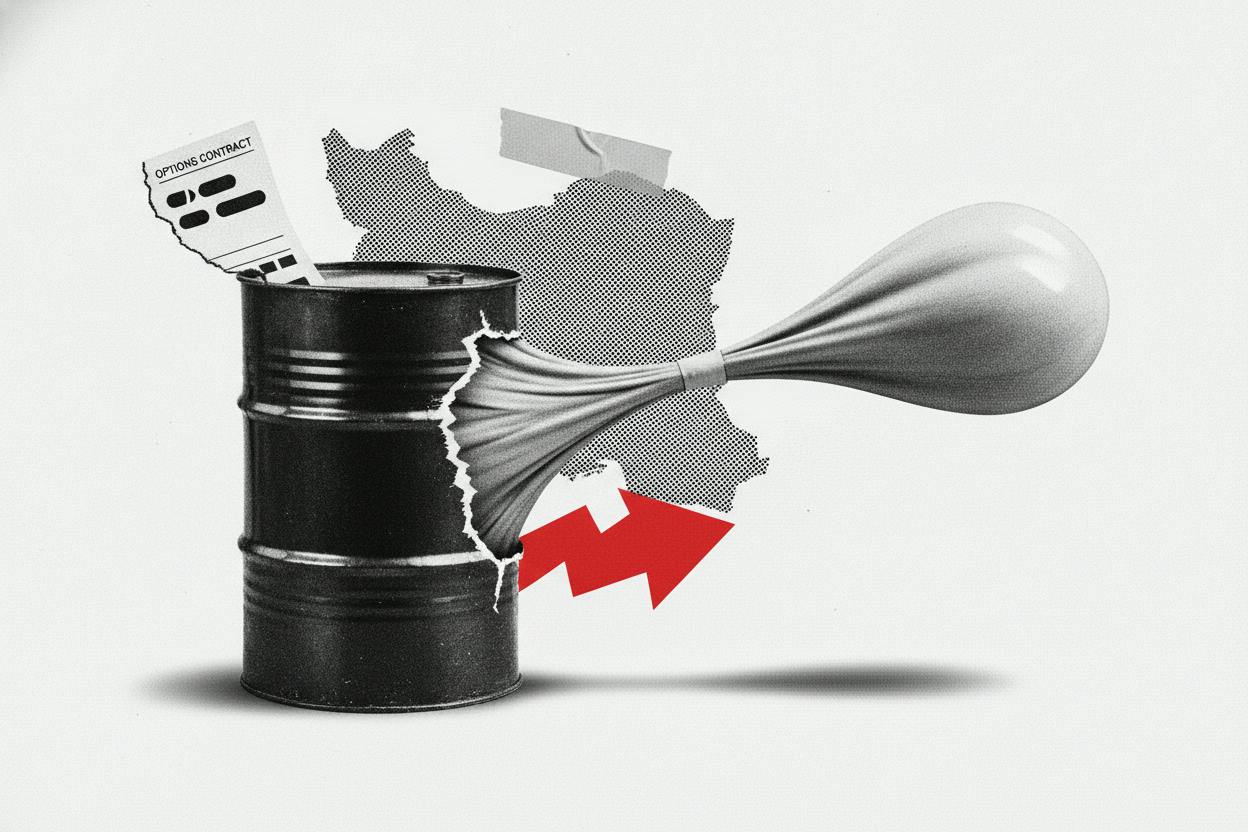
Barclays is holding firm on its bold prediction that Brent crude oil will average $100 a barrel in 2026, even as the market swings on headlines about diplomacy and conflict. In a note cited by Reuters, the bank kept its forecasts unchanged at $100 for 2026 and $85 for 2027, arguing that the lack of progress between the US and Iran leaves oil prices with more upside risk than downside.
The bank's message is not just about the average price—it's about the range of possible outcomes. With “no clear sign” of a breakthrough in US-Iran talks, Barclays sees a “fatter right tail,” meaning a higher probability of sudden price spikes. The bank even penciled in $115 for the fourth quarter of 2026 and $90 for the first quarter of that year, suggesting that volatility could be a defining feature of the oil market.
Why US-Iran talks matter for oil
Iran is a major oil producer, and its exports have been a key factor in global supply. When tensions rise between Washington and Tehran, traders worry about potential disruptions to shipping lanes or sanctions that could take barrels off the market. Conversely, a diplomatic breakthrough could lead to increased Iranian exports, adding supply and pushing prices down.
The talks have been dragging on without a clear resolution, leaving the market in a state of uncertainty. That uncertainty is exactly what Barclays is pointing to: when the outcome is binary—either a deal or a conflict—the risk of a sharp move in either direction is elevated. The bank's forecast suggests it sees the odds of a price spike as higher than the odds of a sudden drop.
Oil prices have already been volatile, with headlines about diplomacy and conflict causing swings. For example, oil dropped 6% on Iran talks in a recent session, showing how sensitive the market is to any hint of progress or setback.
What this means for investors
For everyday investors, Barclays' forecast is a reminder that oil prices can have a big impact on the broader economy and on your portfolio. Higher oil prices tend to push up inflation, which can influence central bank decisions on interest rates. That, in turn, affects everything from mortgage rates to the stock market's performance.
If oil does spike to $100 or beyond, energy companies would likely see higher profits, which could boost their stock prices. But for consumers, it would mean more expensive gasoline and heating bills, and for many businesses, higher input costs that could squeeze margins. Diamondback Energy recently topped profit forecasts thanks to higher crude prices, illustrating how energy producers benefit from a strong oil market.
On the flip side, a sudden drop in oil prices—like the 11% plunge that helped the rupee firm up—can be a boon for import-dependent economies but a drag on energy stocks. A weaker Brent crude price can ease inflationary pressures and improve the outlook for countries that rely on oil imports.
The bigger picture
Barclays' $100 call is a bold one, but it's not out of line with some other forecasts. The bank's view is that the market is underpricing the risk of a geopolitical shock. While the average price might be $100, the actual path could be much more volatile, with periods of both higher and lower prices.
For investors, the key takeaway is to be prepared for swings in oil prices and to understand how they might affect different parts of your portfolio. Energy stocks, for instance, could be a hedge against rising oil prices, but they also carry their own risks. Diversification remains a prudent strategy, as it helps cushion against unexpected moves in any single commodity or sector.
As the US-Iran talks continue, the oil market will likely remain sensitive to headlines. Barclays' forecast is a reminder that sometimes the biggest risk is not the average outcome, but the tail events—the sudden spikes that can catch investors off guard.