Diamondback Energy, one of the largest independent oil producers in the U.S. Permian Basin, reported third-quarter earnings that beat Wall Street's expectations, thanks to a combination of higher production and much stronger crude prices. The company's adjusted profit came in at $5.86 per share for the three months ended September 30, above the $5.46 consensus estimate compiled by LSEG.
The results underscore how oil producers' fortunes remain tied to global crude markets, even when they operate in the shale fields of West Texas. While Diamondback's wells are in the Permian Basin, the prices it fetches for its oil move in step with international benchmarks like Brent crude.
Higher prices, higher volumes
During the quarter, Brent crude averaged $89.27 a barrel, up 31% from the same period a year earlier. Diamondback said it realized $85.89 per barrel for its oil, compared with $63.70 a year ago. That jump in realized prices was the main driver of the earnings beat.
But the company also pumped more oil. Output rose to 1.03 million barrels of oil equivalent per day, up from 942,946 barrels a year earlier. Higher volumes meant that each extra dollar on a barrel mattered more, amplifying the impact of the price increase on the bottom line.
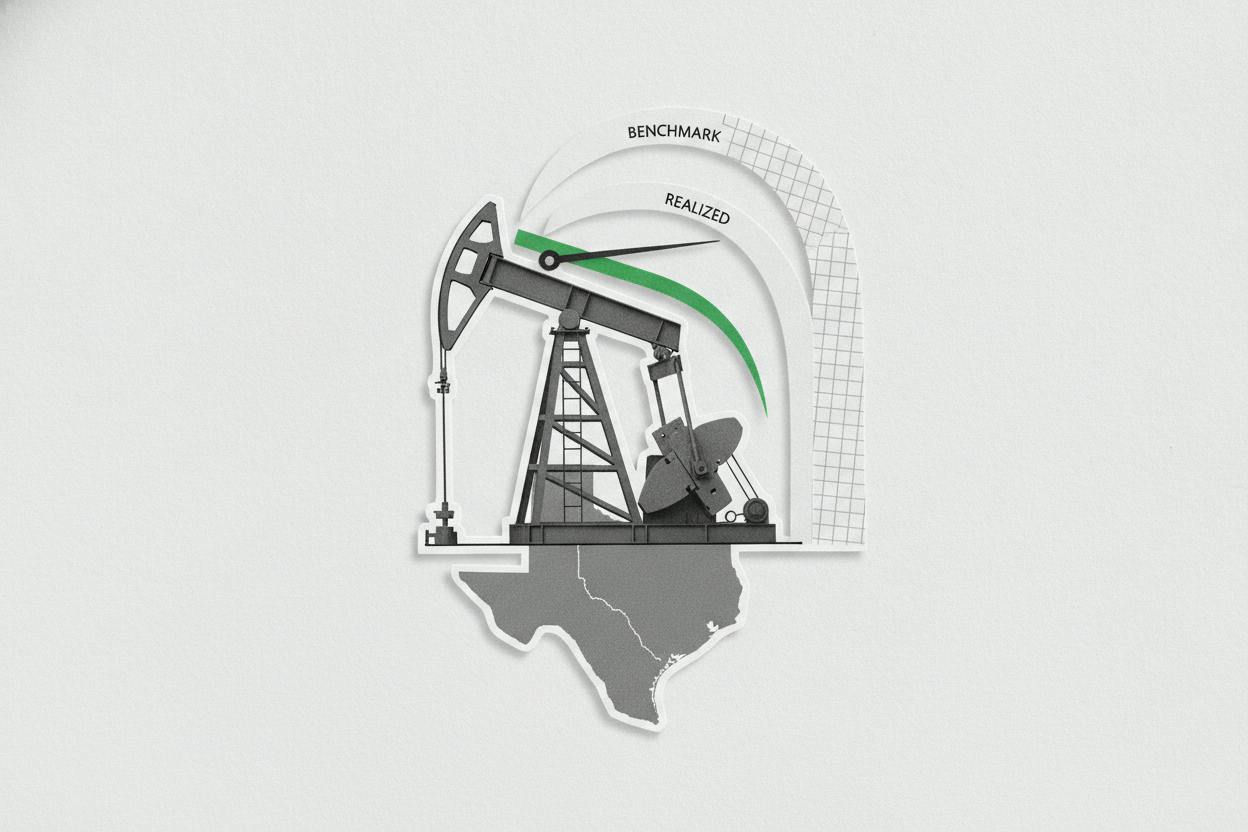
For investors, the distinction between the headline benchmark and what a producer actually receives is crucial. Oil companies don't get paid the spot price you see on the news. They get a "realized" price, which accounts for local supply and demand, crude quality differences, transportation costs, and any hedging contracts that may cap how much of a price move flows through.
That's why Diamondback's realized price lagged Brent this quarter. The gap between the two can widen or narrow, and it's often a key source of earnings surprises. When production is also rising, fixed costs are spread over more barrels, so even a small change in realized price can have an outsized effect on profit per share.
What it means for investors
For everyday investors, Diamondback's results are a reminder that energy stocks can be a leveraged play on oil prices. When crude rises, producers often see profits grow faster than the price increase itself, because their costs don't climb as quickly. Conversely, when oil falls, earnings can drop sharply.
The company's performance also highlights the importance of watching realized prices, not just the headlines about Brent or West Texas Intermediate. If Diamondback can keep selling close to benchmark levels, that's a positive sign. But if the gap widens—due to local bottlenecks, pipeline constraints, or hedging losses—it could weigh on future results even if global prices stay firm.
Oil markets have been volatile recently, with prices tumbling at times on demand concerns and geopolitical headlines. For producers like Diamondback, the key question is whether crude can hold near current levels. If it does, the company's strong quarter could be repeated. If not, the same leverage that boosted profits this quarter could work in reverse.
Investors should also note that Diamondback's results come amid a broader trend of energy companies reporting solid earnings as they benefit from elevated prices. However, not all producers are created equal—some have higher costs, more debt, or less efficient operations. Diamondback's ability to beat estimates while also increasing output suggests it remains one of the more efficient operators in the shale patch.
Looking ahead, analysts will be watching whether Diamondback can sustain its production growth and whether its realized price gap to Brent narrows or widens. The company's next earnings report will also show how it's navigating any changes in hedging positions, which can either protect or limit future revenue.
For now, the takeaway is straightforward: higher oil prices and more barrels pumped equaled a better-than-expected quarter for Diamondback. But as with any commodity-linked stock, the future depends on where prices go from here.