RWE's chief executive has effectively confirmed that the German utility is interested in buying state-owned Uniper alongside private equity firm KKR, as Berlin weighs whether to sell the business outright or take it public.
At the ADIPEC energy conference in Abu Dhabi, RWE CEO Markus Krebber was asked whether the two companies had submitted a non-binding bid for Uniper. His reply: “It sounds right.” That lines up with earlier Reuters reporting, citing a person with direct knowledge, that a KKR–RWE consortium had submitted an offer, even as both firms declined formal comment.
The interest marks a shift from August, when Krebber said RWE wasn't looking at Uniper. Germany took a 99.12% stake in the utility during the 2022 energy crisis to stop it from collapsing after Russia cut off gas supplies.
Why Uniper is on the block
Uniper was one of the biggest casualties of Europe's energy shock. As a major importer of Russian gas, it was forced to buy replacement supplies at sky-high prices, racking up enormous losses. The German government stepped in with a bailout, effectively nationalising the company to keep the lights on and gas flowing.
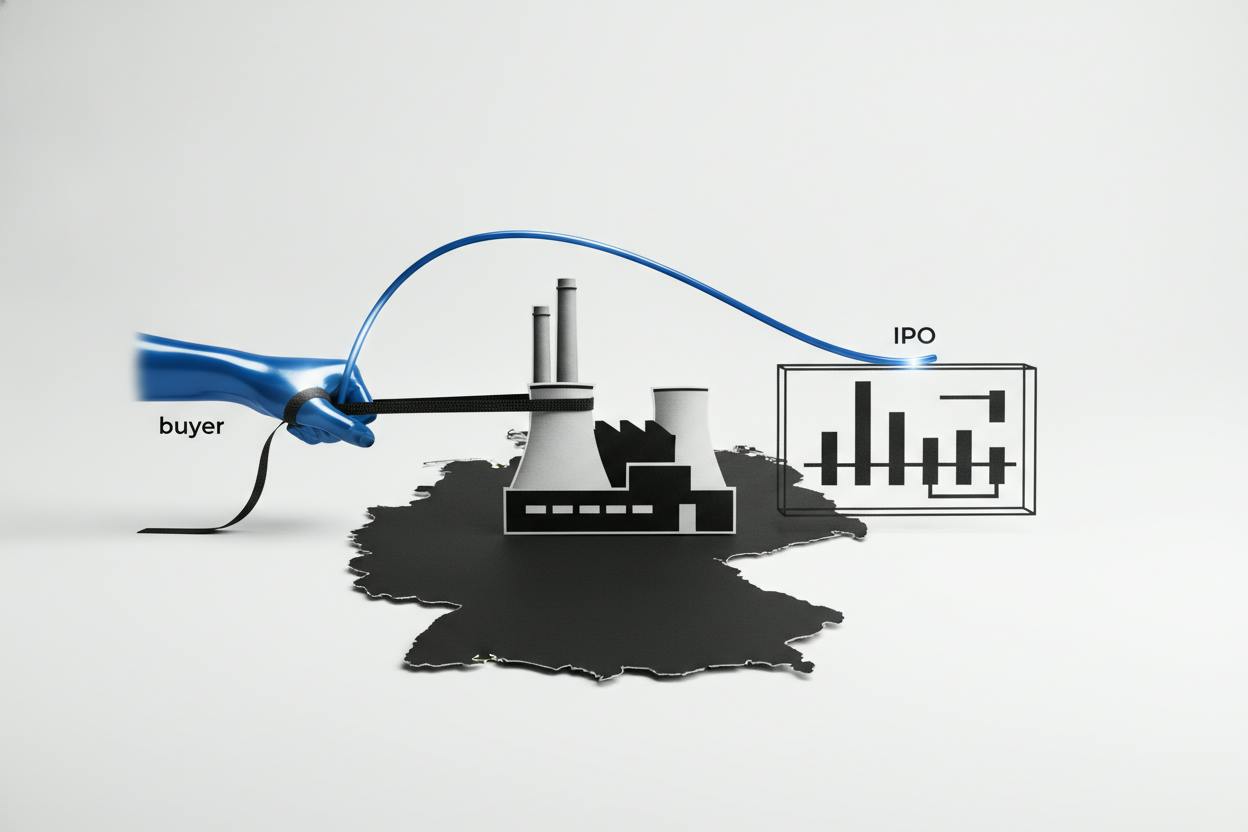
Now the Finance Ministry wants to privatise Uniper and is considering two routes: an outright sale or an initial public offering (IPO). Reuters has previously named other potential bidders too, including EPH, Equinor, Apollo Global Management, and a Brookfield–Canada Pension Plan Investment Board (CPPIB) group.
The more serious bidders that line up, the easier a sale becomes. An IPO, by contrast, depends on a “market window” — a period when investors are willing to absorb a big new listing without demanding too steep a discount.
What a sale versus an IPO means for investors
For everyday investors, the key question is how Berlin's choice could affect the price of Uniper's shares and the broader energy sector.
If Germany opts for a trade sale, bidders are effectively fighting for control of the whole company. That competition can justify paying a control premium — a higher price per share than public markets might offer for small slices of stock. In that scenario, existing shareholders (including the state) could see a better valuation than an IPO might deliver.
If Berlin leans toward an IPO, public-market investors would need to take on a potentially huge new free float. The government would be betting that markets stay friendly long enough to sell a large stake smoothly. That's a risk, especially in a sector that remains sensitive to energy prices and geopolitical shocks.
For investors, a competitive auction could be a positive signal for Uniper's value, while an IPO could mean more supply of shares hitting the market — something that can weigh on the stock price in the short term.
What to watch next
The big unknowns are the timing and the structure of any deal. If a sale proceeds, the identity of the winning bidder and the price will matter. If an IPO is chosen, the market's appetite for a large energy listing will be tested.
Energy markets remain volatile, and any deal will be scrutinised for how it fits with Germany's broader energy policy, including its push to reduce reliance on imported gas and expand renewables. Uniper's future role in that transition could be a factor in how the government weighs its options.
For now, the confirmation from RWE's CEO adds weight to the idea that a sale is a live possibility. The bigger the buyer line-up, the more Berlin's decision starts to look like a competitive auction versus IPO timing risk. Investors will be watching for any formal announcements from the Finance Ministry or the bidders themselves.
Related reading: oil prices and bond markets remain in focus as energy and rate dynamics continue to move markets.