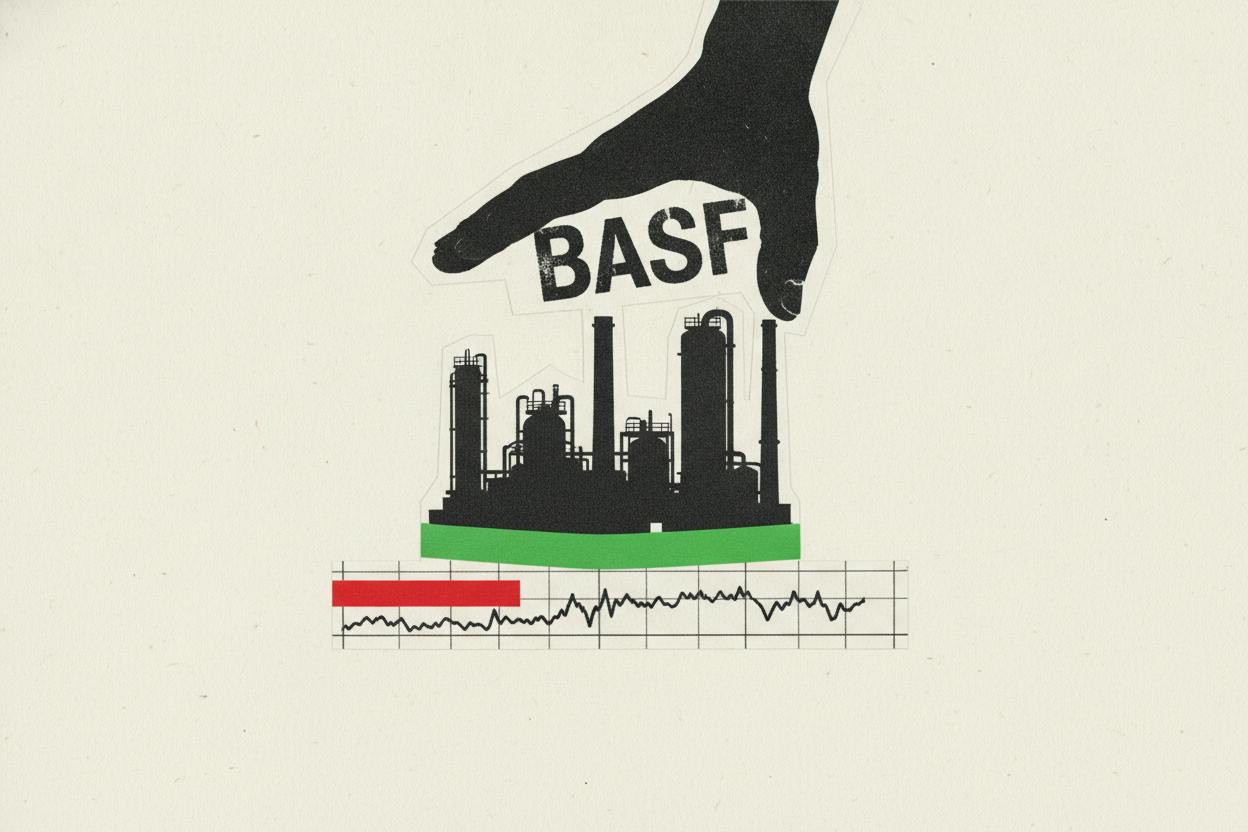
German chemicals giant BASF has raised its takeover offer for rival Evonik to €24 a share, a move that values the specialty chemicals maker at roughly €11.18 billion, according to sources cited by Reuters. The sweetened bid is paired with commitments to protect jobs and production sites, an apparent effort to win over Evonik's management and workforce after an earlier approach was rejected.
The new offer represents a significant step up from BASF's previous proposal of about €22.15 a share, which valued Evonik at around €10.3 billion. Evonik had turned down that earlier bid as too low, Reuters sources said. By adding job and site guarantees, BASF appears to be addressing not just the price but also the human and operational concerns that often make cross-town mergers politically sensitive in Germany.
Why the gap between the offer and the share price matters
Despite the higher bid, Evonik's shares were trading at €21.38 by 1208 GMT, up 3.3% on the day but still well below the €24 offer price. BASF's own shares slipped slightly. That gap is the story: when a cash offer is on the table but the target trades below it, the market is pricing in the chance the deal may not go through.
Investors are essentially betting that there is a meaningful probability that the acquisition fails—whether due to regulatory hurdles, shareholder opposition, or Evonik's board holding out for an even higher price. The discount also reflects the possibility that BASF could walk away if it cannot secure the deal on acceptable terms.
For everyday investors, this spread is a useful reminder that a takeover offer is not a guaranteed payday. Until a deal is formally agreed and approved, the target's share price can trade at a discount to the offer, and that discount can widen or narrow as news develops.
What this means for BASF and Evonik shareholders
For BASF shareholders, the raised bid means the company is willing to pay more to gain control of Evonik, which could dilute the expected benefits of the deal if the synergies don't materialise. The job and site guarantees, while politically savvy, could also limit BASF's ability to cut costs after the acquisition—a key reason companies pursue mergers in the first place.
For Evonik shareholders, the offer represents a premium to the current market price, but the fact that the stock trades below the bid suggests that not everyone is convinced the deal will close. If the acquisition succeeds, shareholders would receive €24 per share, a solid return from current levels. If it fails, the share price could fall back to where it was before the bid was made public.
This kind of situation is common in M&A, and investors should watch for a few key signals: whether Evonik's board recommends the offer, whether any rival bidder emerges, and whether regulators raise concerns about competition in the chemicals sector. Any of these could change the calculus.
Broader context: consolidation in European chemicals
The chemicals industry has been under pressure from high energy costs, weak demand in Europe, and global competition, prompting companies to seek scale through mergers. BASF's pursuit of Evonik fits that pattern, as does the recent wave of dealmaking across the sector. If successful, the combination would create a European chemicals powerhouse with a broader product range and greater pricing power.
However, such deals often face scrutiny from antitrust authorities, especially when they involve major players in the same market. The job and site guarantees may help smooth the political path, but they don't remove the regulatory risk.
For investors, this story is a reminder that M&A activity can create both opportunities and uncertainties. While a successful deal can boost the acquirer's long-term prospects, the immediate reaction of the stock market often reflects doubts about price, execution, and integration risks.
As the situation develops, keep an eye on Evonik's official response and any regulatory announcements. The gap between the offer price and the market price will likely narrow if the deal looks more certain, or widen if obstacles emerge.