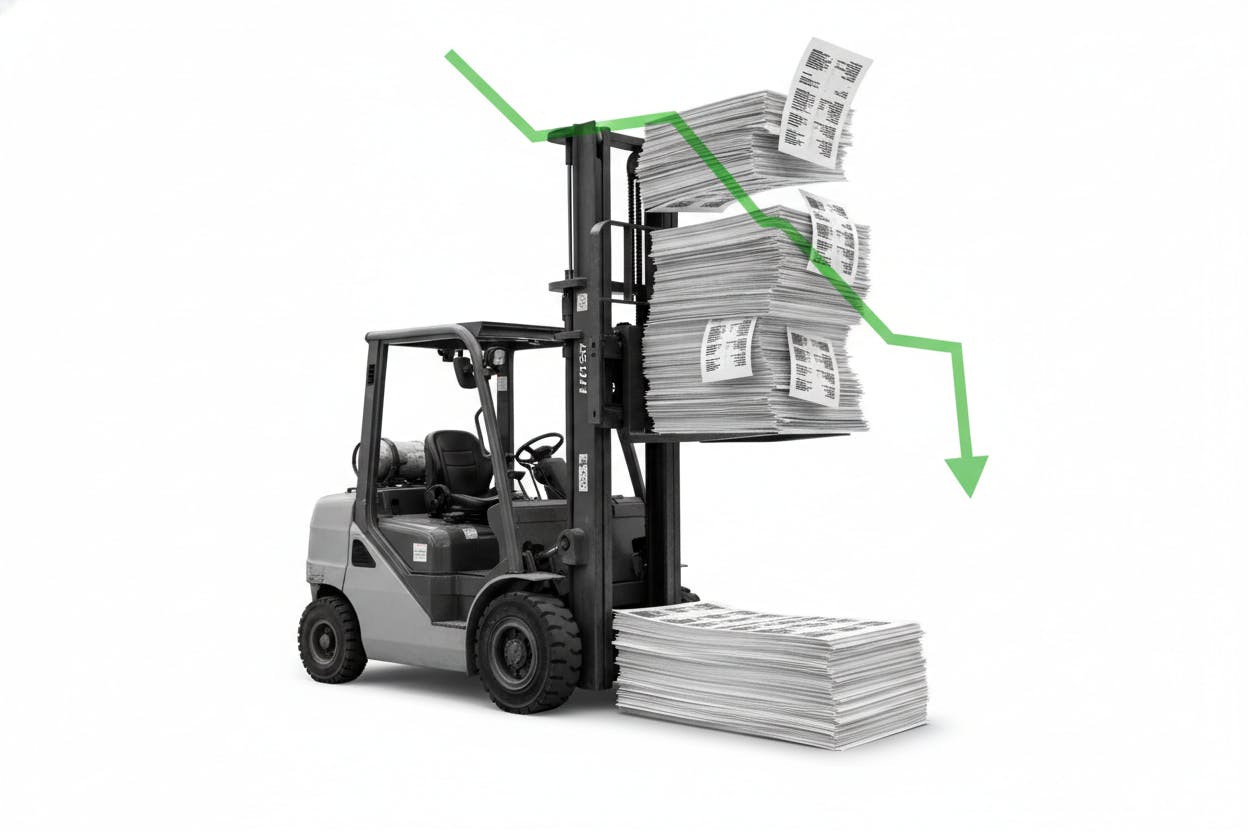
Analysts at Berenberg have cut their price target for Kion Group after the warehouse-automation and forklift maker reported weaker-than-expected second-quarter orders. The European investment bank now estimates Q2 order intake at €2.76 billion, a 21% decline from the same period last year, when demand was artificially inflated by customers rushing to buy ahead of price increases.
What happened
Kion, a German industrial company that makes forklifts, warehouse trucks, and automation systems for logistics centers, issued a pre-close update that signaled a slowdown in new orders. Berenberg, which covers the stock, responded by trimming its price target. The bank's analysts noted that the Q2 order figure came in below expectations, especially after a strong first quarter that had been buoyed by pre-buying activity.
The year-over-year drop is largely a reflection of the comparison period. In Q2 2023, Kion saw an unusual spike in orders as customers accelerated purchases to lock in prices before the company raised them. That pull-forward effect has now faded, leaving this year's order intake looking relatively weak.
Why it matters
Order intake is a key leading indicator for industrial companies like Kion. It shows how much new business the company is winning, which eventually translates into revenue and profit. A 21% decline suggests that demand is normalizing after a period of exceptional strength, but it also raises questions about the broader market for warehouse equipment and automation.
The slowdown comes at a time when many industrial firms are grappling with mixed signals. On one hand, supply chains have largely recovered from pandemic-era disruptions, reducing the urgency for companies to invest in new warehouse capacity. On the other hand, the rise of e-commerce and the need for efficient logistics continue to support long-term demand for automation. Deutz, another German industrial firm, recently highlighted how AI data centers are boosting demand for backup power, but Kion's core markets face a different dynamic.
Berenberg's price target cut reflects the view that near-term earnings may be under pressure as order volumes normalize. However, the bank's analysts likely still see value in Kion's long-term position as a leader in warehouse automation, a sector that benefits from structural trends like labor shortages and the growth of online retail.
What it means for investors
For everyday investors, this news is a reminder that industrial stocks can be sensitive to timing effects. A single quarter's order numbers can look misleadingly good or bad depending on what happened a year earlier. In Kion's case, last year's pre-buying created a tough comparison that makes this year's figures look worse than the underlying trend.
Investors should watch for Kion's full Q2 results, due in the coming weeks, to see whether the order slowdown is just a hangover from last year's spike or a sign of deeper weakness. Key metrics to monitor include revenue, profit margins, and management's outlook for the rest of the year. If the company maintains its full-year guidance, the Q2 dip may be seen as a temporary blip.
Berenberg's move also highlights the importance of analyst ratings and price targets. While a target cut can weigh on a stock in the short term, it does not necessarily mean the company is in trouble. Analysts often adjust their estimates based on new data, and the market may already have priced in the weaker orders.
For context, other European companies have faced similar headwinds. Ahold Delhaize, for instance, is expected to see margin pressure from price cuts in the US, while BofA recently raised its STOXX 600 target but warned that stocks are 'priced for perfection'. That broader caution applies to Kion as well: the stock may already reflect optimistic assumptions about future growth, leaving little room for disappointment.
Ultimately, Kion's story is about the balance between short-term cyclical swings and long-term structural demand. Investors with a longer horizon may view the Q2 order dip as a buying opportunity, but those focused on near-term performance should brace for potential volatility until the full picture emerges.