Earnings season has delivered a nasty surprise for Big Tech investors. A wave of selling has wiped roughly $1 trillion off the market value of the largest technology companies, as shareholders grow uneasy about the enormous sums being poured into artificial intelligence. The concern is simple: the spending is massive, but the payoff remains unproven.
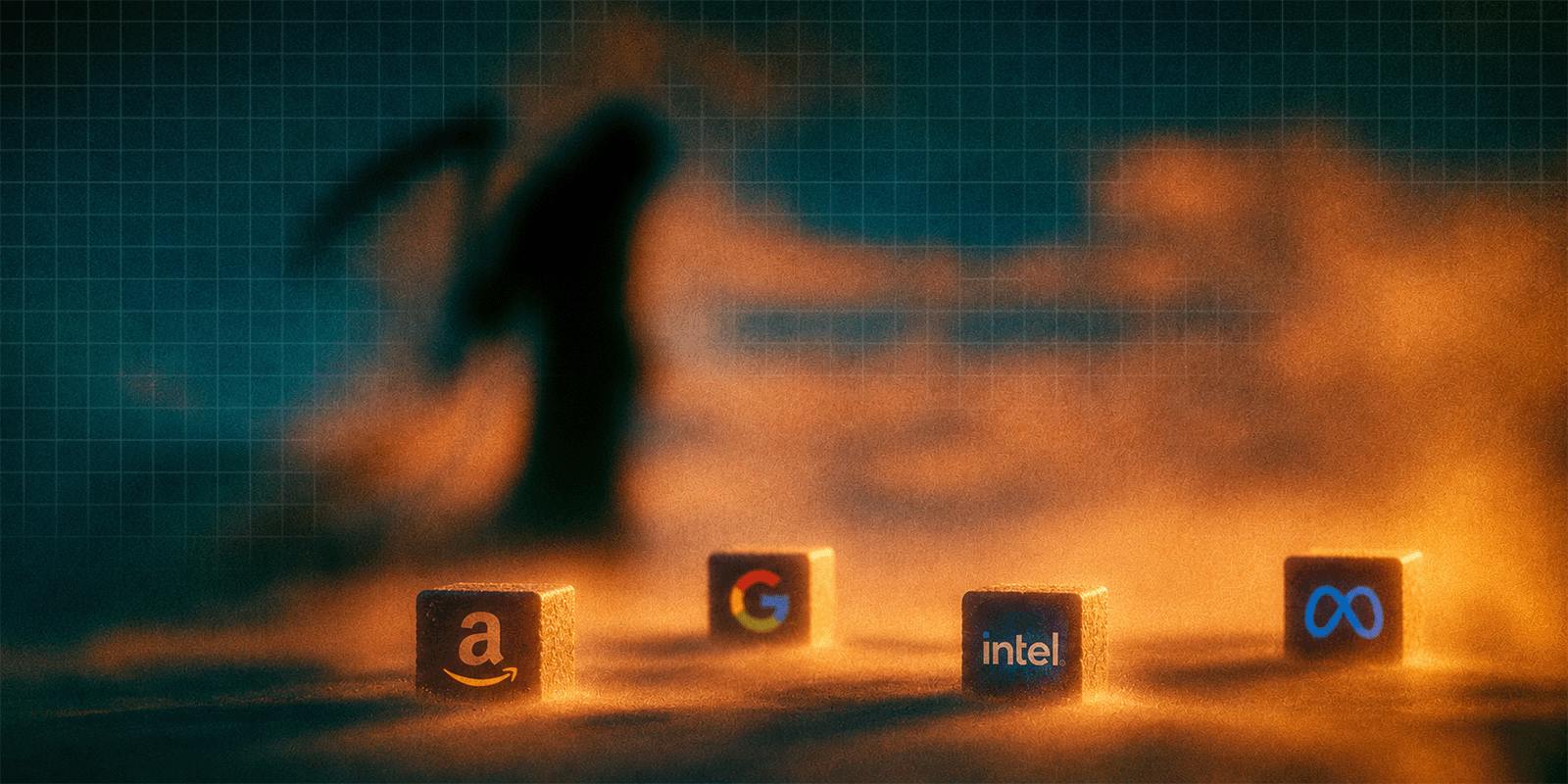
Alphabet took the hardest hit, with its shares plunging 13% in a single day and erasing nearly $500 billion in market value. Meta had already lost $190 billion in one day the previous week, and Amazon and Intel together shed another $250 billion on Friday. The selloff has been broad and brutal, and investors are now asking a pointed question: who's next?
Why investors are spooked
For years, the tech giants were cash machines. They generated mountains of profit, funded generous share buybacks, and rewarded shareholders with steady returns. AI is changing that calculus. Building and running advanced AI models requires expensive chips, sprawling data centers, and vast amounts of electricity. Those costs are eating into the cash reserves that once looked untouchable.
Both Meta and Alphabet reported negative free cash flow for the quarter, meaning they spent more money than they brought in. That's a striking reversal for companies that have long been synonymous with profitability. And the spending shows no sign of slowing. Meta, for instance, plans to raise a record $97 billion through new share issuance — a move that dilutes existing shareholders and signals just how far the company is willing to go to fund its AI ambitions.
The fear is not that AI is unimportant. It's that the race to dominate it could destroy value in the near term, with no guarantee that the winners will earn back what they've spent. Tech executives see AI as a once-in-a-generation opportunity, and they're spending accordingly. The thought of being the company that missed the next big thing is, after all, pretty scary. But investors are starting to worry about who's footing the bill.
Microsoft: the outlier
Not every tech giant is feeling the pain equally. Microsoft has emerged as a relative safe haven. Its Azure cloud business grew 48% last quarter, helping lift overall revenue by 19%. More importantly, Microsoft can make money at nearly every stage of AI adoption — from selling cloud infrastructure to embedding AI features into its workplace software. With loyal customers and a clearer path to AI profits, it looks like one of the better-prepared survivors.
That contrast is instructive. Companies that can show tangible AI revenue are being rewarded, while those that can only show spending are being punished. The market is drawing a distinction between AI investment and AI returns, and it's becoming less patient with the former.
What it means for investors
For everyday investors, this selloff is a reminder that even the mightiest companies are not immune to the laws of economics. When spending rises faster than revenue, the market eventually notices. The AI trade has been one of the most powerful market themes in recent years, but it is not a one-way bet.
It's also a lesson in diversification. If your portfolio is heavily concentrated in a handful of Big Tech names, you're exposed to the swings of a single narrative. The companies leading the AI charge are still among the most profitable businesses in history, but their shares can fall sharply when sentiment shifts.
Looking ahead, investors will be watching a few key things. First, whether free cash flow turns positive again in coming quarters. Second, whether AI products start generating meaningful revenue. And third, whether the spending arms race intensifies further. Any sign that costs are moderating — or that AI is paying off — could steady nerves. Until then, expect volatility.
The broader market backdrop adds to the unease. With interest rates still elevated and economic growth uncertain, investors have less tolerance for big spending plans with distant payoffs. In that environment, the AI trade is being stress-tested. As one analyst put it, for markets it's a case of trick or treat.
For now, the treat has turned into a trick for many Big Tech shareholders. The question is whether this is a temporary scare or the start of a deeper reassessment of what AI is really worth.