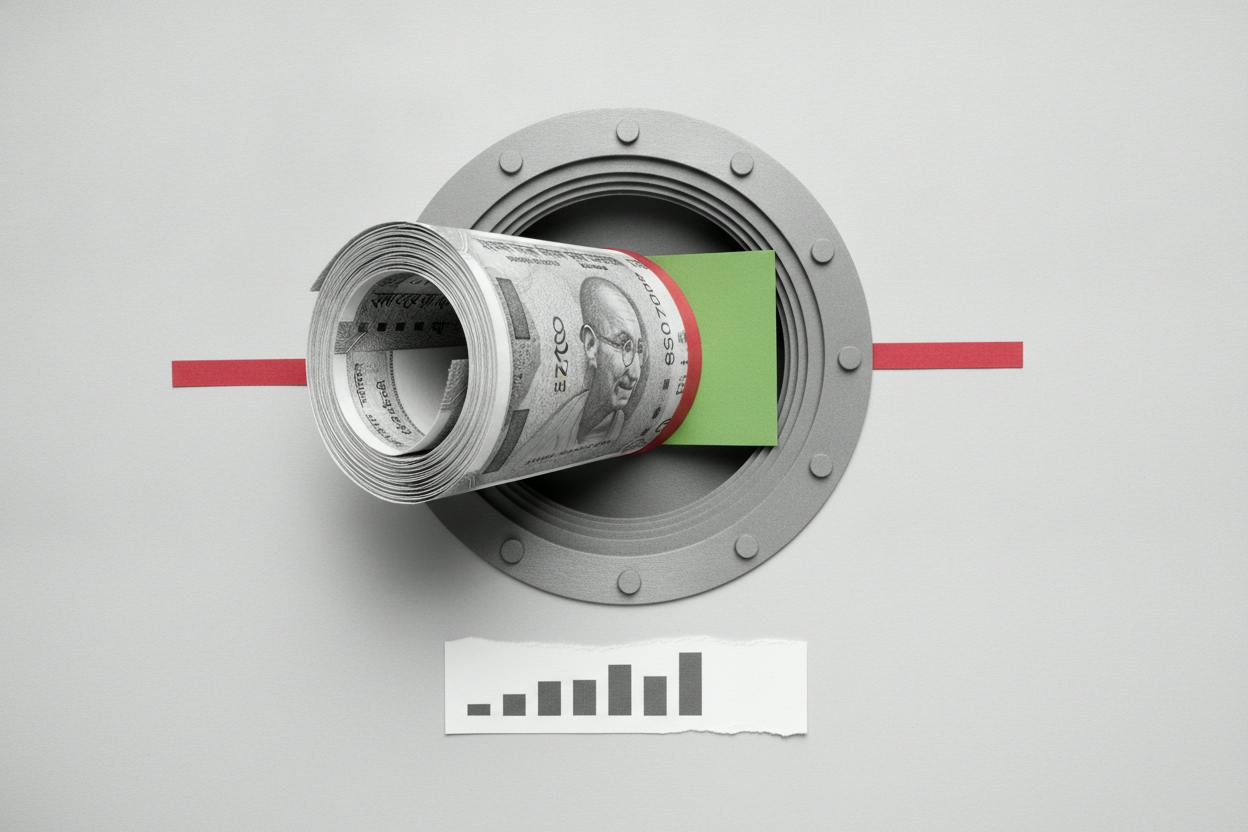
The Federal Reserve's proposal to revise the extra capital surcharge on the largest US banks has opened a rare public rift among the industry's giants. JPMorgan Chase and Bank of America are pushing back, saying the changes could tilt the playing field in favor of Morgan Stanley and Goldman Sachs, according to Reuters.
The surcharge in question is the GSIB (Global Systemically Important Bank) surcharge—an additional layer of equity capital that the biggest, most interconnected banks must hold on top of standard requirements. The idea is that these banks, if they failed, could drag down the entire financial system, so regulators demand a bigger cushion. The Fed proposed changes in March that would make the formula more "risk-sensitive," including adjusting how short-term wholesale funding—large, often uninsured borrowings like repurchase agreements (repo) and commercial paper—is factored into the calculation.
Why does this matter? Because holding more equity capital makes certain activities less profitable. Trading, prime brokerage, and underwriting all use significant balance sheet space. If a bank must fund those activities with expensive equity rather than cheaper borrowed money, its returns shrink. So even small tweaks to the surcharge formula can shift billions of dollars in costs across the industry.
Why JPMorgan and Bank of America are upset
JPMorgan and Bank of America argue that the proposed changes would effectively lower the surcharge for Morgan Stanley and Goldman Sachs, which have large trading and investment banking operations, while leaving or even increasing the burden on themselves. The two banks have reportedly been vocal in their criticism, warning that the changes could distort competition and reward riskier business models.
At the heart of the dispute is the treatment of short-term wholesale funding. These are borrowings that banks use to finance their daily operations—often from other financial institutions, money market funds, or corporations. They are considered riskier than stable retail deposits because they can vanish quickly in a crisis. The Fed's proposal aims to make the surcharge more sensitive to these risks, but the banks disagree on how that sensitivity should be applied.
Morgan Stanley and Goldman Sachs, which rely more heavily on trading and prime brokerage, could benefit if the new formula reduces the weight given to certain types of short-term funding. JPMorgan and Bank of America, with their massive deposit bases and broader balance sheets, might not see the same relief—or could even face higher charges.
What this means for investors
For everyday investors, this is not just an inside-the-Beltway squabble. The GSIB surcharge directly affects how much capital big banks must hold, which in turn influences their profitability and the returns they can generate for shareholders. A higher surcharge can mean lower return on equity, potentially leading to smaller dividends or buybacks. A lower surcharge can free up capital for lending, share repurchases, or investment.
If the Fed's changes favor Morgan Stanley and Goldman Sachs, their earnings could get a relative boost. Conversely, JPMorgan and Bank of America might see their competitive position weaken. But it's important to remember that these are all highly profitable, well-capitalized institutions. The surcharge is a regulatory cost, not an existential threat.
Investors should also watch how the Fed responds to the banks' lobbying. The proposal is still in the comment phase, and the final rule could look different. The Fed has said it wants to make the surcharge more risk-sensitive, but it also has a mandate to ensure financial stability. If the banks' complaints gain traction, the Fed might adjust the formula again—or stick to its guns.
This debate comes at a time when Fed officials themselves are split on the path of interest rates, adding another layer of uncertainty for banks. Higher rates generally help banks' net interest margins, but they can also slow the economy and increase loan losses. The GSIB surcharge is just one of many factors shaping the sector's outlook.
The broader context
The GSIB surcharge was introduced after the 2008 financial crisis as part of a global effort to make the banking system safer. The largest banks—those deemed systemically important—are required to hold extra capital, and the surcharge is calculated using a formula that considers factors like size, interconnectedness, complexity, and reliance on short-term funding.
The Fed's proposal is part of a broader review of capital rules, which has also included the "Basel III endgame" reforms. Those reforms, too, have sparked intense lobbying from banks, with some arguing that the requirements are too stringent and could hurt lending and economic growth.
For now, the fight over the GSIB surcharge is a reminder that regulation is not a one-size-fits-all exercise. Even within the club of the biggest banks, interests diverge. JPMorgan and Bank of America are not just defending their own balance sheets—they are also shaping the debate over how much risk the financial system should be allowed to take.
What to watch next
The Fed will likely take months to finalize the rule. In the meantime, investors should pay attention to the banks' public statements and any data they release on the potential impact. The banks may also try to influence the outcome through the comment process, which is standard practice.
For those with money in bank stocks, the key takeaway is that regulatory changes can create winners and losers even among the largest players. While the surcharge is just one piece of the puzzle, it can have a meaningful effect on profitability. As the debate unfolds, keep an eye on how each bank positions itself—and how the Fed balances its dual goals of safety and competitiveness.
In the end, this is a story about the delicate dance between regulation and profit. The banks want to maximize returns; the Fed wants to prevent another crisis. The outcome will shape the banking landscape for years to come.