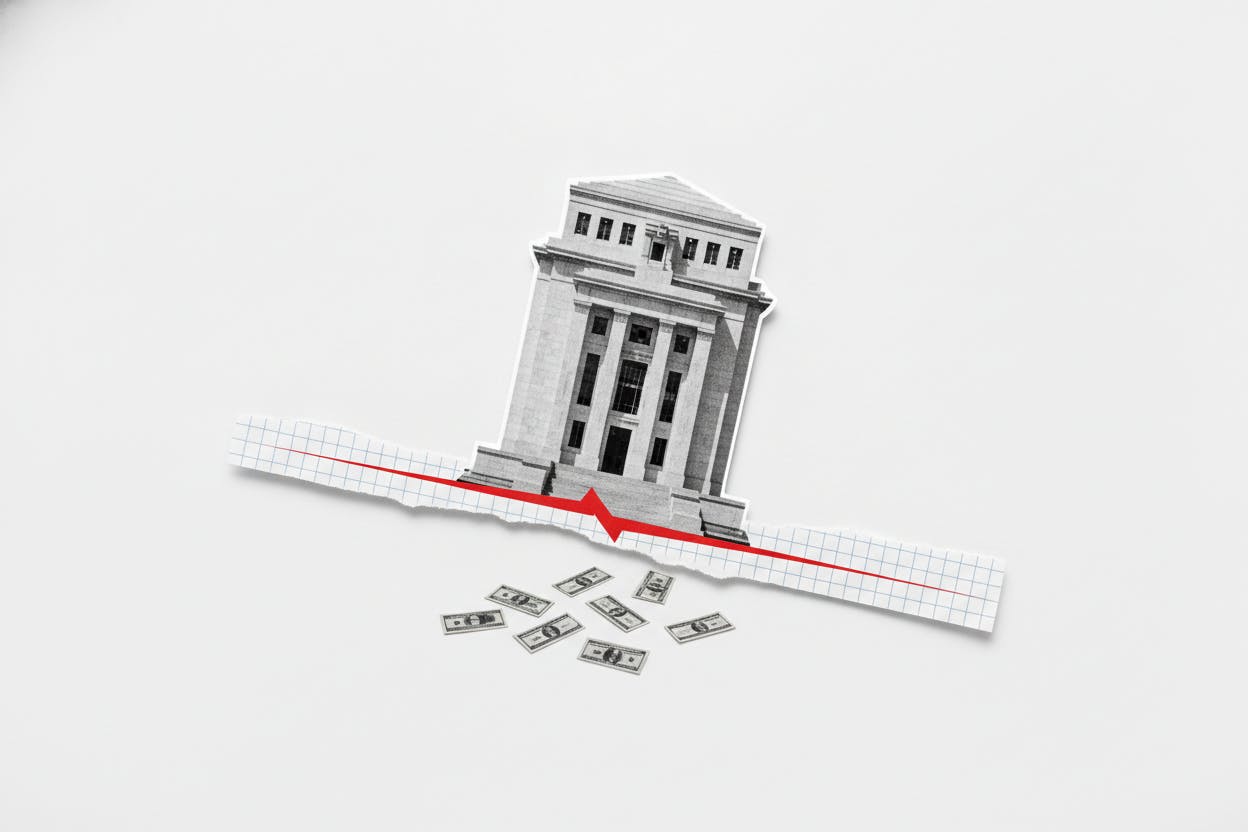
The Federal Reserve's next move on interest rates is looking less certain after two top officials publicly staked out opposing positions. Boston Fed President Susan Collins voiced support for the central bank's recent decision to hold rates steady, while Cleveland Fed President Beth Hammack, a voting member of the rate-setting committee, said the Fed should start raising rates now unless there is clearer proof that inflation is cooling.
The split underscores the delicate balancing act the Fed faces as it tries to bring inflation down without tipping the economy into recession. For everyday investors, the disagreement is a reminder that the path for borrowing costs is far from settled, and that could mean more volatility in stocks and bonds.
What the officials are saying
Susan Collins, who leads the Federal Reserve Bank of Boston, backed the latest pause in rate increases. Her stance suggests she wants more time to see how the economy responds to the higher rates already in place. In recent months, the Fed has slowed its pace of tightening, and a pause gives policymakers a chance to assess the lagged effects of previous hikes.
Beth Hammack, president of the Cleveland Fed and a current voter on the Federal Open Market Committee (FOMC), took a more hawkish line. She argued that without clearer evidence that inflation is on a sustained downward path, the Fed should resume raising rates now. Her comments reflect a worry that pausing too long could allow inflation to become entrenched, forcing even more painful action later.
The difference between the two is not just about the next meeting—it's about how much risk each official is willing to take. Collins appears more willing to risk letting inflation linger a bit longer in exchange for protecting the job market. Hammack seems more concerned that doing too little now will require doing much more later.
Why this matters for your money
Interest rates are the Fed's main tool for influencing the economy, and they ripple through nearly every corner of the financial world. When rates are high, borrowing becomes more expensive for consumers and businesses, which can slow spending and hiring. That tends to weigh on corporate profits and stock prices, especially for growth-oriented companies that rely on cheap borrowing to expand.
For investors, the split among Fed officials means the future path of rates is less predictable. Markets often move on expectations, and when those expectations shift, so do asset prices. If investors begin to believe a hike is coming, bond yields could rise and stocks could pull back. Conversely, if the Fed holds steady, markets might breathe a sigh of relief, but the uncertainty itself can keep volatility elevated.
It's also worth noting that the Fed's decisions affect more than just stocks. Higher rates mean higher yields on savings accounts and certificates of deposit, which can be a bright spot for savers. But they also mean higher costs for mortgages, car loans, and credit card debt. So the outcome of this debate has real consequences for household budgets, not just portfolios.
What to watch next
The public disagreement between Collins and Hammack is part of a broader conversation happening inside the Fed. Investors will be watching for more clues from other officials, as well as upcoming economic data on inflation and employment. A strong jobs report or a stubborn inflation reading could tilt the balance toward a hike, while weak data could reinforce the case for holding.
It's also important to remember that the Fed's decisions are made by committee, and individual voices like Hammack's don't necessarily reflect the consensus. But when a voting member breaks from the majority, it signals that the debate is real and that the outcome is far from predetermined.
For now, the takeaway for investors is to expect the unexpected. The Fed is navigating a narrow path, and the split among its leaders shows just how uncertain the road ahead is. Keeping a diversified portfolio and staying focused on long-term goals remains a sensible approach, rather than trying to guess the Fed's next move.
As the debate continues, investors will also be watching how other central banks handle similar challenges. For instance, the Reserve Bank of Australia also faced a board split on whether to hike, ultimately holding rates at 4.35%. That parallel suggests the dilemma is global, not just American.
In the meantime, the latest earnings season shows a widening gap between winners and losers, partly due to the interest rate environment. Companies that can generate cash and don't rely heavily on borrowing are better positioned, while those with high debt loads may struggle.
Ultimately, the Fed's next move will depend on the data. Until then, the split between Collins and Hammack is a healthy sign of debate, but it also means investors should brace for a bumpy ride.



