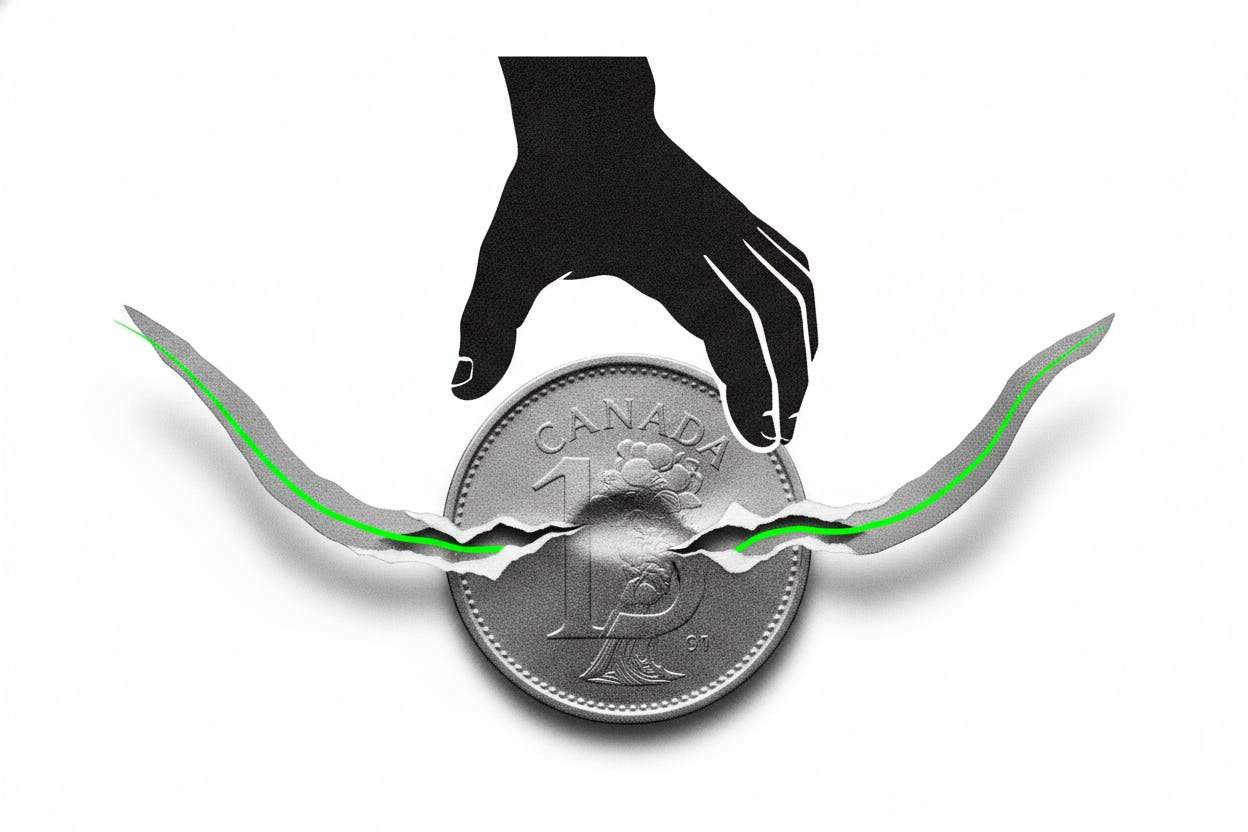
The Canadian dollar strengthened slightly on Wednesday after President Donald Trump took to Truth Social to call the currency gap between the US and Canada “unacceptable.” The US dollar slipped 0.2% to CA$1.3788, a modest move that belied the political noise behind it.
Trump’s post did not specify any concrete action, such as tariffs, sanctions, or coordinated intervention in foreign-exchange markets. Instead, he described the “imbalance” between the two currencies as unacceptable, leaving traders to parse the implications.
What’s behind the loonie’s move?
The Canadian dollar, often called the loonie after the bird on the one-dollar coin, has been under pressure for months as the US dollar strengthened on the back of higher US interest rates and a resilient economy. But Wednesday’s uptick came as the greenback broadly softened, with the dollar index slipping alongside the move against the loonie.
Oil prices also played a role. Middle East tensions have kept crude prices firm, which tends to support the Canadian dollar because Canada is a major oil exporter. Higher oil prices boost the country’s export revenues and can strengthen the currency.
Gold, meanwhile, moved lower, a typical reaction when investors shift toward riskier assets or when the dollar’s decline is not enough to offset other pressures.
Why Trump’s comment matters
Trump’s remarks are the latest in a series of trade-related salvos between Washington and Ottawa. Earlier this year, the US imposed tariffs on Canadian goods, and Canada retaliated with its own duties. The currency gap has been a recurring theme in Trump’s criticism of trade imbalances, but this is the first time he has directly targeted the loonie’s value.
Currency markets are now weighing the possibility of policy shifts. If the US were to intervene in foreign-exchange markets—an unusual step for a major economy—it could weaken the dollar or strengthen the loonie. But such intervention is rare and typically requires coordination with other central banks.
More likely, traders are pricing in the risk of new tariffs or other trade measures that could affect the Canadian economy and, by extension, its currency. That uncertainty often shows up in the options market, where investors buy contracts to protect against sudden moves in exchange rates.
What it means for investors
For everyday investors, the immediate takeaway is that currency fluctuations can have a real impact on portfolios, especially for those holding Canadian assets or US dollar-denominated investments. A weaker US dollar makes Canadian exports more competitive, which could benefit Canadian companies. Conversely, a stronger loonie can hurt US investors holding Canadian stocks when they convert returns back to dollars.
Trump’s comment also adds to the broader uncertainty around trade policy. As we’ve seen with Canada’s tariffs on US goods, trade tensions can ripple through markets. Investors should watch for any concrete policy announcements, as well as upcoming economic data.
The dollar’s direction will likely hinge on US inflation data and the Federal Reserve’s next moves. If inflation stays high, the Fed may keep rates elevated, supporting the dollar. If it cools, the dollar could weaken further, giving the loonie more room to gain.
What to watch next
Currency traders will be closely monitoring any follow-up from the White House. A specific policy tool—such as a tariff on Canadian goods or a threat to intervene in FX markets—would be a much bigger deal than a social media post. Until then, the loonie’s moves are likely to be driven by oil prices, interest rate differentials, and broader risk sentiment.
For Canadian investors, the rise in long-term bond yields is another factor to watch, as it reflects inflation expectations and fiscal concerns. And with jobs data on the horizon, both countries’ labor markets could influence currency moves.
In the end, Trump’s comment is a reminder that politics and currencies are intertwined. For now, the loonie’s gain is modest, but the potential for sudden policy shifts means investors should stay alert.