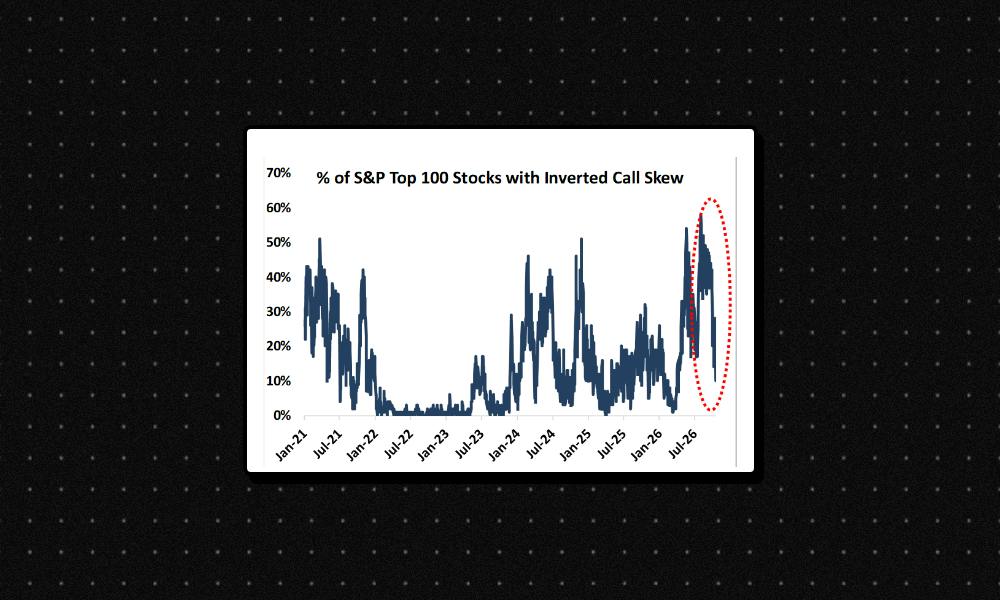
Investors are dialing back their enthusiasm for the biggest US stocks, according to the latest options market data. The shift is visible in the so-called “call skew” across major names, a measure that tracks the relative demand for call options—which profit when a stock rises—versus put options, which protect against declines.
For much of the recent rally, call options on large-cap tech and other market leaders were unusually expensive compared with puts. That pattern, known as “inverted call skew,” typically signals that traders are aggressively positioning for further gains. But that optimism has faded quickly, with investors sharply reducing their upside bets and, at the same time, snapping up more protection in mega-cap technology stocks.
What the options data is telling us
Options are contracts that give the buyer the right to buy or sell an asset at a set price within a specific timeframe. A call option is a bet that the price will go up; a put option is a bet that it will fall. When calls become pricier relative to puts, it suggests that more investors are chasing upside. When the reverse happens, it indicates that fear or caution is creeping in.
The recent data shows a clear reversal. Demand for calls has dropped off, while interest in puts on the largest tech companies has climbed. That suggests that even as the broader market has held up, the traders who were most bullish on the market’s biggest drivers are now hedging their bets.
This kind of shift often happens after a sustained run-up, when the easy gains have been made and investors start to worry about stretched valuations or an unexpected piece of bad news. It doesn’t necessarily mean a sell-off is imminent, but it does indicate that the market’s risk appetite is cooling.
Why mega-cap tech matters
Mega-cap technology stocks—companies like Apple, Microsoft, Nvidia, and Amazon—have been the engine of the US market’s gains for years. Their sheer size means their moves have an outsized impact on index returns. When investors start buying protection on these names, it can be a warning sign for the whole market.
The increased demand for puts in this group suggests that some investors are worried about a pullback in the very stocks that have led the rally. That could be driven by concerns about high valuations, interest rates, or simply profit-taking after a strong run.
For everyday investors, this is a reminder that market sentiment can turn quickly. Even when the headlines are positive, the options market often provides an early read on how professional traders are positioning.
What it means for your portfolio
For most long-term investors, this kind of short-term positioning shift is not a reason to panic. Options activity is driven by traders and institutions with short time horizons, and it can be noisy. But it is worth paying attention to because it can signal that the market’s momentum is slowing.
If you are heavily concentrated in big tech stocks, this might be a good time to review your diversification. The same names that have driven your portfolio higher can also drag it down if sentiment turns. A balanced approach—spreading your investments across different sectors and asset classes—can help smooth out the bumps.
It’s also a reminder that no market goes up in a straight line. Pullbacks are a normal part of investing, and they can even be healthy, shaking out excess speculation and creating opportunities for disciplined investors.
As the options data suggests, the bullishness that powered the market’s recent gains is fading. Whether that leads to a correction or just a period of consolidation remains to be seen. But for now, the message from the options market is clear: investors are becoming more cautious about the biggest names in US stocks.