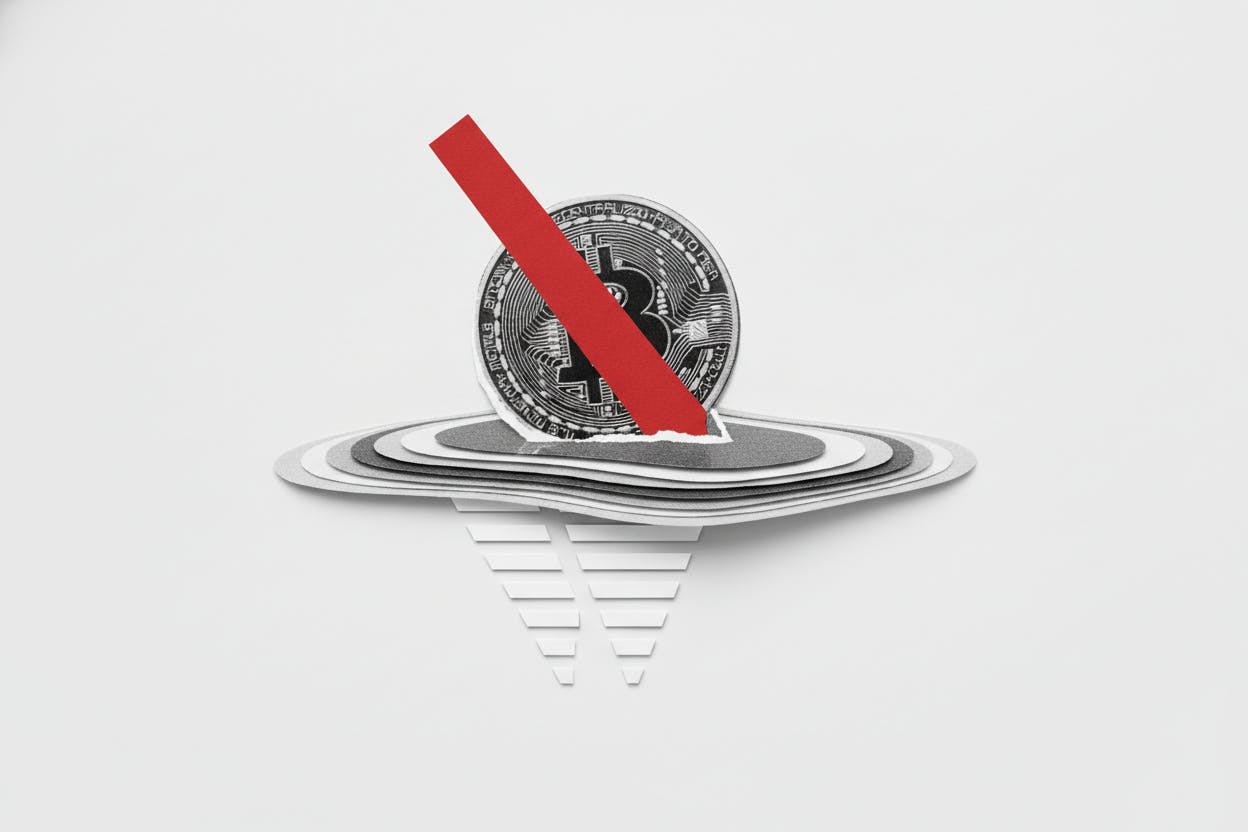
Cryptocurrency prices took a broad hit over the past 24 hours, with bitcoin falling below the $63,000 mark and the wider market sliding 2.9%. The sell-off was accompanied by a notable drop in trading activity, raising questions about near-term investor appetite for digital assets.
What happened
Bitcoin, the largest cryptocurrency by market value, fell 2.5% to $62,191, according to CoinDesk data. The decline pushed it below the psychologically important $63,000 level, a threshold that had held in recent sessions. The broader market, as measured by the CoinDesk Market Index (CMI), dropped 2.9% over the same period. The CMI tracks dozens of digital assets, giving a more complete picture of the sector's health than bitcoin alone.
The weakness was widespread. Ethereum, the second-largest cryptocurrency, slipped 2.9% to $1,737. Solana fell 5.1%, Cardano dropped 5.7%, and smaller declines were seen in XRP, BNB, and Dogecoin. The sell-off was not just in prices: trading volumes also dried up. Bitcoin's 24-hour trading volume fell 14% to $27.9 billion, while total crypto trading volume slid 6.1% to $70.8 billion. The overall market capitalization dipped 2.3% to $2.14 trillion.
Why it matters for investors
Falling prices combined with lower trading volume can signal a lack of conviction among buyers. When volume drops alongside price, it often suggests that the move is driven by a lack of interest rather than panic selling. For everyday investors, this means the current downturn may not be a sharp correction but rather a period of cooling enthusiasm.
Bitcoin has been trading in a relatively narrow range for weeks, and this move below $63,000 could test support levels. If volume remains low, the market may drift lower without a clear catalyst. Investors should watch for any pickup in trading activity, which could indicate renewed interest or a potential reversal.
The broader economic backdrop also matters. Global markets have been volatile recently, with geopolitical tensions and shifting interest rate expectations weighing on risk assets. For example, oil surged 5% after Trump declared the Iran deal over, rattling emerging markets. Such events can spill over into crypto, which often behaves like a risk-on asset.
What to watch next
Investors will be looking for signs of stabilization in bitcoin's price and volume. Key levels to monitor include the $60,000 support zone and any rebound in trading activity. The broader crypto market's direction may also depend on regulatory news and macroeconomic data, such as inflation reports or central bank decisions.
Another factor to consider is the ongoing development of quantum computing. Google has warned that quantum computers could break crypto by 2029, sparking a race to develop quantum-proof blockchains. While this is a longer-term concern, it adds to the uncertainty for crypto investors.
For now, the message is clear: the crypto market is in a cooling phase. Prices are down, and fewer traders are active. Whether this is a pause before another rally or the start of a deeper pullback will depend on whether buyers step back in.