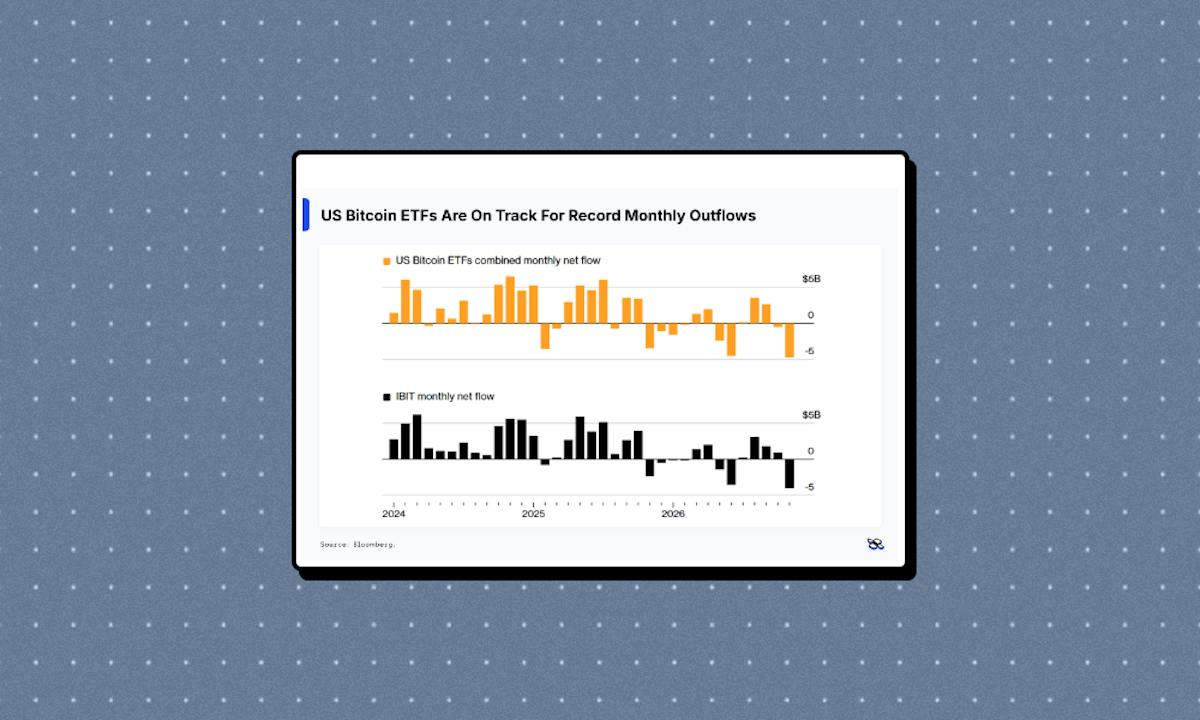
Bitcoin investors are heading for the exits. Nearly $5 billion has flowed out of US-listed bitcoin exchange-traded funds (ETFs) this month, putting the funds on pace for their worst month since they launched in early 2024. The outflows are adding fuel to a sharp selloff in the cryptocurrency itself, which has fallen 23% in November to around $59,000 — its worst monthly performance since June 2022.
BlackRock's flagship bitcoin ETF, the iShares Bitcoin Trust, has been hit especially hard, losing more than $4 billion to withdrawals this month. That fund was one of the biggest beneficiaries of the initial ETF boom, attracting billions from both retail and institutional investors.
From tailwind to headwind
The ETFs were instrumental in bitcoin's previous rally. By wrapping the cryptocurrency in a familiar, regulated structure, they made it easier for everyday investors and large institutions to gain exposure without having to buy and store bitcoin directly. That influx of capital helped push prices higher throughout 2024.
But the same mechanism is now working in reverse. When investors sell their ETF shares, the fund managers must sell the underlying bitcoin to raise cash, which puts downward pressure on the price. That, in turn, can trigger more selling as other investors see the price falling. It's a feedback loop that can amplify both rallies and selloffs.
“The ETFs were a major catalyst for the bull run, but they can also be a source of selling pressure when sentiment turns,” said one market analyst, speaking on condition of anonymity. “The outflows are a clear sign that some investors are de-risking.”
What's behind the pullback?
The brief notes that even a brief rebound alongside tech stocks was not enough to stem the tide. The broader market has been volatile, with concerns about interest rates, inflation, and geopolitical tensions weighing on risk assets. Bitcoin, often seen as a high-risk investment, tends to suffer when investors become more cautious.
It's worth noting that bitcoin has been through similar drawdowns before. The cryptocurrency is known for its extreme volatility, and a 20%+ monthly decline is not unprecedented. However, the scale of ETF outflows is notable because it shows that even the institutional and retail investors who came in through the regulated ETF route are now pulling back.
What it means for investors
For everyday investors, the key takeaway is that bitcoin remains a highly volatile asset. The ETFs made it easier to buy and sell, but they didn't change the underlying risk profile. If you hold bitcoin or a bitcoin ETF, you should be prepared for significant price swings.
The outflows also highlight the importance of understanding how ETFs work. When you sell a bitcoin ETF, you're not just selling a piece of paper — you're indirectly forcing the fund to sell actual bitcoin, which can affect the market price. This is different from a stock ETF, where the underlying assets are shares of companies that aren't directly impacted by the fund's trading.
Investors should also keep an eye on the broader market. The recent drop in oil prices and strength in the US dollar suggest that global risk appetite is fragile. If that continues, bitcoin could face further headwinds.
On the other hand, some investors see the current selloff as a buying opportunity. Historically, bitcoin has recovered from sharp declines, though there are no guarantees. The key is to do your own research and only invest money you can afford to lose.
Looking ahead
The coming weeks will be crucial. If the outflows continue, bitcoin could test lower levels. If they slow or reverse, the price could stabilize. Analysts will be watching the ETF flows closely as a gauge of investor sentiment.
For now, the message is clear: the bitcoin ETF boom has turned into a bust, at least for the moment. And that has real consequences for the price of the cryptocurrency itself.