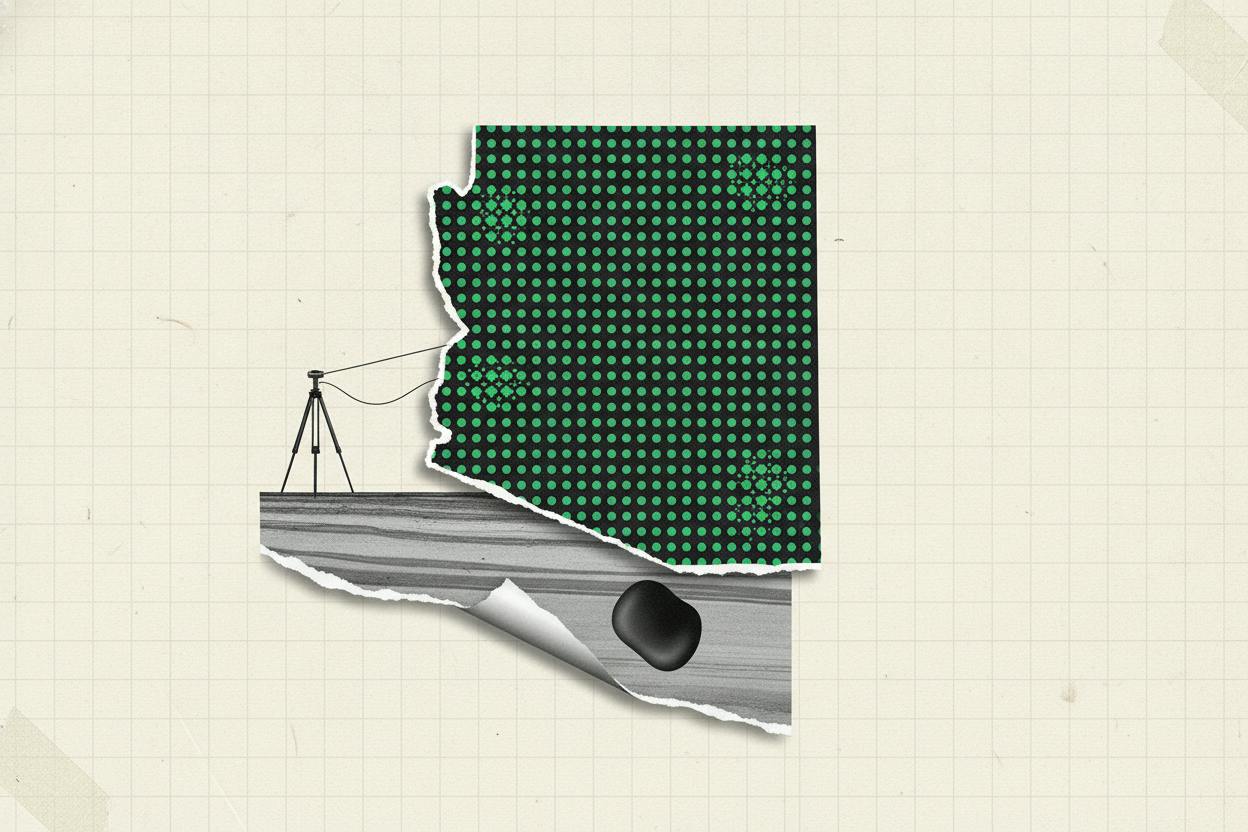
Blade Resources, a mining explorer listed on Canada's CSE, is expanding its magnetotelluric survey at the Hot Breccia project in Arizona after what the company called positive preliminary results. The survey will now include about 86 stations, up from the original 62, with roughly 500-meter spacing in key areas.
Magnetotellurics is a geophysical technique that uses natural electromagnetic signals from the Earth to map variations in underground rock properties. By measuring electrical resistivity at different depths, it can help identify zones where fluids may have altered the rock and where mineralization could be concentrated. It's a common early-stage tool for explorers looking to narrow down where to drill.
Blade said the decision to add stations came after contractor Moombarriga Geoscience delivered encouraging early data. The denser grid should produce a clearer resistivity model, which can help connect separate anomalies and rank the most promising targets. The company is also working to reconcile older ZTEM anomalies with the new signals, a process that often helps refine a project's geological story.
Why geophysics matters for explorers
Geophysics rarely proves that an orebody exists. What it can do is reduce the number of plausible drill sites and highlight which ones deserve the expensive step of drilling. For a junior explorer like Blade, that's a meaningful step forward, even if it doesn't immediately change the company's valuation.
Exploration stocks often see their biggest moves when a story shifts from "interesting anomalies" to "here's where we'll drill." By expanding its magnetotelluric work, Blade is trying to reduce guesswork before spending far more on drilling. More measurement points can tighten the subsurface model, connect separate anomalies, and prioritize targets that are actually testable.
The market's reaction was muted, with shares unchanged at CA$0.31. That's typical for this kind of update. Investors tend to wait for higher-stakes milestones, such as a clearly defined target list, permitting and logistics, and then assay results once holes are drilled.
What it means for investors
For everyday investors, this news is a reminder of how exploration-stage mining companies operate. They spend on surveys and studies long before any metal is produced, and each step is a small piece of a much longer puzzle. The value of a project like Hot Breccia is still highly speculative, and the share price reflects that uncertainty.
Blade's expansion of the survey is a sign that the company sees enough promise to invest more in the project. But it's not a breakthrough. The real test will come when drilling begins and assay results are released. Until then, the stock is likely to trade on news flow and broader sentiment toward the mining sector.
Investors should also keep an eye on the broader market for metals and mining. For example, China's iron ore imports have been rising, which can influence sentiment across the mining space. Similarly, moves in the ASX often reflect how investors are feeling about resource stocks generally.
For now, Blade's expanded survey is groundwork, not a catalyst. The company is doing the patient work of building a better picture of what lies beneath the surface. That's the kind of diligence that can pay off later, but it doesn't guarantee success. As always, exploration carries risk, and only drilling can confirm what the geophysics suggests.
Investors who follow junior miners should watch for the next updates from Blade: a finalized target list, any permitting news, and eventually drill results. Those are the moments when the story can change quickly.