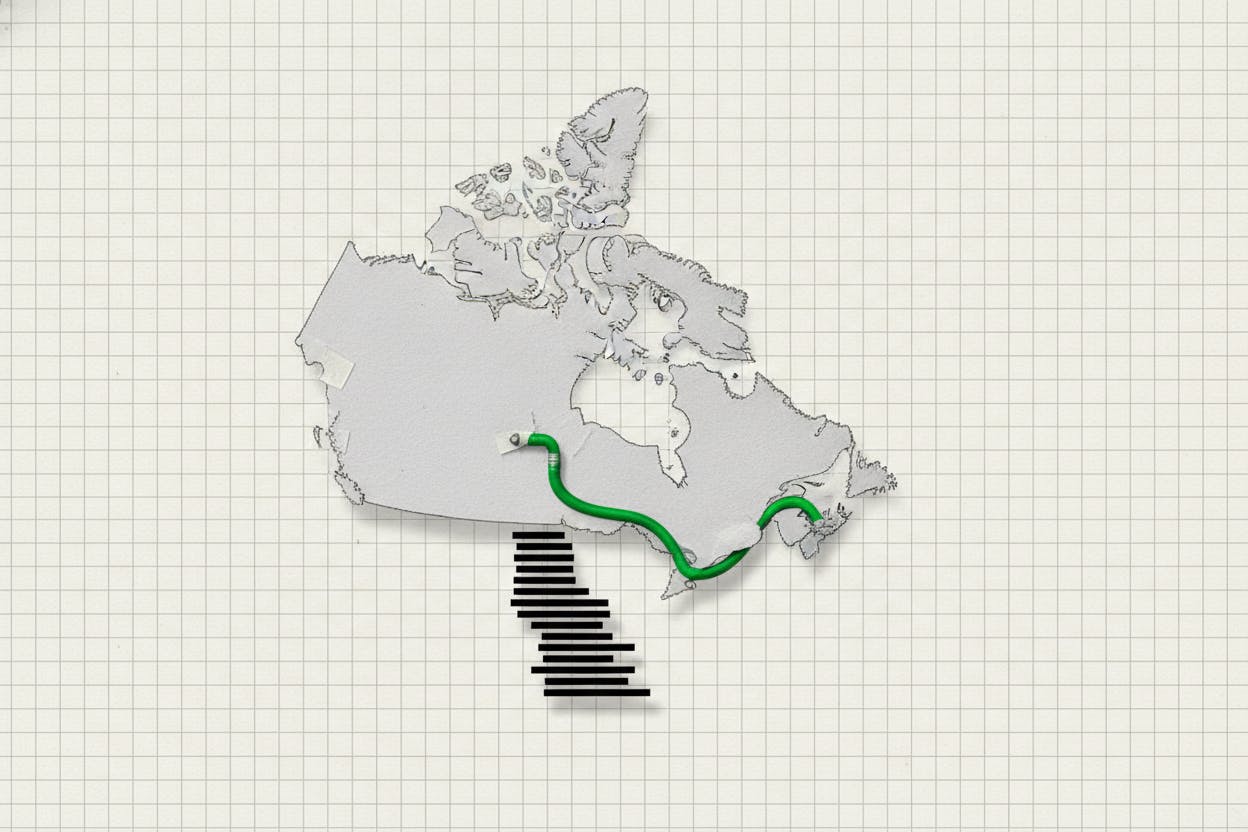
Canada's economy appears to be shaking off its early-year sluggishness, according to a new analysis from Bank of Montreal. In a research note Friday, BMO chief economist Douglas Porter highlighted a 0.5% month-over-month increase in real output for April, along with early signs that housing activity may be bottoming out in major cities and renewed momentum behind large infrastructure projects such as a potential pipeline from Alberta to British Columbia.
What the data shows
The April output gain follows a period of near-stagnation for the Canadian economy. BMO estimates that if the current pace holds through May and June, second-quarter growth could come in around 2% on an annualized basis. That would mark a meaningful pickup after the first quarter's lackluster performance.
Housing, a key driver of economic activity, has been showing tentative signs of stabilization. Porter noted that home sales and prices in Canada's biggest cities appear to be finding a floor after a prolonged downturn. That matters because residential construction supports jobs in building trades, and home purchases often trigger spending on furniture, renovations, and appliances.
On the infrastructure front, BMO pointed to improving momentum behind major projects, including a proposed pipeline linking Alberta's oil sands to the British Columbia coast. While such projects face regulatory and environmental hurdles, any progress could boost investment and employment in the energy sector.
Broader context
Canada's economy has faced headwinds from high interest rates, which the Bank of Canada raised aggressively to combat inflation. Higher borrowing costs have cooled consumer spending and housing markets. However, with inflation moderating and the central bank recently cutting its benchmark rate for the first time in over four years, there is growing optimism that the economy is turning a corner.
The jobs market has also shown resilience. Canada's June employment report, expected to show a modest gain of around 10,000 jobs after a stronger May, will be closely watched for confirmation of the trend. A steady labor market supports consumer confidence and spending.
Meanwhile, global factors are also at play. Lower oil prices, partly due to the recent OPEC+ decision to increase output, have weighed on Canada's energy-heavy stock market. However, for the broader economy, cheaper energy can reduce costs for businesses and consumers.
What it means for investors
For everyday investors, BMO's assessment suggests that the Canadian economy may be entering a more favorable phase. A pickup in growth could support corporate earnings and, by extension, stock prices. Sectors that tend to benefit from an improving economy include financials, industrials, and consumer discretionary.
Housing stabilization is particularly significant. Real estate and construction stocks could see renewed interest if home sales continue to recover. Investors in bank stocks may also benefit, as lenders' loan growth and credit quality often improve when the economy strengthens.
However, risks remain. The Bank of Canada's rate cuts may not be enough to reignite growth if consumers remain cautious. Geopolitical tensions and trade uncertainties could also weigh on business investment. BMO's outlook is cautiously optimistic, not a guarantee of smooth sailing.
For those with exposure to Canadian equities or real estate, the key takeaway is to watch for further data confirming the trend. Monthly GDP reports, housing market numbers, and employment figures will provide the clearest signals. As always, diversification across sectors and geographies remains a prudent strategy.
In summary, BMO sees Canada's economic engine warming up again after a cold start to the year. While the recovery is still in its early stages, the signs are encouraging for investors looking for a brighter second half.