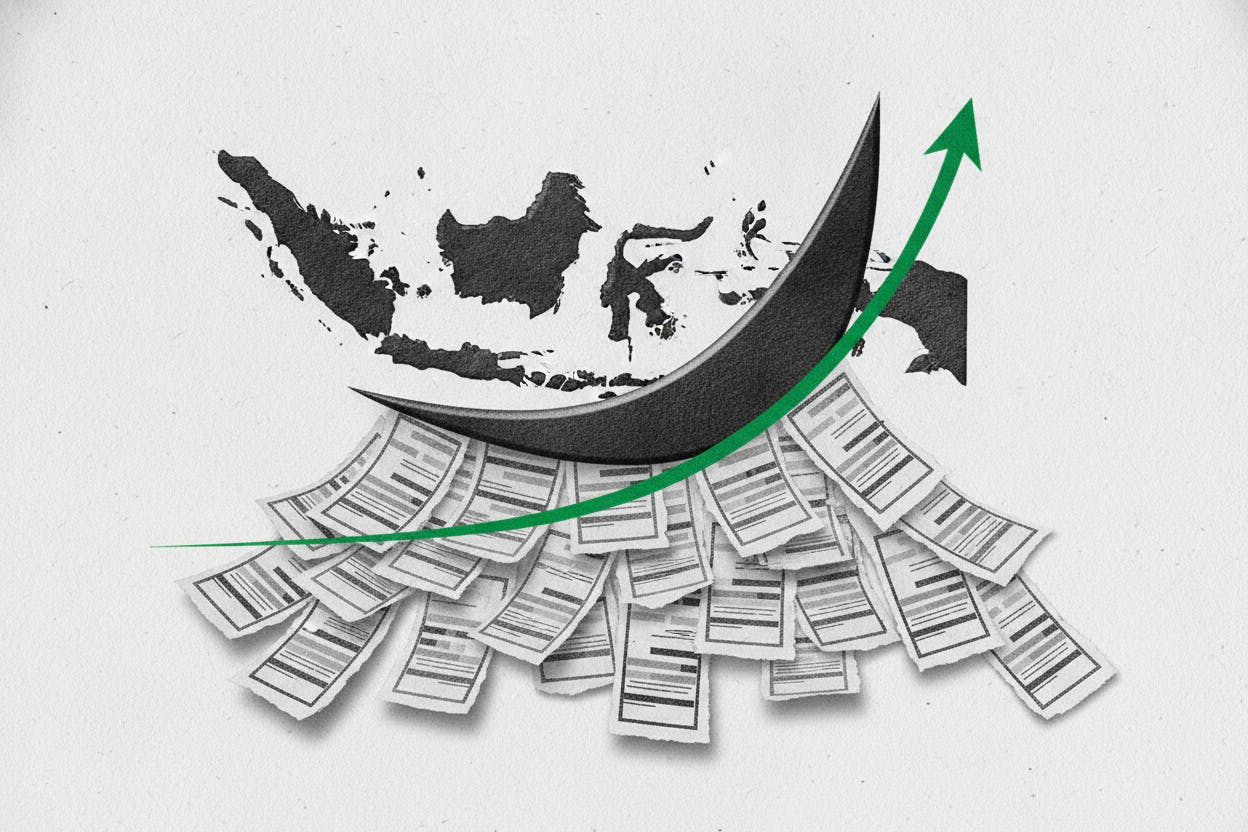
Indonesia's Islamic finance market has reached a new milestone, with total assets now exceeding $200 billion, according to Fitch Ratings. The credit ratings agency expects the sector to keep growing into 2027, as Islamic finance moves from a niche offering to a core part of the country's financial system.
What the Numbers Show
Fitch's data reveals that sukuk—Islamic bonds that comply with Sharia law by avoiding interest payments—made up 33% of Indonesia's total debt issuance in the first five months of 2026. Outstanding sukuk grew by 13% over the same period, compared to just 6.3% growth for conventional bonds. That gap highlights how quickly Islamic debt instruments are gaining ground.
On the banking side, Islamic lenders' assets surpassed 1 quadrillion rupiah (roughly $64 billion) by the end of the first quarter. That represents about 8% of total system financing in Indonesia, a share that Fitch sees as having significant room to expand in a country where over 87% of the population is Muslim.
Why This Matters for Investors
For everyday investors, the growth of Islamic finance in Indonesia signals a broadening of the country's capital markets. Sukuk offer an alternative to conventional bonds, often with similar risk-return profiles but structured differently to comply with religious principles. Instead of paying interest, sukuk represent ownership in an underlying asset or project, with returns tied to its performance.
This expansion also reflects Indonesia's efforts to deepen its financial markets and attract a wider pool of investors, including those from the Middle East and other Muslim-majority countries. As the market grows, liquidity and transparency tend to improve, which can benefit all participants.
Indonesia's fiscal credibility has been a key factor in supporting this growth. The government has consistently issued sukuk as part of its debt management strategy, and the instruments have become a staple for both domestic and foreign investors. For context, Indonesia's broader bond market has also seen increased foreign interest, as highlighted in recent analyses of Asia's big investors stress-testing AI costs, private credit risks, and Indonesia's fiscal credibility.
What's Driving the Growth
Several factors are fueling the expansion. First, Indonesia's young and growing population is increasingly seeking financial products that align with their religious beliefs. Islamic banks and sukuk issuers have responded by offering more competitive and accessible products.
Second, the government has actively promoted Islamic finance as a way to diversify funding sources and reduce reliance on conventional debt. This includes regulatory support, tax incentives for sukuk issuance, and the development of a Sharia-compliant interbank market.
Third, global demand for Sharia-compliant assets has risen, particularly from institutional investors in the Gulf and Southeast Asia. Indonesia's sukuk have benefited from this trend, as they offer relatively high yields compared to similar instruments in other markets.
What It Means for Your Portfolio
For investors with exposure to Indonesian bonds or banking stocks, the growth of Islamic finance is a positive sign. It suggests a more resilient and diversified financial system, which can help cushion against shocks. However, it's important to remember that Islamic finance is still a relatively small part of the overall market, and conventional instruments remain dominant.
If you're considering investing in sukuk, note that they are not risk-free. Like conventional bonds, they are subject to credit risk, interest rate sensitivity, and market volatility. The key difference is the structure: sukuk holders have a claim on underlying assets, which can provide some protection in case of default, but the specifics vary by issuance.
For those invested in Indonesian equities, the growth of Islamic banking could benefit lenders that have strong Sharia-compliant divisions. However, the overall impact on the stock market is likely to be gradual, as Islamic finance accounts for a single-digit percentage of total banking assets.
Looking Ahead
Fitch's outlook suggests that Indonesia's Islamic finance market will continue to expand, driven by demographic trends, government support, and rising global demand. The agency expects sukuk issuance to remain robust, and Islamic banking assets to grow faster than conventional ones.
Investors should watch for any changes in regulation or fiscal policy that could affect the sector. Indonesia's fiscal credibility has been a cornerstone of its sukuk market, and any deterioration could slow growth. Conversely, further reforms could accelerate it.
For now, the $200 billion milestone is a clear signal that Islamic finance is no longer a sideshow in Indonesia—it's a central part of the country's financial future.