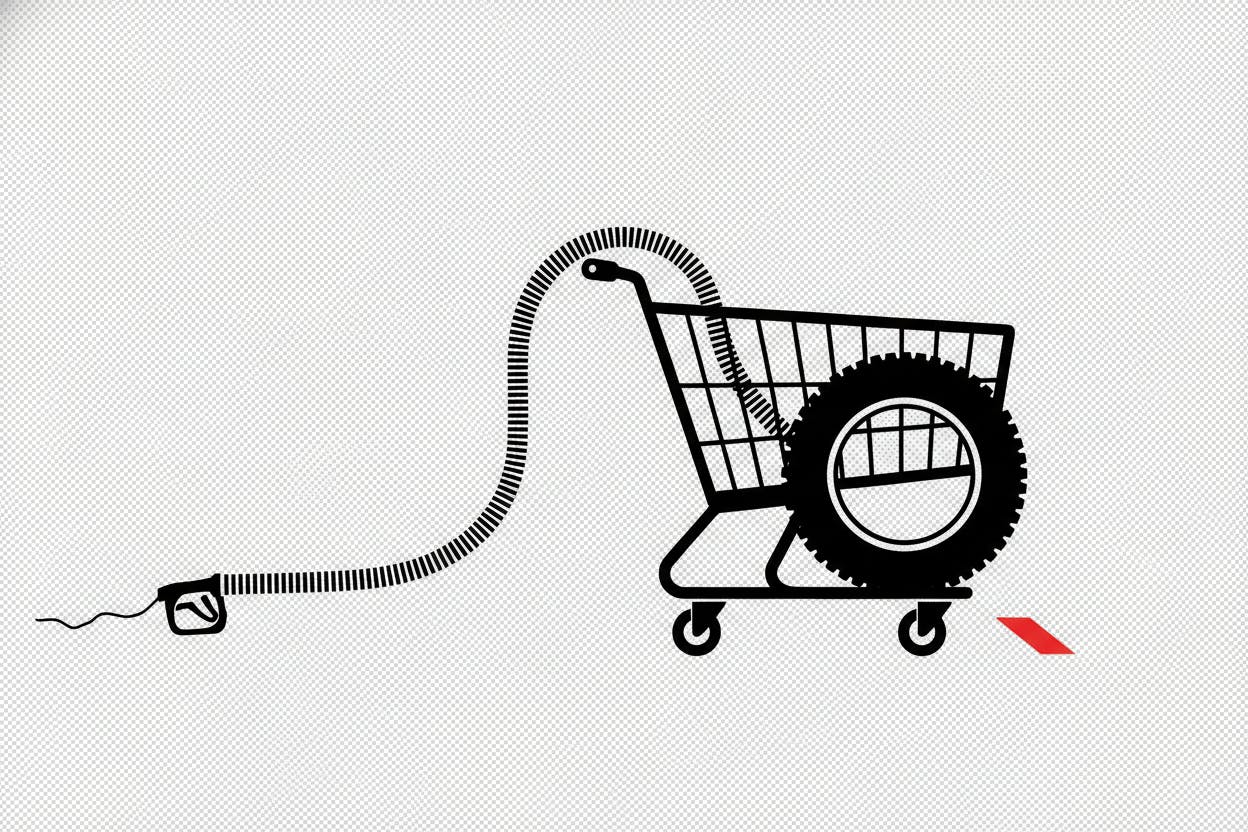
American shoppers pulled back in July, with retail sales falling 0.6% from the previous month, according to data released Friday. That was a sharp miss compared with economists' expectations of a 0.1% gain, and it adds to a growing picture of a consumer who is feeling the strain of higher prices and borrowing costs.
Separately, the University of Michigan's consumer sentiment index for August slipped to 51.0, down from the prior reading. That's a level that historically signals a fairly gloomy outlook among households, and it reinforces the message from the retail sales report: the engine of the U.S. economy is sputtering.
What's behind the slowdown?
Retail sales are a key gauge of consumer spending, which accounts for roughly two-thirds of U.S. economic activity. When shoppers cut back, it can ripple through the broader economy, affecting everything from corporate profits to hiring decisions.
The 0.6% decline in July was broad-based, though the report didn't specify which categories led the drop. Economists often look at the so-called control group, which strips out volatile items like autos and gas, to get a cleaner read on underlying demand. But the headline miss alone was enough to catch the market's attention.
Why are consumers pulling back? Several forces are at play. Inflation, while cooling from its peaks, is still running above the Federal Reserve's 2% target, and prices for everyday goods remain elevated. At the same time, the Fed's aggressive interest rate hikes over the past couple of years have made borrowing more expensive, hitting everything from credit card balances to car loans and mortgages.
The drop in consumer sentiment to 51.0 suggests households are feeling the pinch. That index, which measures how Americans view their current financial situation and the economy ahead, has been volatile in recent months, but a reading below 60 is generally seen as a sign of significant pessimism.
What it means for the Fed and markets
The soft retail sales figure could have a direct impact on the Federal Reserve's next move. Central bank officials have been wrestling with how much longer to keep interest rates at their highest level in over two decades. A weakening consumer gives the Fed more reason to consider cutting rates sooner rather than later, as the risk of overtightening and tipping the economy into recession grows.
For investors, the data is a double-edged sword. On one hand, weaker consumer spending could boost the case for rate cuts, which tend to be positive for stock valuations. On the other hand, it raises concerns about corporate earnings, especially for retailers and consumer-facing companies that rely on strong demand.
Bond markets have already been pricing in a higher chance of a rate cut at the Fed's next meeting, and the retail sales miss is likely to reinforce those expectations. Lower interest rates could also weigh on the U.S. dollar, which has been a factor in global markets.
What should everyday investors watch?
For the average investor, this report is a reminder that the economy is slowing, and that can translate into more volatility in the stock market. It's not a signal to panic, but it does suggest that being diversified and keeping an eye on your risk tolerance is wise.
Retailers and consumer discretionary stocks are likely to be in focus in the coming weeks as they report earnings. Companies that sell non-essential items, like clothing, electronics, and dining out, could see their shares react to any signs of weakening demand.
Also worth watching is how the Fed responds. If the central bank signals a pivot to rate cuts, that could provide a tailwind for stocks, particularly growth-oriented sectors like technology. However, if the economy slows too much, it could offset those benefits.
For a broader perspective on how consumer spending is shaping up, you can check our earlier coverage of the July retail sales report. And for a look at how other economies are faring, see our piece on Canada's wholesale sales and factory backlogs.
The bottom line
The combination of weaker retail sales and falling consumer sentiment paints a picture of an economy that is losing momentum. While the labor market has remained resilient, consumers are clearly becoming more cautious, and that could have implications for the broader economic outlook.
For investors, the key takeaway is to stay informed and avoid making impulsive decisions based on any single data point. The market will be watching upcoming inflation reports and Fed commentary for clues about the path ahead. As always, a well-diversified portfolio that matches your long-term goals is the best defense against uncertainty.