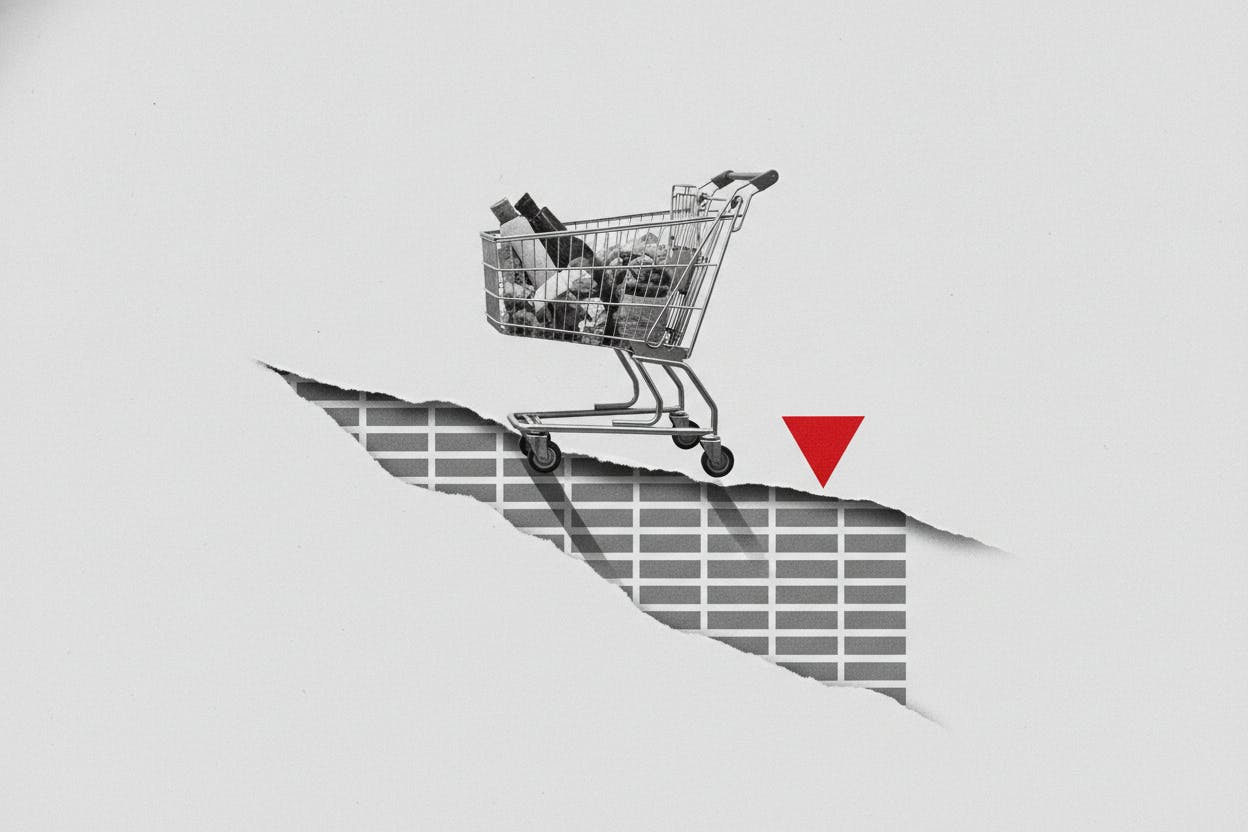
American shoppers tapped the brakes in July, with retail sales falling 0.6% from the previous month, according to the Commerce Department. The decline was broad-based, and a key subset of the data that feeds directly into the government's gross domestic product (GDP) calculation also slipped, offering an early hint that consumer spending on goods may be cooling as the third quarter progresses.
The so-called "control group" — which excludes volatile categories like autos, gasoline, and building materials — fell 0.5% in July. That measure is closely watched by economists because it feeds directly into the GDP report's goods-spending component. A drop there suggests that the consumer, long the engine of U.S. economic growth, is becoming more cautious.
What's in the retail sales report?
The monthly retail sales report is a snapshot of how much consumers spent at stores, online, and at restaurants and bars. It covers everything from new cars and furniture to groceries and electronics. Because consumer spending accounts for roughly two-thirds of U.S. economic activity, the report is one of the most closely followed indicators on the economic calendar.
July's pullback looked broad. Even after stripping out autos, sales still fell 0.3%. Declines in nonstore retailers — the category that includes online shopping — and electronics stores outweighed gains in clothing and restaurants. That mix suggests the slowdown wasn't just a one-off dip in car purchases but a more general softening in demand for goods.
It's worth noting that the report is not adjusted for inflation, so part of the decline could reflect lower prices rather than just fewer items sold. Still, the control group's drop is a signal that real spending on goods may be losing momentum.
Why the control group matters
Economists pay special attention to the control group because it is the component of retail sales that flows directly into the GDP calculation. When that number falls, it often foreshadows a weaker contribution from consumer goods spending in the quarterly growth report.
The July data arrives as the U.S. economy has been showing signs of resilience, with a strong labor market and steady wage growth supporting household budgets. But higher interest rates, elevated prices for many everyday items, and the gradual depletion of pandemic-era savings have been squeezing some consumers. Retailers have also noted that shoppers are becoming more selective, trading down to cheaper brands or delaying big-ticket purchases.
This isn't the first sign of softening. Recent earnings reports from major retailers have highlighted cautious consumer behavior, and other data points, such as Canada's wholesale sales and factory sales, have shown mixed signals across the broader economy. While those are from north of the border, they underscore the global nature of the current demand environment.
What it means for investors
For everyday investors, the retail sales report is a window into the health of the consumer, and by extension, the broader economy. A sustained pullback in spending could translate into softer corporate earnings for retailers and consumer goods companies, and it could also influence the Federal Reserve's thinking on interest rates.
The Fed has been trying to cool inflation by keeping borrowing costs high, and slower consumer spending is part of that intended effect. But if spending falls too sharply, it could raise concerns about an economic slowdown or even a recession. Investors will be watching upcoming data — including inflation readings and the next jobs report — for clues about whether this is a temporary blip or the start of a more pronounced slowdown.
For now, the July retail sales report is a yellow flag, not a red one. The decline is modest, and the labor market remains solid, which should continue to support household incomes. But it's a reminder that the consumer, who has been remarkably resilient through the post-pandemic period, is not immune to the pressures of high interest rates and accumulated debt.
As always, it's wise for investors to keep a diversified portfolio and avoid making drastic moves based on a single month's data. The trend over the coming months will be more telling than any one report.