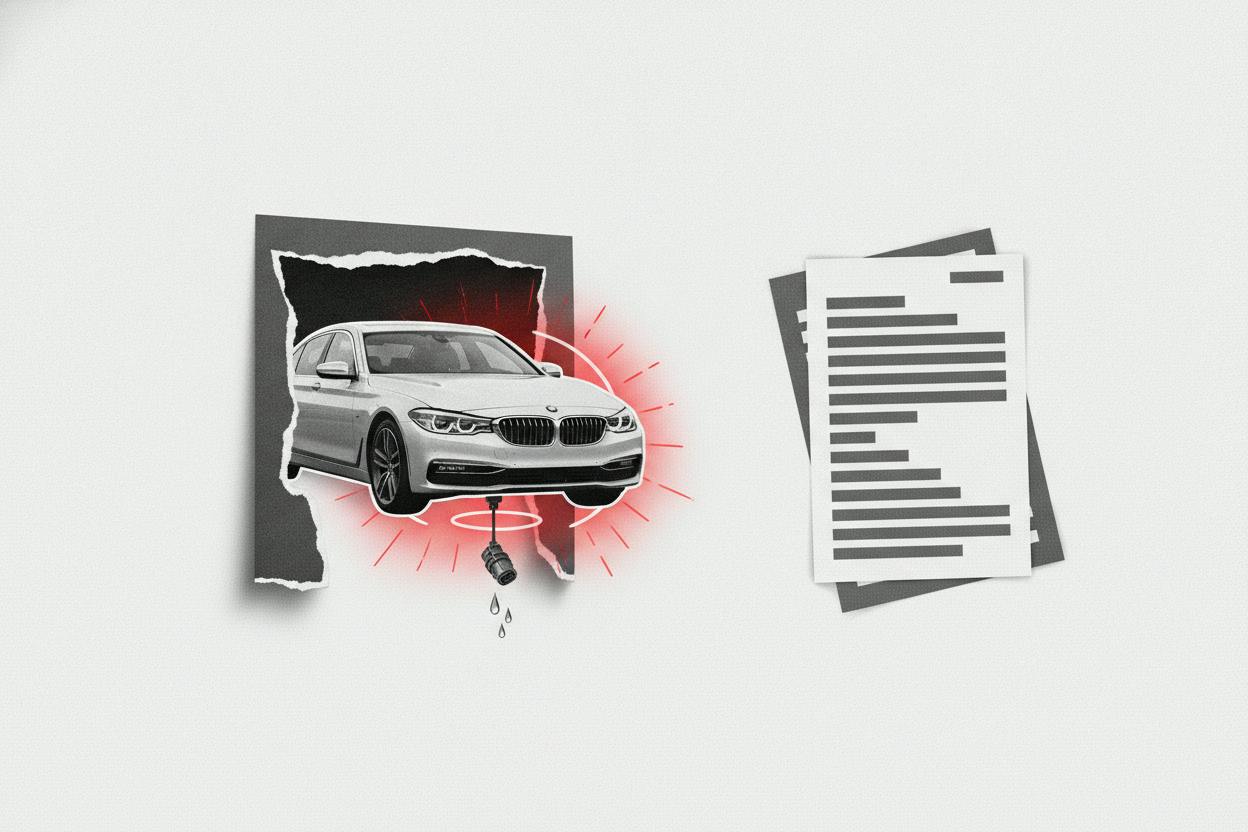
BMW is recalling more than 720,000 vehicles in the United States after federal regulators flagged a potential fire risk tied to an electrical connector that can be exposed to water. The company says a permanent fix is not yet available, leaving owners in a holding pattern that could stretch for months.
What the recall covers
The National Highway Traffic Safety Administration (NHTSA), the US auto-safety regulator, says the recall spans 14 BMW models from the 2012 through 2016 model years. The problem centers on an electrical connector that may not be properly sealed. If water gets in, it can trigger a short circuit and cause localized overheating. NHTSA has cited 10 incidents in the US, with no reported injuries.
BMW told MT Newswires, a financial news service, that the connection can deteriorate over time and that a remedy “is not yet available.” That means owners are being advised to park their vehicles outside and away from structures until a fix is developed and deployed.
Why this recall is messier than usual
Recalls are often straightforward: a faulty part is swapped out, and the problem is resolved. This one is different for two reasons.
First, the lack of a ready remedy means the timeline is uncertain. BMW will need to design a repair, source parts, and coordinate with dealers before any appointments can be scheduled. In the meantime, the company is likely to issue temporary guidance—like the “park outside” instruction—which can be disruptive for owners and costly for BMW in terms of customer support and logistics.
Second, NHTSA noted that some of these vehicles were already brought in under a similar 2024 recall related to the water pump. That means some owners may need to return to the dealer a second time once the new fix is finalized. Repeat repairs add to the complexity and can strain dealer capacity, especially if many vehicles come in around the same time.
What it means for BMW's bottom line
For investors, the size of this recall is the headline number, but the real cost driver is the uncertainty. Recalls can be relatively cheap when there’s a simple part swap and enough inventory on hand. But when there’s no remedy yet, costs tend to spread out over several quarters: owner outreach, temporary guidance, then a wave of appointments that tests dealer capacity.
That pattern matters for BMW’s near-term warranty and recall expenses in the US. The repeat-repair wrinkle—some cars may return even after a prior recall visit—increases the odds that labor hours, parts logistics, and customer-support costs linger for several quarters instead of being booked and cleared quickly.
BMW is not the only automaker dealing with recall-related headaches. US regulators are also probing Honda over stop-start system failures in about a million vehicles, a reminder that safety issues can hit any manufacturer and carry both reputational and financial consequences.
What investors should watch
For everyday investors, the key takeaway is that recalls are a normal part of the auto industry, but their financial impact can vary widely. A recall with a quick fix and ample parts is often a minor blip. A recall with no remedy and the potential for repeat visits is a different story—it can drag on for quarters and eat into margins.
Investors should watch for updates from BMW on when a fix will be available and how many vehicles actually come in for repairs. They should also keep an eye on the company’s quarterly earnings reports for any mention of increased warranty provisions or recall-related costs. The longer the fix takes, the higher the eventual bill is likely to be.
For owners of the affected vehicles, the advice is straightforward: follow NHTSA’s guidance and park outside until the repair is ready. For investors, this is a reminder that even well-established automakers can face unexpected costs that ripple through their financial statements.
As the situation develops, expect more details on the repair timeline and the total cost. Until then, the “park outside” instruction is a clear signal that this recall is far from over.