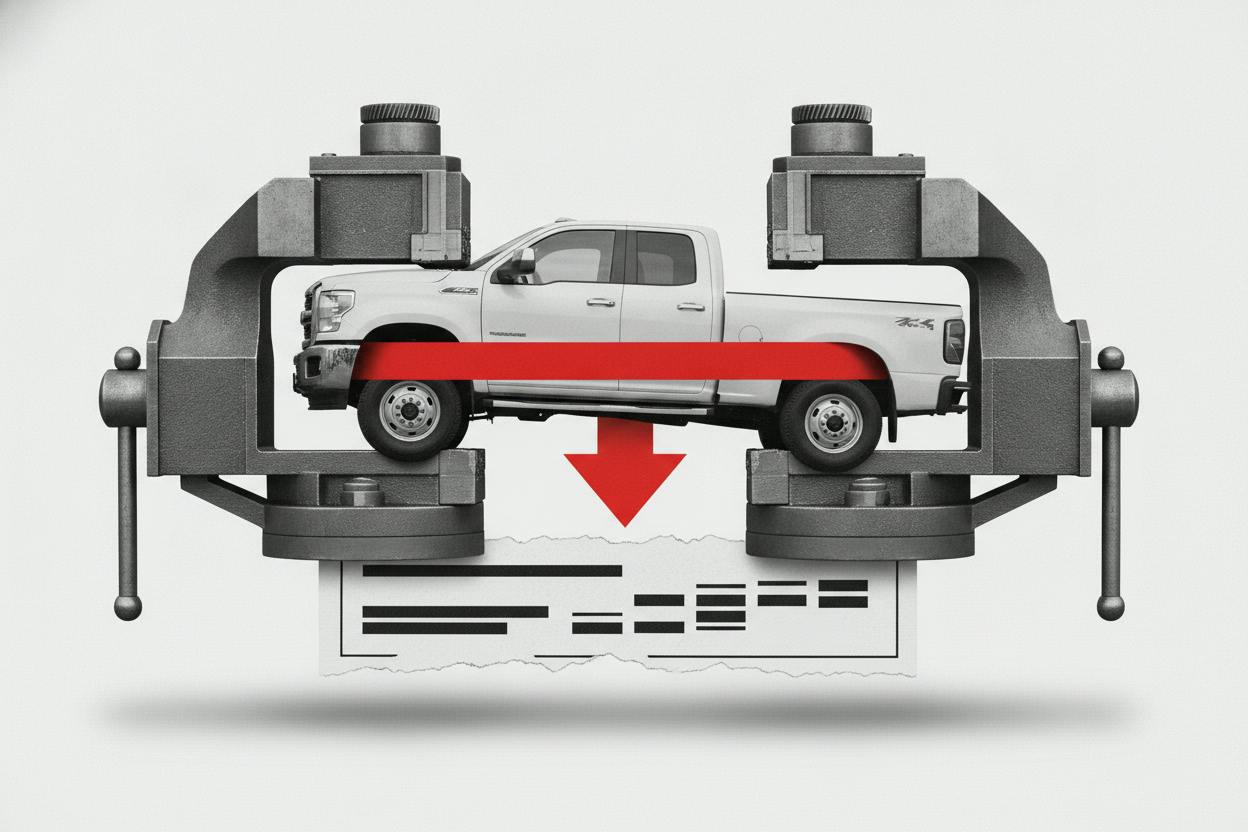
Bank of America has slashed its price target on auto-parts supplier Dauch to $5 from $10, warning that a slowdown in Ram heavy-duty truck production and rising costs are set to weigh on the company's earnings. The bank also flagged $15 million to $25 million of pressure on third-quarter EBITDA — a closely watched measure of operating profit before interest, taxes, depreciation and amortization.
The call is a notable downgrade in expectations for a company whose fortunes are closely tied to the health of North American truck manufacturing. When a major customer like Ram dials back production of its heavy-duty pickups, the suppliers that feed those assembly lines feel it almost immediately through lower order volumes and less efficient use of their factories.
Why Ram production matters so much
Dauch, formerly known as American Axle & Manufacturing, is a Detroit-based supplier of driveline and metal-forming components for light trucks, commercial vehicles and passenger cars. Heavy-duty pickups are among the most profitable vehicles an automaker sells, and the parts that go into them tend to carry higher margins than components for smaller cars. That makes exposure to a single truck platform a double-edged sword: it can drive strong profits when volumes are high, but it leaves suppliers exposed when production schedules are cut.
Ram is the truck brand of Stellantis, the automaker formed from the merger of Fiat Chrysler and France's PSA Group. Heavy-duty versions of the Ram pickup compete directly with offerings from Ford and General Motors, and all three have been navigating a market where higher interest rates have made financing a new truck more expensive for buyers. When demand cools or inventories build up, automakers typically respond by slowing assembly lines — and that decision ripples straight down to suppliers.
Bank of America's note points to exactly that dynamic, alongside cost inflation that is squeezing margins. Suppliers are still dealing with elevated input costs, wage pressure and the expense of retooling factories for newer vehicle programs. Those costs are harder to absorb when volumes are falling.
What it means for investors
For everyday investors, the Dauch downgrade is a reminder of how sensitive auto-parts stocks are to the production plans of a handful of large customers. Unlike a diversified industrial company, a supplier tied to one or two truck platforms has limited ability to offset a slowdown elsewhere. Analysts often describe this as customer concentration risk — and it can make earnings volatile from quarter to quarter.
The $15-25 million EBITDA hit flagged by Bank of America is the kind of figure that can meaningfully change a supplier's quarterly results, especially if the pressure persists beyond a single period. Investors will want to watch whether the production slowdown is temporary — a matter of inventory rebalancing — or the start of a longer downturn in heavy-duty truck demand. Automakers' monthly sales reports, dealer inventory levels and any updates to production schedules will be key signals.
It's also worth putting the move in a broader context. Analysts routinely adjust price targets when their earnings estimates change, and a cut from $10 to $5 signals that Bank of America now expects materially lower profits than it previously modelled. That doesn't necessarily mean the stock is headed to $5 — a price target is a projection, not a guarantee — but it does reflect a more cautious view of the company's near-term prospects.
The downgrade lands against a backdrop of mixed signals for the industrial economy. Consumer spending has held up better than many economists expected, but higher borrowing costs are weighing on big-ticket purchases like trucks and equipment. Recent data on US retail sales showed resilience, though much of the strength came from gasoline prices rather than broad-based demand. For capital-intensive industries, the cost of financing remains a headwind.
Suppliers aren't the only ones feeling the pinch. Analyst notes across the auto and industrial space have grown more cautious, with firms trimming targets on companies exposed to cyclical demand. A recent RBC downgrade of General Dynamics followed a similar logic, citing a weaker outlook for one of its key business lines.
What to watch next
- Dauch's third-quarter results: The company's own guidance and management commentary will show whether the EBITDA pressure Bank of America expects actually materialises.
- Ram production schedules: Any further cuts or restarts at Stellantis truck plants will directly affect supplier order books.
- Input costs: Steel, labour and freight expenses remain a swing factor for margins across the parts industry.
- Interest rates: Cheaper financing would help truck buyers and, by extension, the entire supply chain.
For now, the message from Bank of America is one of caution. Dauch's earnings are likely to face a tougher stretch as its biggest truck customer slows down and costs stay elevated. Investors holding auto-parts names should pay close attention to production data and management guidance in the coming weeks, because in this part of the market, the health of a single assembly line can move a stock.