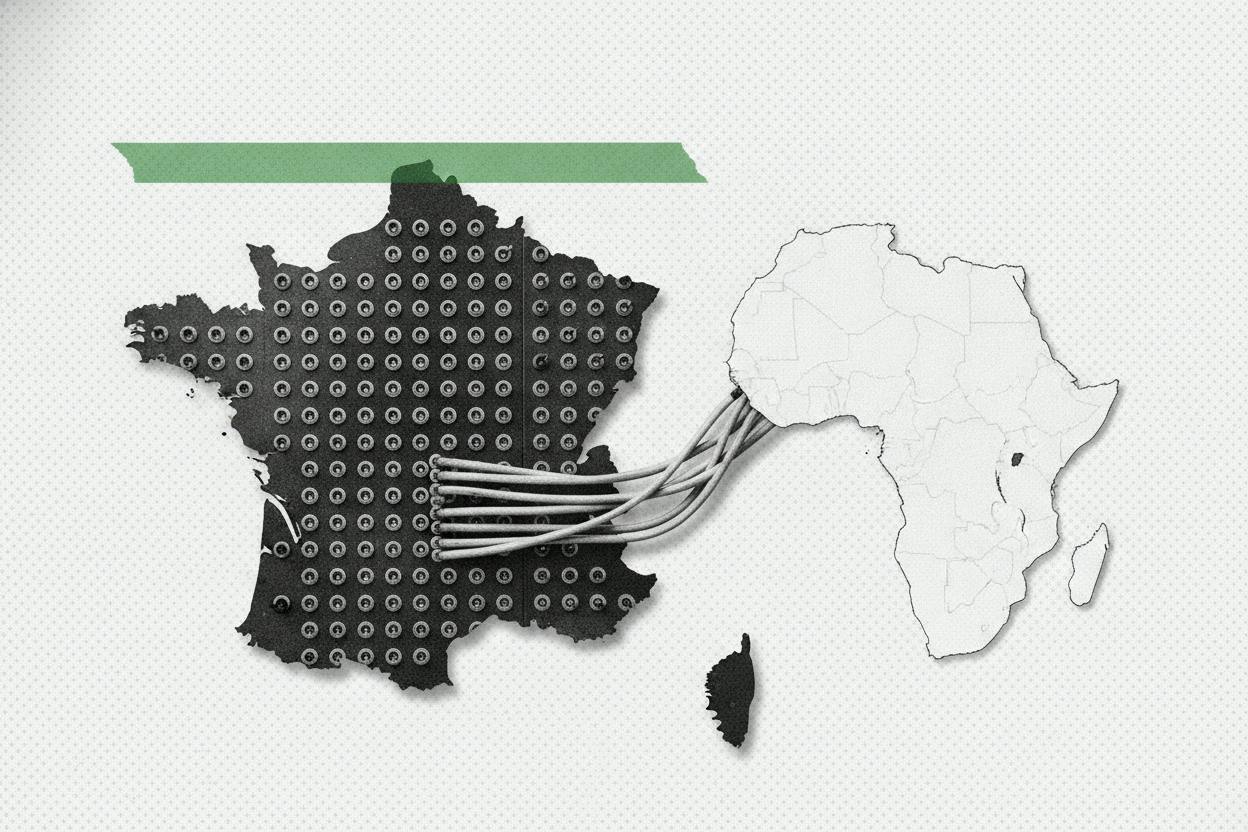
Bank of America believes French telecom giant Orange could raise its 2026 financial outlook when it reports third-quarter results on October 27. The bank's analysts point to a steadier competitive environment in France and continued strength in Africa and the Middle East as reasons the company might feel confident enough to upgrade its guidance.
What's behind the optimism?
Orange operates across Europe, Africa, and the Middle East, with its home market of France being its largest. For much of the past year, French mobile and broadband markets have been fiercely competitive, with aggressive discounting pressuring prices and margins. But Bank of America says that dynamic appears to be easing. Fewer bargain-basement mobile promotions are showing up, which could relieve some near-term pricing pressure. Management, however, has cautioned that the improvement could be fragile.
In Africa and the Middle East, Orange continues to see growth, driven by rising mobile data usage and expanding financial services. That momentum has helped offset a slow patch in the company's corporate division, Orange Business, which has been dealing with weaker demand for legacy telecom services.
Spain remains the biggest headache. The market has been hit hard by low-cost rival Digi, which has been undercutting incumbents on price. But Bank of America notes signs of improvement there too: lower customer switching and less aggressive discounting from Digi suggest the worst of the price war may be passing.
What the numbers say
For the third quarter, Bank of America expects Orange to report revenue of €12.16 billion and EBITDAaL (earnings before interest, taxes, depreciation, and amortization after leases) of €4.10 billion. The bank has already nudged up its 2026 estimates by 0.1% for revenue and 0.3% for EBITDAaL, reflecting the slightly more favorable outlook.
In telecoms, changes to earnings often matter more than changes to revenue. That's because many costs—networks, staffing, maintenance—don't move much quarter to quarter. So even a small improvement in pricing or customer mix can lift profit disproportionately. This is the basic idea behind operating leverage, and it's why analysts tend to focus on EBITDAaL when valuing telecom companies.
If Orange signals higher 2026 EBITDAaL, analysts typically feed that straight into higher future cash generation, then into valuation models that often compare enterprise value (the company's value including debt) with EBITDA. The immediate market reaction, then, is less about the quarter itself and more about how quickly expectations for 2026 EBITDAaL reset—and whether that makes targets like Bank of America's €19.2 price objective look easier to justify.
What it means for investors
For everyday investors, the key takeaway is that a guidance upgrade would be a positive signal for Orange's profitability, not just its sales. In a sector where revenue growth is often modest, profit improvements can have an outsized effect on the stock price.
That said, the bank's view is just one analyst's opinion, and the company itself has warned that the competitive improvement in France could be fragile. Investors should watch the October 27 report for management's own language on pricing, competition, and the outlook for 2026.
Orange's situation also fits into a broader theme: European telecoms have been under pressure from intense competition and high investment needs, but some are starting to see relief. If Orange does raise its outlook, it could be a sign that the sector's worst days are behind it—at least in some markets.
For those holding Orange shares or considering them, the October 27 results will be a key moment. A guidance upgrade could provide a catalyst, but the fragility of the French market means surprises are possible. As always, it's wise to consider how this fits into your overall portfolio and risk tolerance.
Related reading: French and Benelux firms hold 2026 targets and Bank of America's recent profit dip.