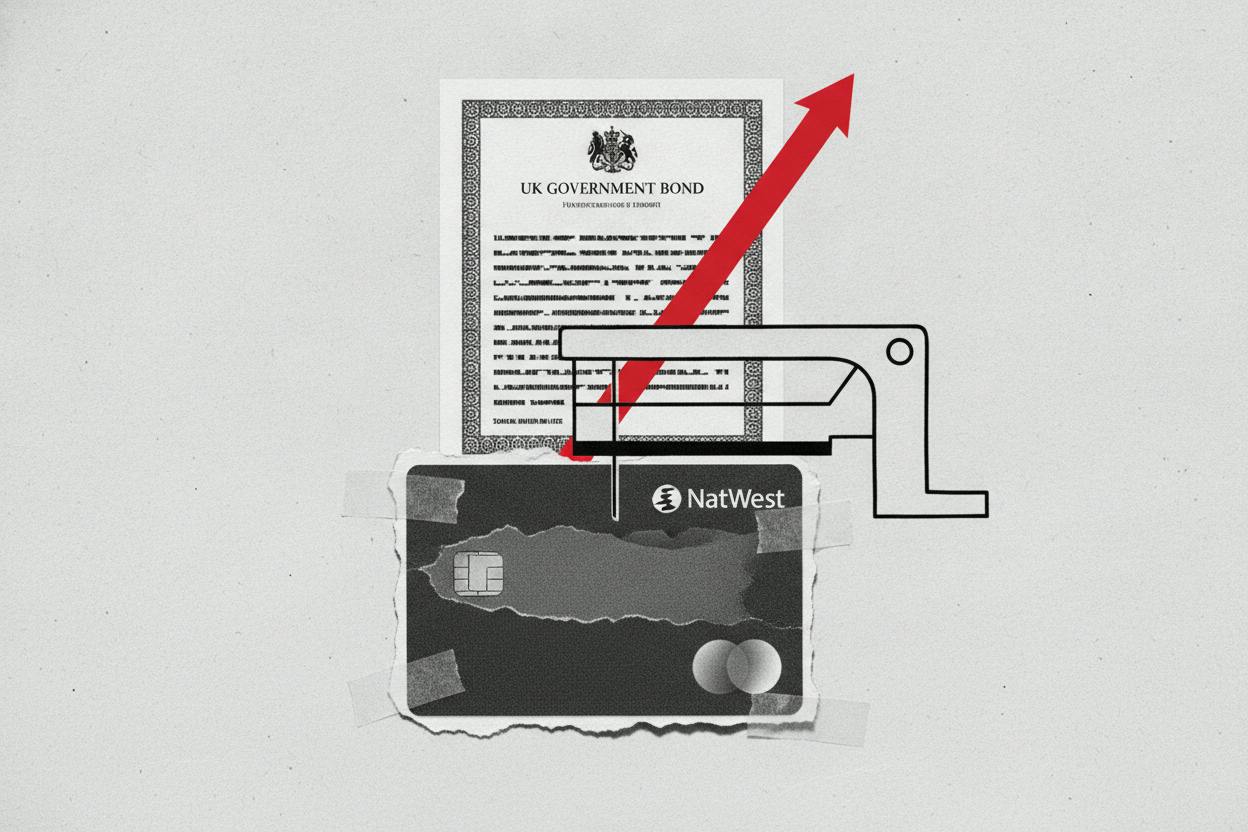
Bank of America has lowered its price target for UK lender NatWest to £8 from £8.50, a modest cut that arrives even as the bank described NatWest's third-quarter update as solid. The adjustment reflects a shift in the financial math behind bank valuations rather than any deterioration in the underlying business.
In a note to clients, BofA analysts said the main driver was a higher cost of equity — the return investors demand for holding the stock — which has been pushed up by rising UK risk-free rates, typically measured by government bond yields. When those yields climb, the discount rate used to value future earnings rises, which mechanically reduces what those earnings are worth today.
What the numbers show
NatWest's net interest income — the profit a bank earns from the difference between interest received on loans and interest paid on deposits — came in slightly below BofA's forecast. The miss was partly due to a model change; without that adjustment, the figure would have been roughly in line with expectations.
The brighter spot was lending momentum. Loans grew 2% during the quarter, including a 4% rise in the commercial book. Management continues to expect loan growth to do more of the heavy lifting for revenue in the coming quarters.
However, the bank also guided for a “broadly stable” net interest margin — the amount it earns per pound of lending — through 2027. That guidance reflects competitive pressures and customer behaviour that limit how much the bank can expand its margins, even in a higher-rate environment.
Why the target moved
Analysts typically value banks by projecting future dividends and earnings, then discounting those cash flows back to today's pounds. When UK government bond yields rise, the “risk-free” starting point for that discount rate goes up, which raises the cost of equity and lowers the present value of future profits.
That dynamic matters more for NatWest because of its flat margin outlook. With little scope for a margin-led earnings upgrade, there's less to offset the higher discount rate. So even with steady loan growth and a solid quarter, the valuation math can push price targets down.
BofA's cut is a reminder that bank share prices are sensitive to interest rate expectations, not just to how well the bank is performing. For everyday investors, it underscores why a company can report decent results and still see its analyst price target trimmed.
What it means for investors
For those holding NatWest shares or considering them, the key takeaway is that the bank's earnings power is expected to remain steady rather than accelerate. That makes the stock more vulnerable to moves in bond yields, which can shift valuations without any change in the bank's own outlook.
The broader context is that UK banks have benefited from higher interest rates over the past couple of years, but that tailwind is fading as competition for deposits and customer switching pressure margins. NatWest's guidance suggests the era of easy margin expansion is over, and future growth will need to come from lending volumes and other revenue streams.
Investors should also note that a price target is not a forecast of where the stock will go, but rather a reflection of what an analyst thinks it's worth based on their assumptions. A cut of 50 pence is relatively small and doesn't signal a fundamental problem with the bank.
Still, the move highlights how interconnected bank valuations are with the broader interest rate environment. As UK government bond yields fluctuate, so too will the models that analysts use to set their targets.
For now, NatWest's underlying business appears on a steady course, with loan growth providing some offset to margin pressure. But the higher cost of equity means the bar for future earnings upgrades is higher, and that's something investors will be watching closely in the coming quarters.