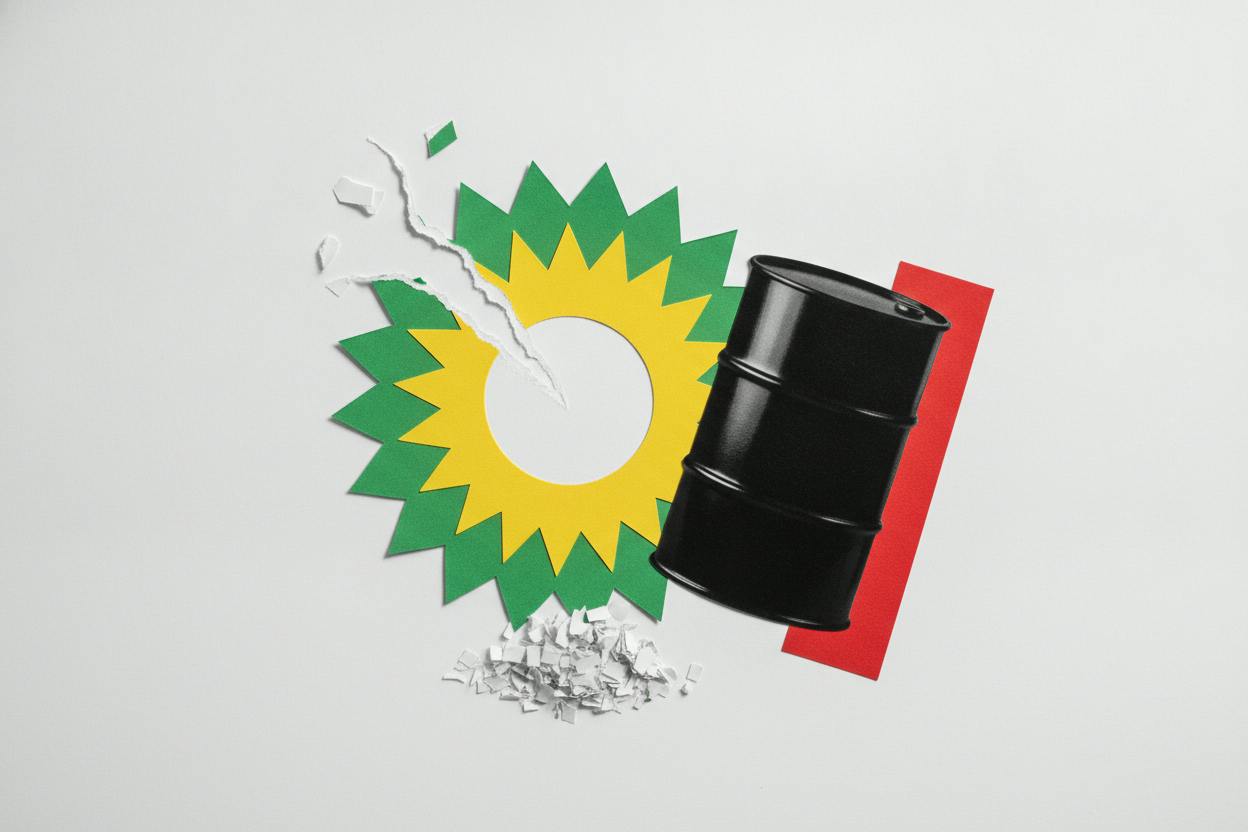
BP has warned that it will take another multi-billion-dollar hit on the value of some of its assets, this time in the third quarter. The oil major said it expects impairments of $3 billion to $4.5 billion, mostly related to its gas and low-carbon energy business. The news comes even as its more traditional profit engines—refining and gas trading—are showing signs of a stronger quarter.
What is an impairment?
An impairment is an accounting write-down. It happens when a company decides that an asset on its balance sheet is worth less than the value it originally recorded. In BP's case, the company is lowering the book value of certain projects because it now expects them to generate less cash in the future than previously assumed. This is a non-cash charge, meaning it doesn't directly reduce the company's cash flow, but it does reduce reported profits and can signal a change in outlook.
This is not the first time BP has taken such a hit. In January, the company flagged $4 billion to $5 billion of impairments, also largely tied to its lower-carbon ambitions. The fact that this is the second big write-down in a year suggests that some of BP's investments in renewables and other low-carbon projects are not performing as well as originally hoped. The company has not provided much detail this time about which specific assets are being written down.
Stronger traditional business
While the write-down grabs headlines, the rest of BP's business appears to be having a better quarter. The company's refining indicator margin—a key measure of how much money it makes from turning crude oil into products like gasoline and diesel—rose to $46.7 per barrel in the third quarter, up from $29.6 in the second quarter. That is a significant jump and reflects stronger refining economics.
BP also said it expects to realize $1.9 billion to $2.1 billion from refining margins in the quarter, though it has tweaked how it calculates that metric in recent years, which makes comparisons a bit tricky. In addition, the company said its gas marketing and trading result should be “significantly higher” than last quarter, a sign that volatile natural gas markets are providing opportunities for traders.
Upstream production guidance remained roughly steady, meaning the company's oil and gas output is on track. Taken together, the third quarter looks like a tug-of-war between strong near-term cash generation from the traditional business and a reset in expectations for parts of BP's lower-carbon strategy.
What it means for investors
For investors, the write-down is less about the third quarter itself and more about what it says about the future. Write-downs are often largely non-cash, so they don't directly threaten BP's ability to fund dividends, buybacks, or capital spending this year. But repeated impairments can change how the market values the company.
When a company takes a write-down, it is admitting that previous return assumptions were too optimistic. That can lead analysts to trim their long-term earnings forecasts, which in turn can lower the price-to-earnings multiple investors are willing to pay. Even a big jump in refining margins may not be enough to offset that negative sentiment.
BP's shares are part of the FTSE 100, and the write-down could weigh on the index's performance, as seen in recent trading. The broader market context also matters: with traders waiting on US inflation data and currency moves, energy stocks are just one piece of a complex puzzle.
For everyday investors, the key takeaway is that BP is still generating strong cash from its oil and gas operations, but its push into low-carbon energy is proving more expensive and less profitable than initially hoped. This is a common challenge for oil majors as they try to balance the energy transition with shareholder returns.
Investors will be watching BP's full third-quarter results, due in the coming weeks, for more details on the impairments and on how the stronger refining and trading performance translates into profits. The company's ability to maintain its dividend and buyback program will also be a focus, as those are key reasons many investors hold the stock.
In the meantime, the write-down serves as a reminder that the energy transition is not a smooth path. Companies like BP are making big bets on low-carbon projects, but the returns are uncertain. For investors, that means volatility in earnings and in the stock price is likely to continue.