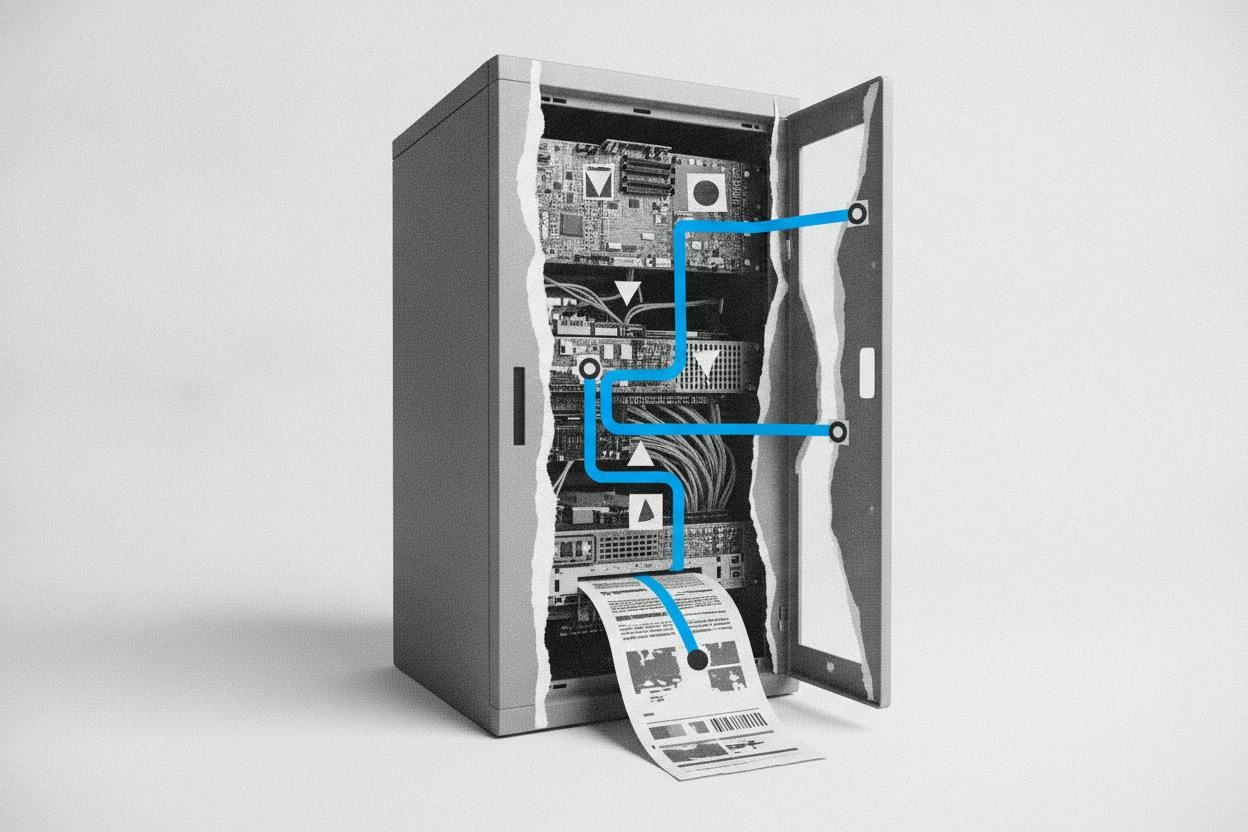
DXC Technology, a provider of IT services to large enterprises, announced a partnership with LangChain to embed AI agents into its Oasis platform. The move aims to automate how companies detect and fix IT problems, potentially reducing the time engineers spend on routine troubleshooting.
The partnership adds two LangChain tools — LangGraph and LangSmith — to Oasis, DXC's platform for automating IT operations. LangGraph helps build multi-step AI workflows, while LangSmith provides monitoring and debugging for those workflows. DXC says Oasis is scaling toward 125 customer environments and has already cut issue-resolution times by an average of 95% across more than 500 measured use cases. The company also claims its automated diagnoses match those of senior engineers at least as often.
Why IT operations is a target for AI agents
IT operations — often called ITOps — involves monitoring networks, servers, applications and cloud services for problems, then diagnosing and fixing them. It is a field full of repetitive, time-consuming tasks: checking logs, correlating alerts, restarting services and escalating issues. These tasks are well-suited to automation because they follow patterns and can be described in rules or workflows.
AI agents take automation a step further. Instead of following a fixed script, an agent can reason about a problem, decide which steps to take and execute them — all with some level of autonomy. In ITOps, that could mean an agent that notices a spike in error rates, traces it to a misconfigured load balancer, and either fixes it or prepares a detailed report for a human engineer.
LangChain is a well-known name in the AI developer community, offering frameworks that make it easier to build applications powered by large language models. Its LangGraph tool is designed for creating agent workflows that can loop, branch and involve multiple steps — exactly what complex IT troubleshooting requires. LangSmith, meanwhile, helps developers see what their agents are doing, which is critical when those agents are making changes to production systems.
The bigger picture: AI agents move into the enterprise
DXC's move is part of a broader trend of AI agents moving from experimental projects into core business operations. Microsoft has been pushing AI agents onto Windows PCs, not just its Azure cloud, while Nvidia has released tools aimed at keeping agents from going rogue. Startups like OpenAI are also building agents that can work alongside employees in tools like Slack and Teams.
For IT services companies like DXC, the appeal is clear. If AI can handle more of the routine work, DXC can potentially serve more customers without proportionally increasing headcount, improving margins. It also makes the company's offerings more competitive against rivals like Accenture, IBM and Infosys, which are all investing heavily in AI-driven services.
But there are risks. Enterprises are cautious about letting AI make changes to critical systems without human oversight. DXC says its approach keeps controls in place, but the company will need to prove that its agents are reliable and secure. Any high-profile failure could set back adoption.
What it means for investors
For investors, the DXC-LangChain partnership is a signal that AI is moving deeper into the boring but essential plumbing of corporate IT. Companies that can successfully automate IT operations may see better margins and stickier customer relationships, as clients become reliant on their platforms.
DXC itself has been in turnaround mode, and its ability to commercialise AI could be a key driver of its stock. The company's claim of a 95% reduction in resolution times, if validated by customers, would be a strong selling point. However, investors should watch for concrete evidence: customer adoption numbers, revenue growth in DXC's AI-related services, and whether the partnership translates into new contracts.
More broadly, the news underscores the growing importance of AI agents in the enterprise software landscape. Companies that provide the tools to build and manage these agents — like LangChain — are becoming strategic partners for traditional IT firms. As AI agents proliferate, expect more deals like this one, as well as increased scrutiny over their safety and reliability.
For everyday investors, the takeaway is that AI is not just a consumer story or a chip story. It is increasingly a services story, where the winners may be the companies that can use AI to deliver traditional services more efficiently. Keeping an eye on how DXC and its peers execute on these promises will be important, especially as the technology matures and competition heats up.