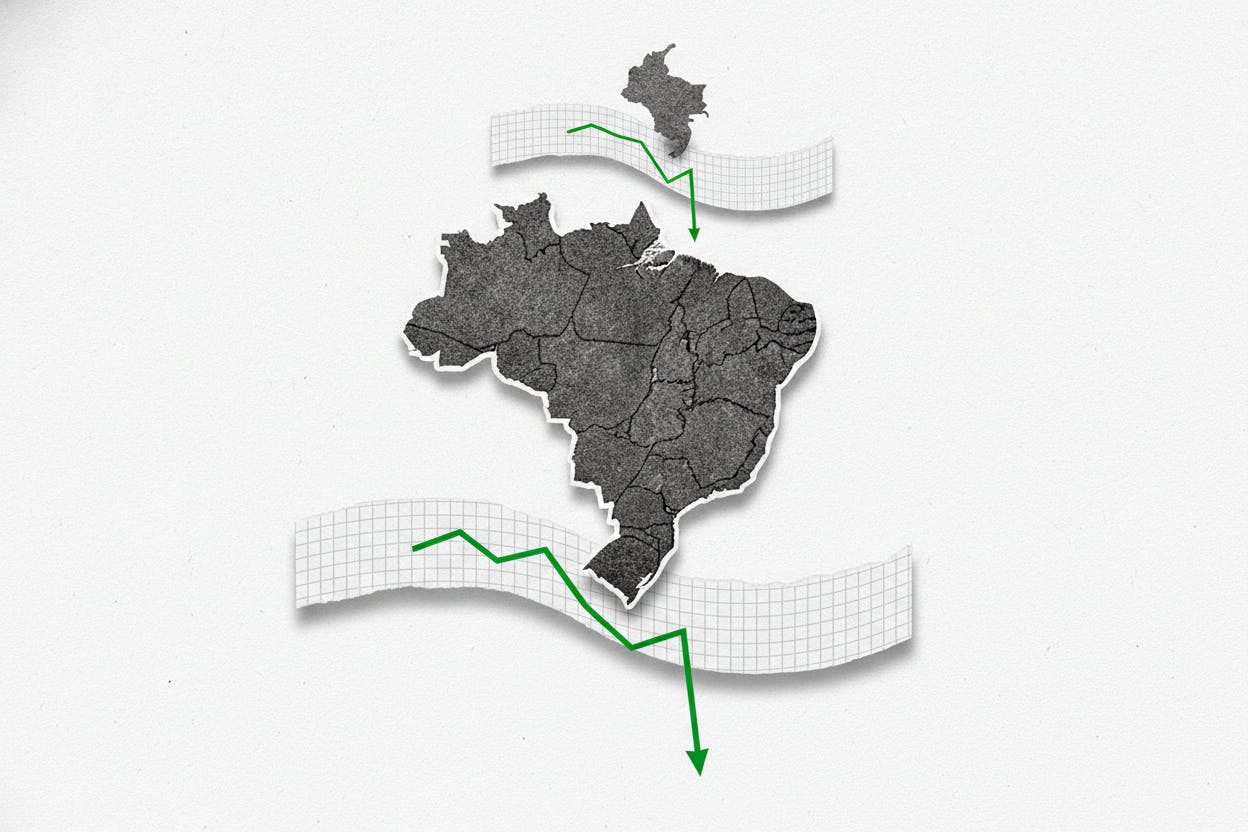
Latin American markets had a rough session on Tuesday, with Brazil doing most of the damage. The MSCI Latin America equities index fell 2.46%, while the region's currencies gauge slipped 0.65%. The main culprit was Brazil, where the Bovespa stock index dropped about 2.56% and the real weakened 1.03% to 5.1619 per US dollar—its lowest level in a month.
The sell-off came as investors refocused on two familiar worries: interest rates that are staying higher for longer, and political uncertainty ahead of elections. Brazil's central bank has been cutting rates, but inflation has proven stubborn, and the latest data showed consumer prices cooling to 4.44%—still above the official target. That has led policymakers to signal caution about further cuts, as the central bank's recent cut to 14% came with a warning that the path ahead is uncertain.
Why rates matter so much
Interest rates are the backbone of asset prices. When rates are high, bonds become more attractive relative to stocks, and borrowing costs for companies rise, which can squeeze profits. For Brazil, a country that has struggled with inflation for decades, the central bank's credibility is crucial. If investors believe the bank will keep rates high to fight inflation, they may be more willing to hold Brazilian assets. But if they think political pressure will force premature cuts, they demand a higher risk premium—which pushes down the currency and stock prices.
The two-year local bond yield rose, reflecting these concerns. Higher yields on government bonds can be a sign that investors want more compensation for holding Brazilian debt, often because they fear inflation or fiscal instability.
Election jitters add to the mix
Elections are always a source of uncertainty for markets, and Brazil is no exception. Investors worry about what a new government might mean for fiscal policy, state intervention in the economy, and the independence of the central bank. Even though the election is not imminent, the prospect of a change in leadership can make investors cautious, especially when combined with a tight monetary policy environment.
This is not the first time Brazil has faced such a combination. In the past, political turmoil has led to sharp currency depreciation and stock market drops. The current situation is a reminder that emerging markets are sensitive to both domestic politics and global interest rate trends.
Colombia stands out
While Brazil struggled, Colombia's COLCAP index touched a seven-week high. This divergence highlights that Latin American markets are not a monolith. Each country has its own drivers—Colombia's economy is heavily tied to oil and mining, and its central bank has been managing inflation differently. The COLCAP's rise could be due to positive local earnings, a weaker peso boosting exporters, or simply a rotation of funds away from Brazil.
For investors, this means that a single regional index can mask big differences. A diversified portfolio that includes multiple Latin American countries might be less volatile than one concentrated in Brazil alone.
What it means for investors
For everyday investors, the key takeaway is that emerging market assets carry extra risks—currency swings, political uncertainty, and sensitivity to global interest rates. When the US Federal Reserve keeps rates high, it tends to pull capital away from emerging markets, putting pressure on their currencies and stocks. Brazil's real is particularly vulnerable because of its large fiscal deficit and the central bank's balancing act.
If you hold Brazilian assets, either directly or through a fund, be prepared for volatility. The recent slide is a reminder that even after a period of rate cuts, the market can quickly reverse course if inflation or politics disappoint. On the other hand, for those looking to enter, a weaker real and lower stock prices could present opportunities—but only if you have a long-term horizon and a tolerance for risk.
As always, it's wise to stay diversified and not put all your eggs in one country's basket. The contrast between Brazil and Colombia shows that regional investing can offer some natural hedging, but it also requires careful attention to local conditions.
In the coming weeks, watch for any new inflation data from Brazil, as well as comments from central bank officials. Also keep an eye on the election calendar—any surprises could move markets sharply. For now, the mood is cautious, and that is likely to keep Brazilian assets under pressure.