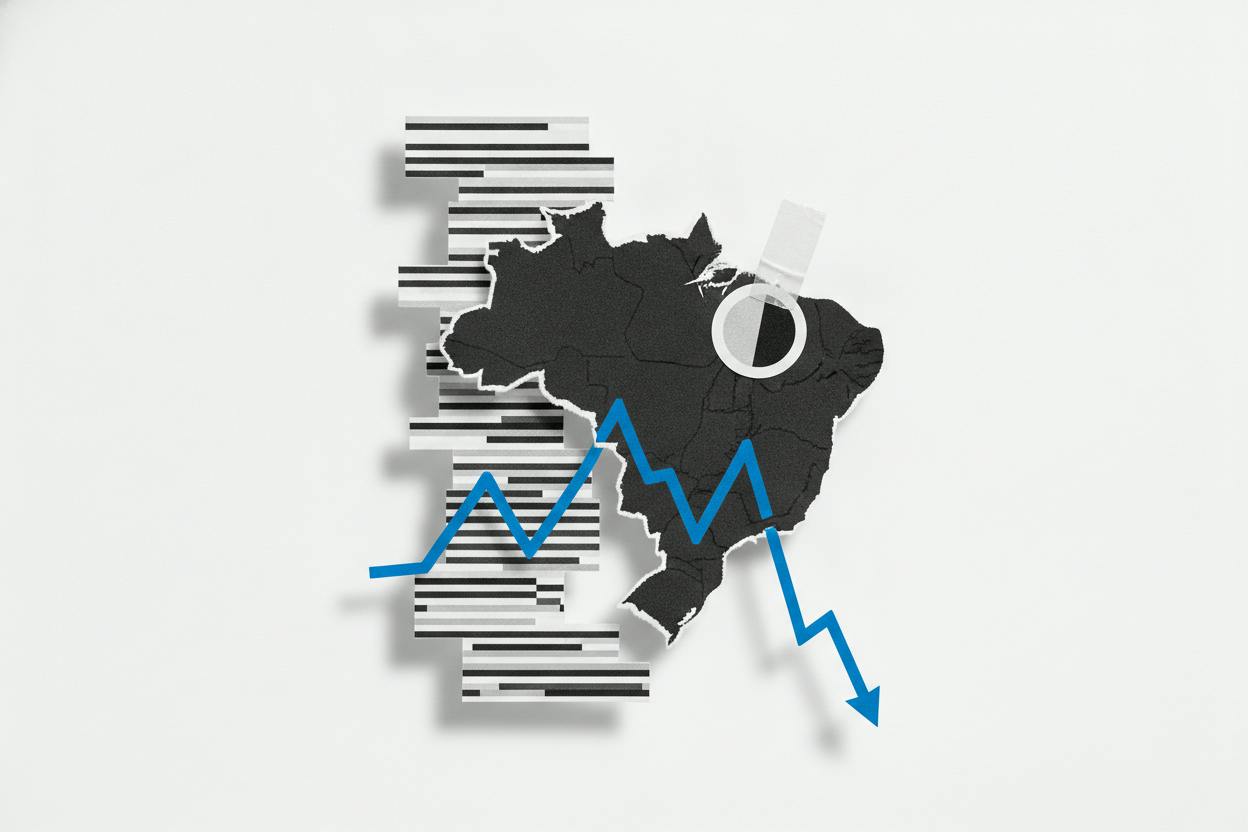
Latin American markets took a hit on Tuesday after a new poll indicated that Brazil's upcoming presidential runoff could be extremely close. The Brazilian real slid toward 5.01 per dollar, and the jitters quickly spread to regional stocks, underscoring how much the region's fortunes hinge on the outcome of the October 25 vote.
The poll, conducted by BTG Pactual and Nexus, showed Flavio Bolsonaro narrowly ahead of President Luiz Inacio Lula da Silva. But with a margin of error of two percentage points, the race is effectively a dead heat. That leaves traders on edge, bracing for headline swings as each new survey lands.
Why Brazil matters so much to Latin markets
Brazil is the heavyweight of Latin America's financial landscape. Its economy is the largest in the region, and its currency, stocks, and bond markets are the most liquid. When Brazil sneezes, the rest of Latin America tends to catch a cold.
That's because investors often treat the region as a single basket. Money flows into or out of Latin American assets based on the overall mood, and Brazil sets that mood. A turbulent election there can prompt investors to pull back from not just Brazilian assets, but also from neighboring markets like Mexico, Chile, and Colombia.
The current uncertainty is a classic example. The real's slide toward 5.01 per dollar reflects growing anxiety about what a Bolsonaro victory might mean for fiscal policy and economic management. Lula, a leftist former president, is seen as more likely to increase government spending, while Bolsonaro, the incumbent, has his own record of fiscal expansion. Neither outcome offers a clear, market-friendly path, which is why investors are nervous.
What the poll actually tells us
The BTG Pactual/Nexus poll is just one data point, but it carries weight because it's a respected survey. The fact that it shows Bolsonaro ahead—even narrowly—flips the narrative from recent weeks, when Lula was widely seen as the front-runner.
However, the two-point margin of error means the race could easily be tied, or even favor Lula. That's why the market reaction was muted rather than panicked. The real didn't crash; it just drifted weaker. Investors are waiting for more clarity, and they know that any new poll could shift sentiment in either direction.
This kind of volatility is typical in the run-up to a close election. Markets hate uncertainty, and a photo finish is the definition of uncertainty. Traders will be glued to every new survey, and any hint of a clear leader could trigger a sharp move in the real and regional equities.
What it means for investors
For everyday investors, the key takeaway is that Brazilian politics can have a ripple effect far beyond its borders. If you hold emerging market funds, Latin American ETFs, or even global stocks with exposure to the region, you should be prepared for some turbulence in the coming weeks.
The real's slide toward 5.01 per dollar is a reminder that currency risk is a real factor in international investing. A weaker real can erode returns for foreign investors, even if local asset prices hold up. It also makes Brazilian exports more competitive, but it can fuel inflation by raising the cost of imports.
Beyond Brazil, the broader emerging market landscape is already under pressure. A recent selloff in tech stocks has dragged the MSCI emerging markets index to a two-month low, and the dollar's moves remain a key driver for all risk assets. If the US dollar strengthens, it tends to weigh on emerging market currencies, including the real.
Investors should also keep an eye on the broader macro backdrop. The upcoming US inflation data could set the tone for global markets, and any surprise could amplify moves in Latin America. A hot inflation print might push the Federal Reserve to keep rates higher for longer, which would strengthen the dollar and put more pressure on emerging markets.
What to watch next
The immediate focus is on the October 25 runoff. Between now and then, expect a flood of polls, campaign events, and possibly debates. Each headline could move the real and regional stocks.
Also watch for any signs of market stress, such as widening credit spreads or a sharp drop in Brazilian equities. These would signal that investors are truly worried about the election outcome, not just adjusting positions.
For now, the prudent approach is to stay informed and avoid making impulsive decisions based on a single poll. Elections are inherently unpredictable, and markets often overreact in the short term. The long-term fundamentals of Latin America—its natural resources, young demographics, and growing consumer markets—remain intact, regardless of who wins.
But as the race tightens, expect more volatility. Brazil's election has tightened its grip on Latin markets, and it won't let go until a winner is declared.