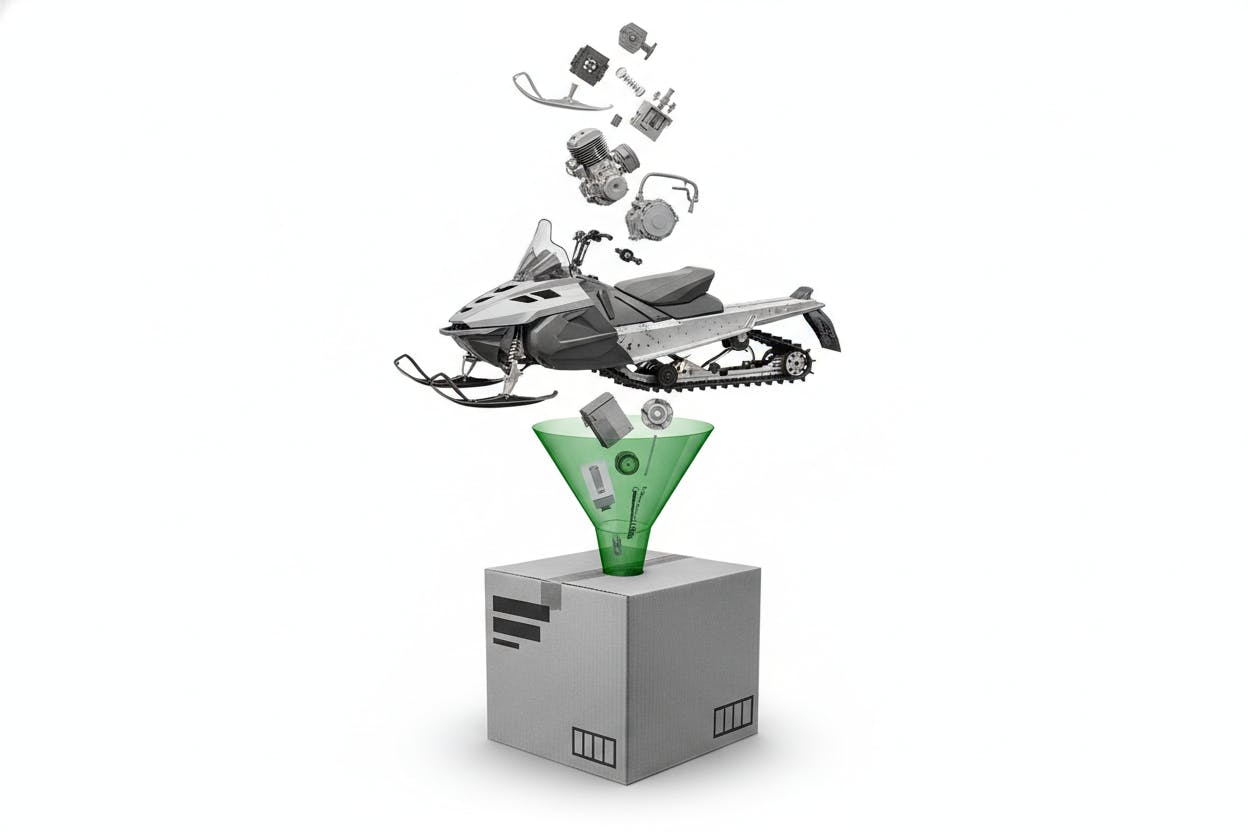
BRP, the Canadian company behind Ski-Doo snowmobiles, Sea-Doo watercraft, and Can-Am off-road vehicles, has opened the largest distribution and logistics center in its history. The new facility in Saint-Philippe, Quebec, is designed to handle up to 2.5 million orders a year for parts, accessories, and apparel (PA&A) — a business that now generates more than C$1 billion in annual sales.
The center consolidates BRP's parts distribution with its PA&A operations, a move the company says will speed up deliveries to dealers and customers while reducing errors. For a company that sells recreational vehicles through a network of dealers, getting the right part to the right place quickly is critical: every stockout or shipping mistake can mean a lost sale, a return, or a frustrated customer who switches brands.
Why Aftermarket Matters
For BRP, the sale doesn't end when someone rides off the lot. Replacement parts, accessories like cargo racks or audio systems, and branded apparel can drive steadier revenue than new vehicle sales, which tend to be more cyclical. The company reported that its PA&A business grew nearly 10% in fiscal 2026, outpacing the broader recreational-vehicle market.
Centralizing inventory is a classic logistics strategy known as "inventory pooling." Instead of keeping separate stockpiles at multiple warehouses, one shared hub can support many dealers with fewer total parts sitting idle. That can reduce working capital — the cash tied up in unsold inventory — while keeping service levels high. For investors, that means potentially better margins and more predictable earnings from the aftermarket stream.
The approach is similar to moves seen in other industries. For example, O'Reilly's recent bid for Genuine Parts' NAPA auto unit highlights how aftermarket parts businesses are seen as valuable, steady revenue generators. In BRP's case, the new hub is designed to scale that model for recreational vehicles.
What It Means for Investors
BRP's bet on parts and gear reflects a broader trend: manufacturers are looking to aftermarket sales to smooth out the ups and downs of new-vehicle demand. When the economy slows and consumers delay big purchases like a new snowmobile or ATV, they still need replacement parts and may still buy accessories for the vehicles they already own.
The risk, however, is execution. A single mega hub can become a bottleneck if systems or labor fall short. Any disruption — whether from a strike, a software glitch, or a natural disaster — would hit more of the network at once. BRP will need to keep the center running smoothly to realize the promised benefits.
If the hub delivers, it could help BRP scale a higher-margin revenue stream while cutting the amount of "just-in-case" inventory it has to keep spread across multiple sites. That would be a positive for profitability and cash flow, two metrics that matter to investors.
The move also comes as logistics and supply chain efficiency remain a focus across industries. Companies like Segro are investing heavily in logistics parks, and CMA CGM's pursuit of FedEx's logistics unit shows how valuable distribution networks have become. BRP's new hub is a smaller-scale version of that trend, tailored to the recreational-vehicle market.
What to Watch Next
Investors will want to see whether the Saint-Philippe center actually reduces delivery times and error rates, and whether it helps BRP grow its PA&A margins. The company's next earnings report will likely include early metrics on the hub's performance.
Also worth watching: how BRP manages the transition. Consolidating multiple warehouses into one can cause short-term disruptions as inventory is moved and systems are integrated. If the company executes well, the hub could become a competitive advantage. If not, it could create headaches for dealers and customers.
For everyday investors, the key takeaway is that BRP is trying to make its revenue mix more stable and profitable. Aftermarket sales tend to be repeat business, but only if products are available and shipments are accurate. The new hub is a bet that centralization can deliver both.