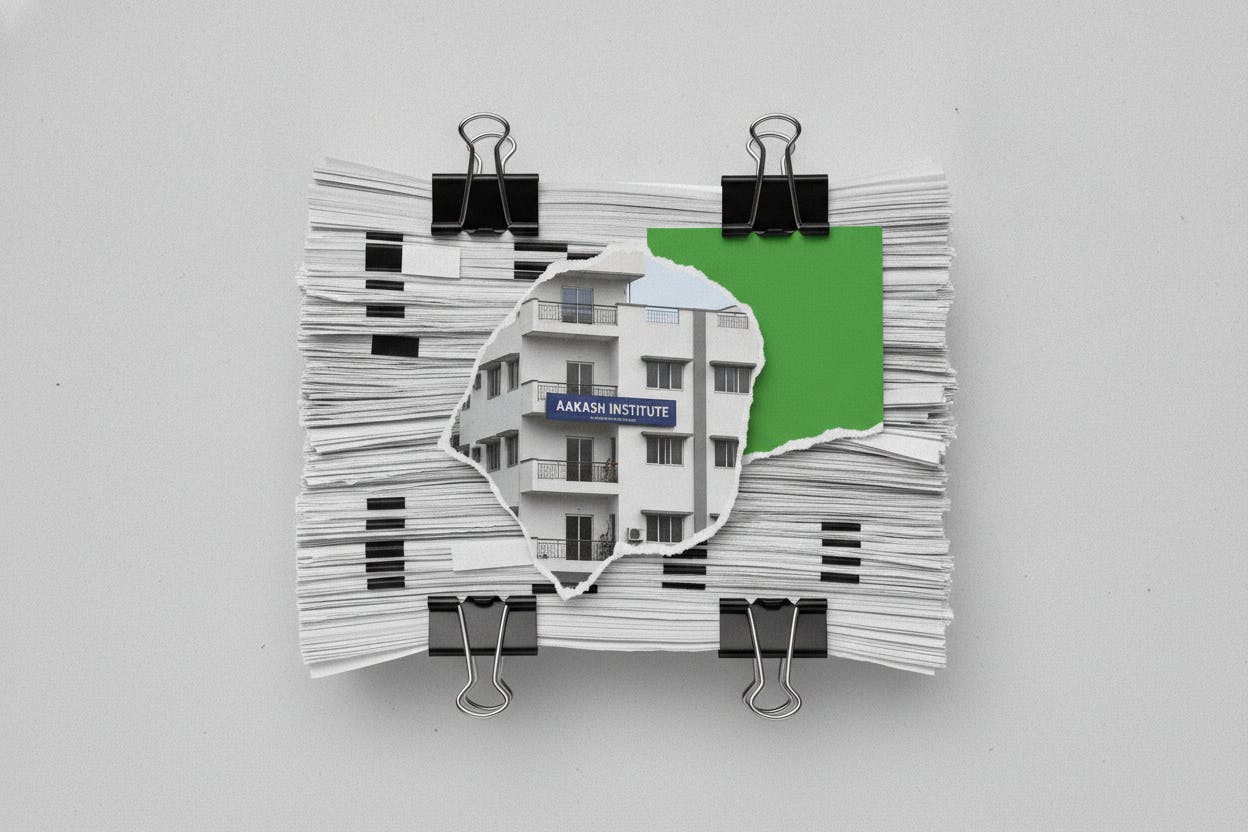
Lenders to the embattled Indian edtech company Byju's are moving closer to a settlement that would hand them a roughly 30% stake in Aakash Educational Services, the offline test-prep chain Byju's acquired in 2021. The deal, reported by Reuters, would also end a web of lawsuits across India, Singapore, and the United States involving founder Byju Raveendran.
The talks represent a potential turning point for Byju's, which was once one of India's most celebrated startups but has been mired in a long-running dispute with a group of mostly overseas lenders. Glas Trust, a US-based trustee representing those lenders, has said Byju's owes about $1 billion, a claim the company and Raveendran have denied.
What's on the table
Under the proposed settlement, lenders would swap their contested debt claim for an equity stake in Aakash, the offline coaching chain Byju's bought for $1 billion at the height of the pandemic-era online-learning boom. Reuters' sources said the discussions value Aakash at roughly $2 billion, meaning a 30% stake would be worth about $600 million.
Aakash has become a prized asset within Byju's struggling empire. The chain operates more than 300 centers and employs over 5,000 teachers. It last reported annual revenue of around $254 million. Unlike Byju's complex web of digital and offline entities, Aakash's business model—traditional classroom coaching for medical and engineering entrance exams—is straightforward and easier for investors to understand.
Why lenders might take less than they're owed
Cross-border insolvencies are notoriously slow and uncertain. Different courts can reach conflicting rulings, and cash can get stuck behind disputes over who gets paid first. That's why lenders sometimes prefer a "take the asset and move on" deal, even if it means accepting less than the face value of their claim.
In this case, the gap between the $1 billion Glas Trust has demanded and the roughly $600 million implied by a 30% Aakash stake is significant. But ending the lawsuits could remove what investors call "legal overhang"—the uncertainty that scares off potential buyers, lenders, or IPO investors. A cleaner legal picture could make it easier for Aakash's owners to raise money or eventually sell the business.
Minority shareholders, however, have fewer levers to force a sale or demand dividends. So while the deal might resolve the immediate legal fight, it doesn't guarantee a quick payout for lenders.
What it means for investors
For everyday investors, this story is a reminder of how messy corporate debt disputes can become, especially when they span multiple countries. The Byju's case also highlights the risks of investing in high-growth startups that expanded rapidly during the pandemic boom and are now struggling to adapt to a post-lockdown world.
The broader edtech sector has faced headwinds as students returned to classrooms and demand for online learning cooled. Byju's, which once raised money at a valuation of $22 billion, has seen its fortunes reverse sharply. The company has been fighting legal battles on multiple fronts, including with lenders, regulators, and former investors.
If the Aakash deal goes through, it could provide a template for resolving similar disputes in the future. But investors should watch closely: the final terms of any settlement will determine how much value lenders actually recover, and whether Aakash can operate independently without the shadow of Byju's legal troubles.
For now, the talks signal that both sides are willing to compromise. That's often the first step toward a resolution in complex cross-border insolvencies—but it's rarely the last.