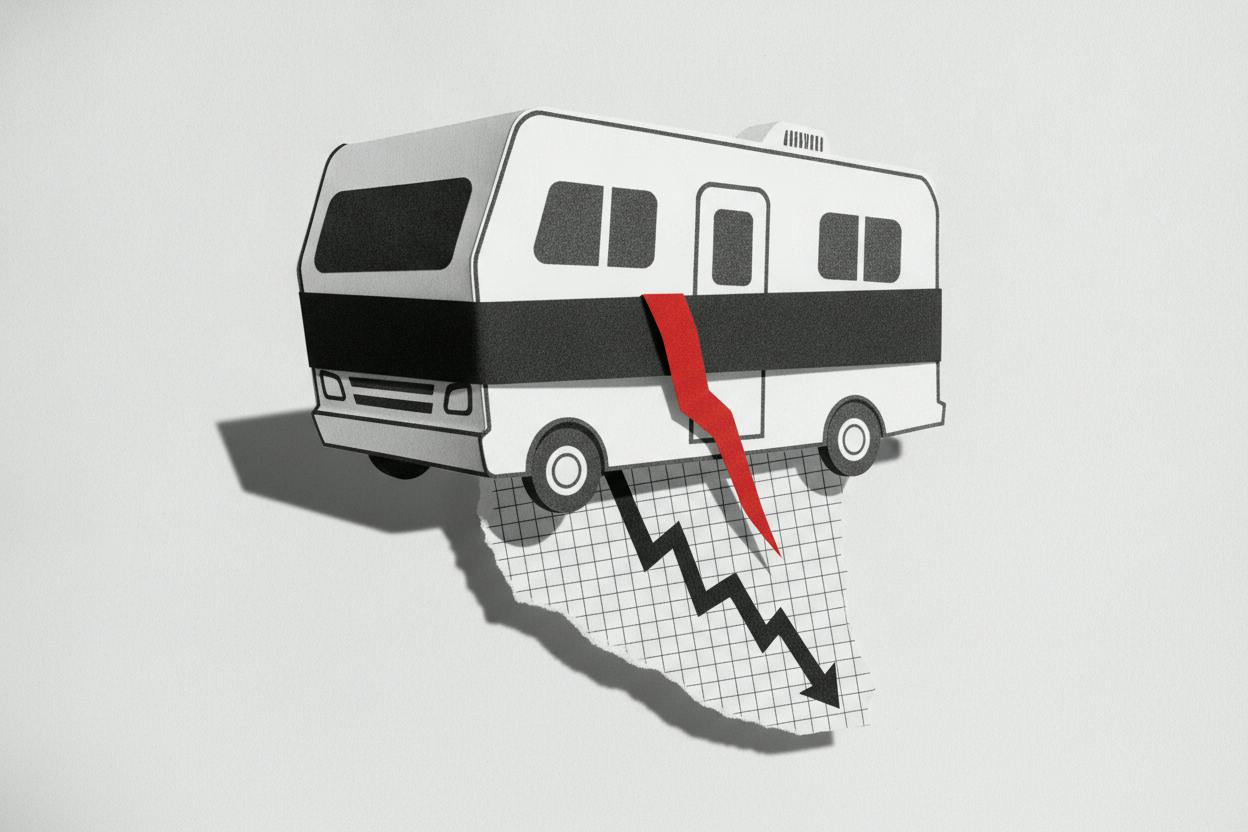
Camping World, one of the largest U.S. recreational-vehicle dealers, has told investors that its 2026 profits will likely come in below the target it had set for itself. In a regulatory filing, the company said weak demand for RVs through the third quarter continued to squeeze margins, forcing it to accelerate cost-cutting measures and consider refinancing its debt.
The warning is the latest sign that the post-pandemic boom in outdoor recreation has faded, leaving dealers and manufacturers to adjust to a slower, more price-sensitive market.
What the company said
Camping World said it now expects 2026 adjusted EBITDA—a measure of profitability that strips out certain one-time costs—to land below its previous guidance of $230 million to $270 million. The company did not provide a new, narrower range in the filing.
To offset the pressure, the dealer said it is pulling forward $100 million in cost reductions, including cutting headcount. It also said it is exploring refinancing its term loan, a type of multi-year bank debt that often comes with covenants—rules that require the borrower to maintain certain financial health metrics. Refinancing could lower interest costs or give the company more breathing room, but it also signals that lenders may be watching its balance sheet more closely.
The company noted that both new and used unit sales remained weak through the third quarter, a trend that has persisted as higher interest rates make financing a big-ticket purchase like an RV more expensive for consumers.
Why RV demand is struggling
RVs are discretionary purchases, often financed over several years. When borrowing costs rise, monthly payments climb, and many households postpone or abandon plans to buy. That dynamic has hit the entire RV industry, from manufacturers like Thor Industries and Winnebago to dealers like Camping World.
During the pandemic, many Americans bought RVs as a way to travel safely and socially distance. That surge in demand led manufacturers to ramp up production. But as the economy reopened and interest rates climbed, demand cooled sharply, leaving dealers with bloated inventories and forcing them to discount heavily to move units.
Camping World's warning suggests that the downturn is not over. The company's decision to cut costs and reduce staff is a common response in cyclical industries when demand weakens, but it also raises questions about how long the slump will last.
What it means for investors
For everyday investors, the key takeaway is that Camping World's business is highly sensitive to interest rates and consumer confidence. When rates are high, RV sales tend to fall, and that directly hits the company's revenue and profit.
The company's move to accelerate cost cuts is a defensive step that could help protect its bottom line in the near term. However, the fact that it is also exploring refinancing its term loan suggests that its debt load is a concern. If the company can secure better terms, it could reduce interest expenses and ease pressure on cash flow. But if lenders demand stricter conditions, it could limit the company's financial flexibility.
Investors should also watch whether the company updates its full-year guidance for 2025, as the third-quarter weakness likely means this year's results will also be under pressure. The RV market's recovery will depend heavily on the path of interest rates. If the Federal Reserve begins cutting rates, borrowing costs could ease, potentially reviving demand. Until then, Camping World and its peers may continue to face headwinds.
Broader market context
Camping World's struggles are not isolated. Other consumer discretionary businesses that rely on financed purchases—such as boats, motorcycles, and even some home improvement projects—have reported similar softness. The broader economy has shown resilience, but high borrowing costs are clearly weighing on big-ticket spending.
For investors, this story is a reminder that cyclical companies can see sharp swings in profitability. While Camping World's long-term prospects depend on the health of the RV market, its near-term performance is tied to macroeconomic conditions that are largely out of its control.
The company's next earnings report will be closely watched for more details on its cost-cutting progress, any refinancing terms, and whether demand shows signs of stabilizing. Until then, the warning serves as a cautionary note for anyone considering an investment in the RV sector.