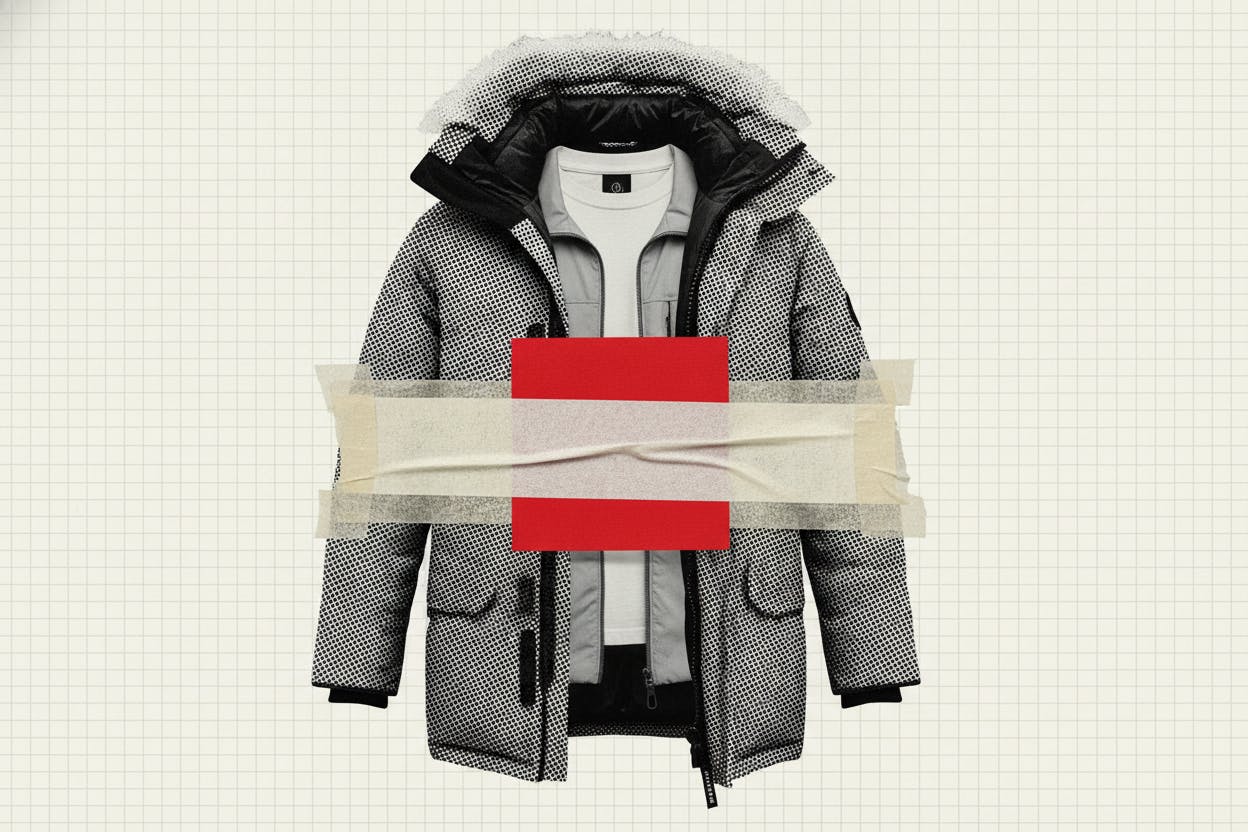
Canada Goose, the Canadian luxury outerwear company best known for its heavy parkas, surprised investors with a stronger-than-expected first quarter, driven by sales of lightweight jackets, T-shirts and earlier seasonal launches. But the company also warned that a new 50% US tariff on Canadian goods could weigh on future results.
Revenue rose 10.3% from a year ago to C$118.9 million, beating analysts' estimate of C$108.8 million, according to Reuters. Gross margin — the share of sales left after making and shipping products — ticked up to 62.4% from 61.4%, and the company posted a slightly smaller adjusted loss than expected.
Why the summer strength matters
Canada Goose has long been synonymous with cold-weather gear, but the company has been working to broaden its appeal beyond winter. The first-quarter results suggest that strategy is gaining traction. By launching spring and summer collections earlier and expanding into lighter apparel, the company is trying to smooth out the seasonal swings that have historically made its revenue heavily dependent on the fourth quarter.
That shift is important for investors because it reduces the company's vulnerability to a single season. If Canada Goose can build a year-round customer base, it may be able to generate more consistent cash flow and reduce the inventory risks that come with a narrow product focus. Other apparel companies have faced similar challenges when trying to diversify beyond their core categories, as seen with Woolworths' recent struggles with fashion margins.
The tariff cloud on the horizon
Despite the upbeat quarter, Canada Goose's outlook was cautious. The company warned that new US tariffs of 50% on Canadian goods could hurt future earnings. The tariffs, which are part of broader trade tensions between the US and Canada, would raise the cost of Canada Goose products sold in the US, its largest market.
For a luxury brand like Canada Goose, passing those costs on to consumers is risky. Higher prices could dampen demand, especially if shoppers become more price-sensitive amid broader economic uncertainty. The company may also face pressure on its margins if it chooses to absorb some of the tariff costs rather than pass them on fully.
Trade policy has become an increasingly important factor for companies with cross-border supply chains. The impact of tariffs on earnings is a theme investors are watching closely across industries, from manufacturers like Prysmian to apparel makers like Gildan.
What it means for investors
Canada Goose's first-quarter beat shows the company is making progress in diversifying its product lineup and attracting customers beyond the winter season. That's a positive sign for long-term growth potential. However, the tariff warning introduces a new layer of uncertainty.
Investors should watch for several things in the coming months. First, how the company manages its pricing strategy in the US market. If it raises prices, will customers still buy? Second, whether Canada Goose can continue to grow its spring and summer sales enough to offset any tariff-related drag. Third, any updates on trade negotiations between the US and Canada that could change the tariff landscape.
The broader market context also matters. Luxury goods companies have generally held up well despite inflation, but consumer spending patterns can shift quickly. If tariffs lead to higher prices across a range of Canadian imports, the cumulative effect on household budgets could eventually weigh on demand for premium products like Canada Goose parkas and jackets.
For now, the company's ability to beat estimates in a seasonally weak quarter is a reminder that it is not just a one-season wonder. But the tariff threat is a reminder that even well-positioned companies can be caught in the crossfire of trade policy.