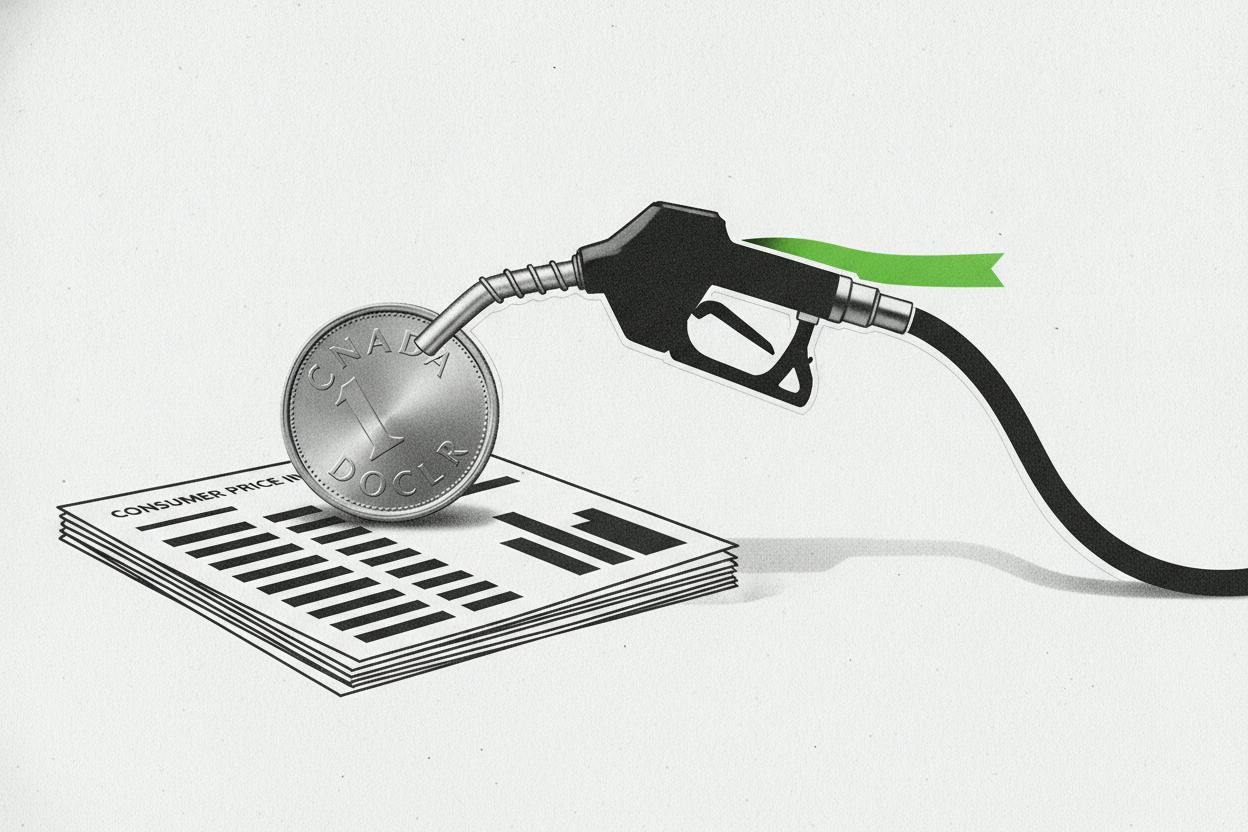
Canada's inflation rate stayed at 3.1% in October, matching the previous month, as gasoline prices continued to bite. But beneath the headline, the picture was cooler, and investors took notice: short-term bond yields fell and the Canadian dollar slipped after the data.
Statistics Canada's consumer price index (CPI) rose 0.2% in October, slightly below the 0.3% economists had expected. The annual rate held steady at 3.1%, but the details showed that energy was doing most of the heavy lifting.
Gasoline and transportation costs surge
Gasoline inflation accelerated to 30.9% year-on-year in October, up from 27.8% in September. That pushed transportation costs up 8.9% from a year earlier, with air fares jumping 21.6%. For everyday Canadians, these are visible price increases that can dominate the headlines.
But strip out energy, and the picture looks much closer to normal. CPI excluding energy eased to 2.0% from 2.1% in September. That's a key distinction for investors, because volatile fuel prices can swing the headline number without telling you much about where inflation is headed over the medium term.
Core measures point to underlying calm
The Bank of Canada watches several "core" inflation measures to judge how much price pressure is embedded in the economy. These strip out the most volatile components to reveal the underlying trend.
In October, CPI-median, which tracks the middle of price changes, held steady at 2.0%. CPI-trim, which removes the most extreme price moves, slowed to 1.8%. Both are right around the central bank's 2% target, suggesting that the "sticky" part of inflation is already close to where policymakers want it.
Some everyday categories did firm up a little. Grocery inflation rose to 2.0% from 1.7%, and clothing prices turned positive after earlier declines. But these were modest moves, not signs of a broad reacceleration.
What it means for investors
For markets, the key takeaway is that the underlying inflation trend is cooling even as the headline stays elevated. That's why Canada's 2-year government bond yield fell 4.2 basis points to 2.700% after the release. Two-year yields are the most sensitive to expectations for the central bank's policy rate, so a drop suggests traders are leaning toward a more dovish Bank of Canada.
The Canadian dollar also weakened, slipping 0.17% to C$1.4293 per US dollar. That move reflects the expected interest-rate gap between Canada and the US. If the Bank of Canada cuts rates while the Federal Reserve holds or hikes, the loonie tends to lose ground.
For everyday investors, this means a few things. First, if you hold bonds or bond funds, falling yields are generally positive for prices. Second, a weaker loonie can affect the returns on foreign investments, especially US stocks, when converted back to Canadian dollars. And third, if the Bank of Canada does ease policy, that could eventually feed into lower borrowing costs for mortgages and other loans.
As Canada's inflation report could decide the loonie's next move, currency traders will be watching the central bank's next steps closely. The data also comes as TSX futures slipped ahead of the release, reflecting the market's focus on the report.
Globally, inflation dynamics remain mixed. In the UK, the pound slid again as traders await UK jobs and inflation data, while other economies show different patterns. But for Canada, the message from October's numbers is clear: the headline may look stubborn, but the underlying trend is closer to target.
Investors will now watch for the Bank of Canada's next policy decision, due in December. With core inflation near 2%, the case for rate cuts is building, but the central bank will also weigh the impact of higher energy costs on consumer spending. The balance of those factors will determine how quickly policy loosens.
For now, the market's reaction suggests a growing belief that the Bank of Canada can ease off the brakes sooner rather than later. That would be welcome news for borrowers, but it also means the loonie could stay under pressure if the US keeps rates higher for longer.