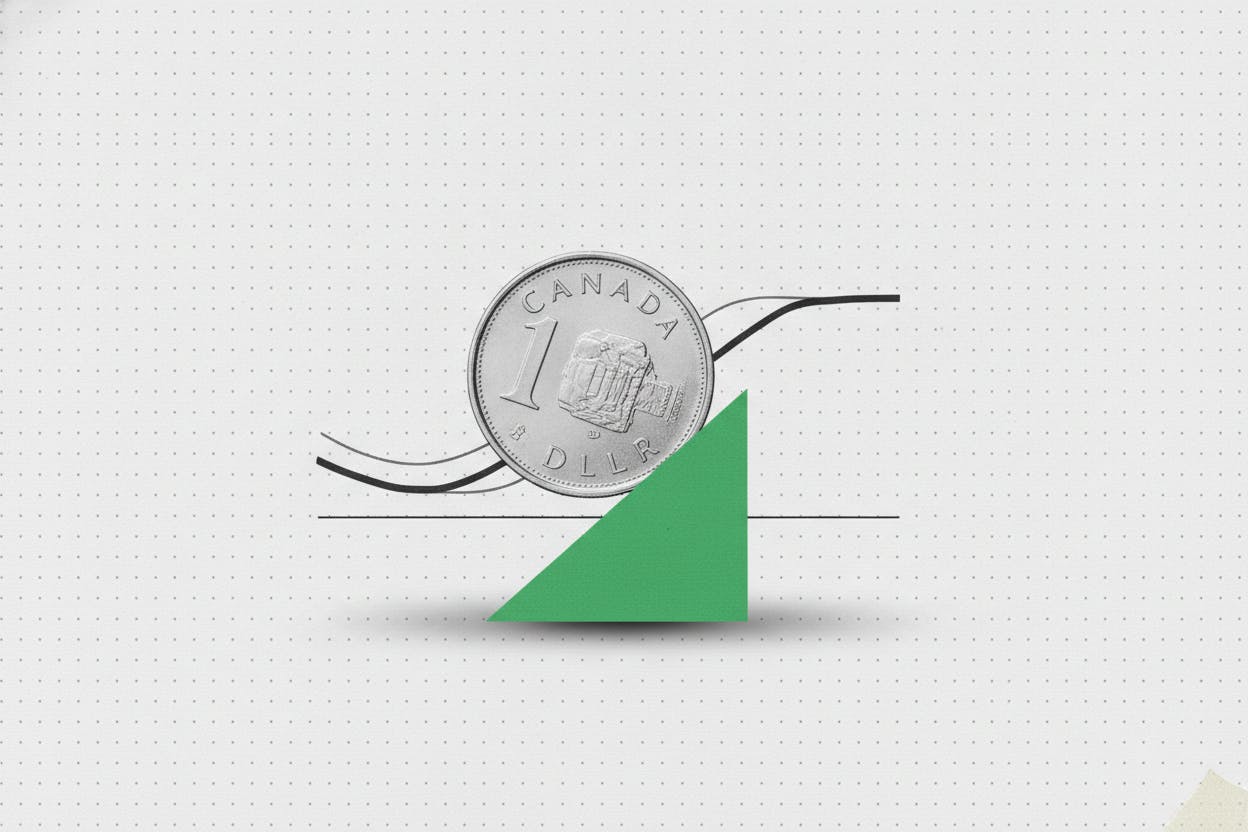
The Canadian dollar snapped a seven-day losing streak on Wednesday, climbing 0.2% to 1.4202 per US dollar as softer-than-expected US inflation data weighed on the greenback and a modest uptick in crude prices provided additional support. The bounce comes after the loonie—as Canada's currency is commonly called—had fallen to its weakest level in 14 months, pressured by persistent US dollar strength and uncertainty about the path of interest rates.
What Drove the Reversal
The catalyst for Wednesday's move was the release of May US inflation data, which came in slightly cooler than some market participants had feared. While inflation remains above the Federal Reserve's 2% target, the data reduced expectations for additional rate hikes in the near term. That shift in sentiment pulled down the US Dollar Index, a measure of the greenback against a basket of major currencies, and gave the loonie room to recover.
Currency markets often react more to what traders think central banks will do next than to long-term yields that barely budge. Corpay, a corporate payments firm, noted that the US “front end”—shorter-term bonds that move with rate expectations—has room to rally if investors keep pricing out the most aggressive hike scenarios. If that happens, the dollar’s interest-rate edge can narrow at the margin, and that can unwind stretched US-dollar positioning, letting the loonie recover even if oil’s move is modest.
Oil prices also edged higher on the day, providing a tailwind for Canada, a major energy exporter. Crude is one of the country's largest exports, so rising prices tend to support the Canadian dollar by improving the country's terms of trade.
Why the Loonie Has Been Under Pressure
The Canadian dollar's recent weakness reflects a broader trend of US dollar strength that has affected currencies around the world. The greenback has been buoyed by the Federal Reserve's aggressive rate hiking cycle, which has made US assets more attractive to yield-seeking investors. The interest rate differential between Canada and the US has widened significantly, with the Canada–US 10-year yield spread currently sitting at about 101 basis points in favor of the US.
This “carry” advantage—the extra return investors get from holding dollars instead of other currencies—has been a powerful force in currency markets. Even when long-term yields are steady, the short-term rate differential can drive exchange rates, as traders borrow in low-yielding currencies and invest in higher-yielding ones.
The loonie's seven-day losing streak had pushed it to levels not seen since early 2023, raising concerns about the impact on Canadian consumers and businesses. A weaker Canadian dollar makes imports more expensive, which can feed into inflation, but it also makes Canadian exports more competitive abroad.
What It Means for Investors
For everyday investors, the Canadian dollar's movements have real implications. A weaker loonie means that US stocks and other dollar-denominated assets become more expensive for Canadian investors to buy. It also means that Canadians traveling to the US or buying imported goods will face higher costs. Conversely, Canadian companies that export to the US benefit from a weaker currency, as their products become cheaper for American buyers.
The key question now is whether Wednesday's bounce marks the start of a sustained recovery or just a temporary pause in the loonie's decline. Much will depend on the Federal Reserve's next moves. If US inflation continues to moderate and the Fed signals that it is done raising rates, the dollar could weaken further, giving the loonie more room to rise. But if inflation proves sticky and the Fed keeps tightening, the interest rate advantage will continue to support the greenback.
Currency markets are also watching developments in other parts of the world. Latin American stocks and currencies rallied on Wednesday as the US dollar weakened, suggesting that the move lower in the greenback is broad-based. Similarly, gold rebounded above $4,000 as the dollar eased, and copper bounced 1.1% as a weaker dollar lured bargain hunters. These moves indicate that the dollar's decline is lifting a range of assets, not just the loonie.
What to Watch Next
Investors should keep an eye on upcoming US economic data and Fed speeches for clues about the direction of interest rates. Any hints that the Fed is considering a pause or a slowdown in its hiking cycle could further weaken the dollar and support the loonie. On the other hand, strong economic data that keeps the pressure on the Fed to raise rates could reverse Wednesday's gains.
Oil prices will also remain a key factor. If crude continues to rise, it will provide ongoing support for the Canadian dollar. But if oil falters, the loonie could quickly give back its gains, especially if the interest rate differential remains wide.
For now, the Canadian dollar's bounce is a welcome relief after a tough week, but the underlying pressures that drove it lower have not disappeared. The currency remains at the mercy of US interest rate expectations and global commodity prices, and investors should expect continued volatility in the weeks ahead.