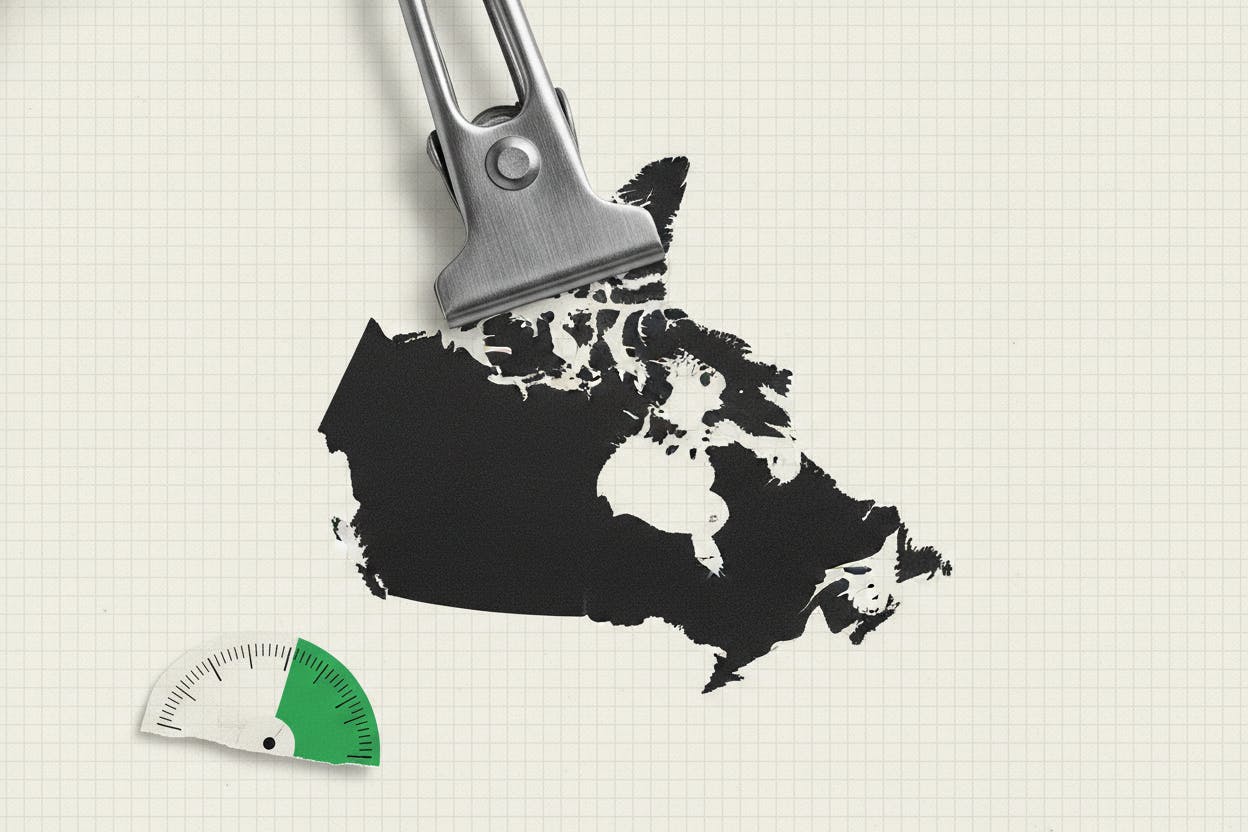
Canadian small businesses entered the late summer with a slightly less rosy outlook, but they remain firmly in optimistic territory. The Canadian Federation of Independent Business (CFIB) reported that its 12-month business barometer slipped to 57.6 in August, down from the previous month but still above the 50-point threshold that separates expected growth from contraction.
The dip comes as the specter of new US tariffs on Canadian goods re-entered the conversation, adding a fresh layer of uncertainty for exporters and domestic firms alike. Yet the fact that the index remains above 50 suggests that more business owners still expect conditions to improve over the next year than those who expect them to worsen.
What the CFIB barometer tells us
The CFIB's Business Barometer is a widely watched gauge of small business sentiment in Canada. It surveys owners across sectors and regions, asking them to compare expected business performance over the next 12 months with the past year. A reading above 50 signals net optimism; below 50 signals net pessimism.
While the index is not a perfect predictor of economic output, it is a useful early indicator of how companies are feeling about the road ahead. When confidence holds up, firms are more likely to invest, hire, and expand. When it sags, they tend to pull back on spending and delay decisions—moves that can ripple through the broader economy.
BMO Capital Markets, in a note to clients, called the report a valuable signal of how businesses are processing the renewed tariff threats. Senior economist Shelly Kaushik pointed out that the sentiment gauge does not neatly track business-sector output, but it can influence decisions that matter for growth. In other words, even if the index doesn't move in lockstep with GDP, it can shape the behavior that drives GDP.
Tariff clouds on the horizon
The backdrop to this month's reading is a familiar one: the possibility of new US tariffs on Canadian products. Trade tensions between the two neighbors have simmered for years, and any escalation can hit small businesses hard—especially those in manufacturing, agriculture, and other trade-exposed sectors.
Tariffs can raise costs for exporters, disrupt supply chains, and create uncertainty that makes it harder to plan. For small businesses, which often lack the resources to absorb sudden cost shocks or pivot to new markets, the threat alone can be enough to dampen enthusiasm.
Still, the August reading suggests that, so far, Canadian business owners are taking the tariff chatter in stride. The index remains in expansion territory, and the decline from the prior month is modest. That resilience is notable, especially given the broader economic headwinds that have been building globally.
What it means for investors
For everyday investors, this report is a reminder that sentiment data can offer clues about the direction of the economy. When small business confidence stays above 50, it suggests that the domestic economy is likely to keep growing, even if slowly. That can be supportive for Canadian stocks, particularly those tied to consumer spending and domestic demand.
On the other hand, a sustained drop below 50 would be a warning sign. It could signal that businesses are bracing for a downturn, which might translate into weaker hiring, lower capital spending, and softer corporate earnings down the road.
The tariff angle is also worth watching. If trade tensions escalate, the Canadian dollar could come under pressure, and export-heavy sectors could see their margins squeezed. Conversely, any resolution or easing of tensions could provide a boost to sentiment and markets. Recent moves in the loonie and the TSX have already shown how sensitive Canadian assets are to trade headlines.
For now, the CFIB's August reading offers a measure of reassurance. Small businesses—often the backbone of the Canadian economy—are not panicking. They are cautious, but they are still looking ahead with a degree of optimism. That is a good sign for the months to come, even if the path is not entirely clear.
Investors should keep an eye on future sentiment readings and any concrete tariff developments. A further slide in confidence would be a red flag, while a rebound would reinforce the view that the Canadian economy can weather the storm.