Live cattle futures climbed to a three-week high on Tuesday, propelled by a jump in wholesale beef prices that signaled strong demand in the meat supply chain. The move came as the U.S. Department of Agriculture's choice boxed-beef cutout—a key benchmark for wholesale beef—was quoted at $378.93 per hundredweight, up from recent levels.
The rally was led by fundamentals, but technical buying added fuel. Chart-driven traders, who act when prices break above established resistance levels, helped amplify the advance. This kind of momentum can extend moves beyond what the underlying supply-demand picture alone would suggest.
What is the boxed-beef cutout?
The boxed-beef cutout is essentially the wholesale price that meatpackers charge retailers for cuts of beef, before it reaches your local grocery store. It's a crucial indicator for the entire cattle complex because it reflects what the market is willing to pay for beef at the wholesale stage. When the cutout rises, it often signals stronger demand or tighter supplies, and it can eventually translate into higher prices at the meat counter.
On Tuesday, the choice cutout hit $378.93 per hundredweight. For context, a hundredweight is 100 pounds, so this is the price for 100 pounds of wholesale beef. This level is notable because it represents a meaningful uptick, and it helped lift live cattle futures to their highest point in three weeks.
Packer margins widen
Another key data point came from analyst firm HedgersEdge, which estimated average beef packer margins at $108.85 per head on Tuesday, up sharply from $59.65 a day earlier. Packer margins are the difference between what packers pay for cattle and what they receive from selling beef. Wider margins mean packers are making more money per animal processed.
This matters for the cattle market because fatter margins give packers more flexibility. They can keep slaughter operations running at a steady pace without immediately needing to pay up for cattle, even as they benefit from higher beef prices. In other words, the supply chain has some breathing room, which can support steady processing volumes and potentially keep beef supplies flowing.
The widening margins also suggest that the recent rise in wholesale beef prices is not being squeezed by higher input costs. That could make it more likely that retailers pass along some of the increase to consumers, though the timing and extent of that pass-through is never guaranteed.
Hogs slip on profit-taking
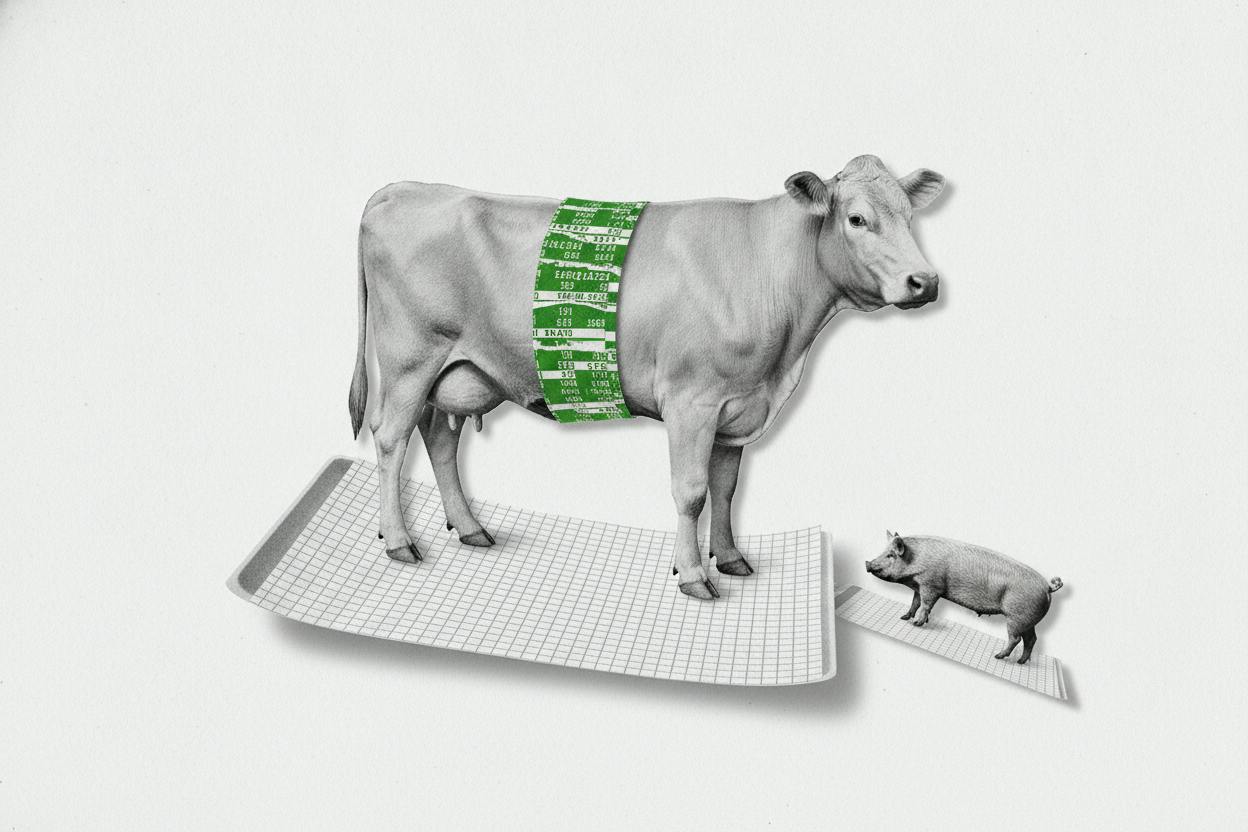
While cattle futures rallied, lean hog futures eased as traders locked in gains from recent advances. This divergence underscores that Tuesday's move was a beef-led story rather than a broad rally across all meats. Hog traders may have seen the recent run-up as a good opportunity to take profits, especially if there's no fresh fundamental catalyst to keep pushing prices higher.
This kind of profit-taking is common in commodity markets, especially after a sustained move. It doesn't necessarily signal a change in the underlying trend, but it can create short-term pullbacks.
What it means for investors
For everyday investors, the wholesale beef price is a leading indicator for what you might pay at the grocery store. The $378.93 cutout is not the price you see on the shelf, but retailers typically adjust their prices with a lag. When wholesale prices jump, and packer margins widen at the same time, it suggests the supply chain has room to absorb costs and still raise prices. That makes near-term grocery-store beef increases more likely.
If beef prices do rise, it could keep food inflation a bit choppier. Food prices are a significant component of overall inflation, and swings in meat prices can have an outsized impact on consumer perceptions of inflation. For investors, this is worth watching because inflation data influences central bank policy and, in turn, bond yields and stock market valuations.
It's also important to remember that futures markets are not the same as the physical beef market. Futures prices are influenced by expectations, speculation, and technical factors, so they can diverge from what's happening on the ground. Tuesday's rally, partly driven by chart-based buying, may not fully reflect the longer-term supply-demand outlook.
For those with exposure to agricultural commodities or food-related stocks, the cattle complex is a sector to monitor. The recent strength in beef prices could support companies involved in cattle production and processing, while hog producers may face a different dynamic. As always, it's wise to consider the broader economic backdrop and not make decisions based on a single day's price move.
Investors will likely keep an eye on upcoming USDA data and any shifts in packer margins to gauge whether the rally has staying power. If wholesale beef prices continue to climb, it could signal sustained demand and potentially higher retail prices down the line.