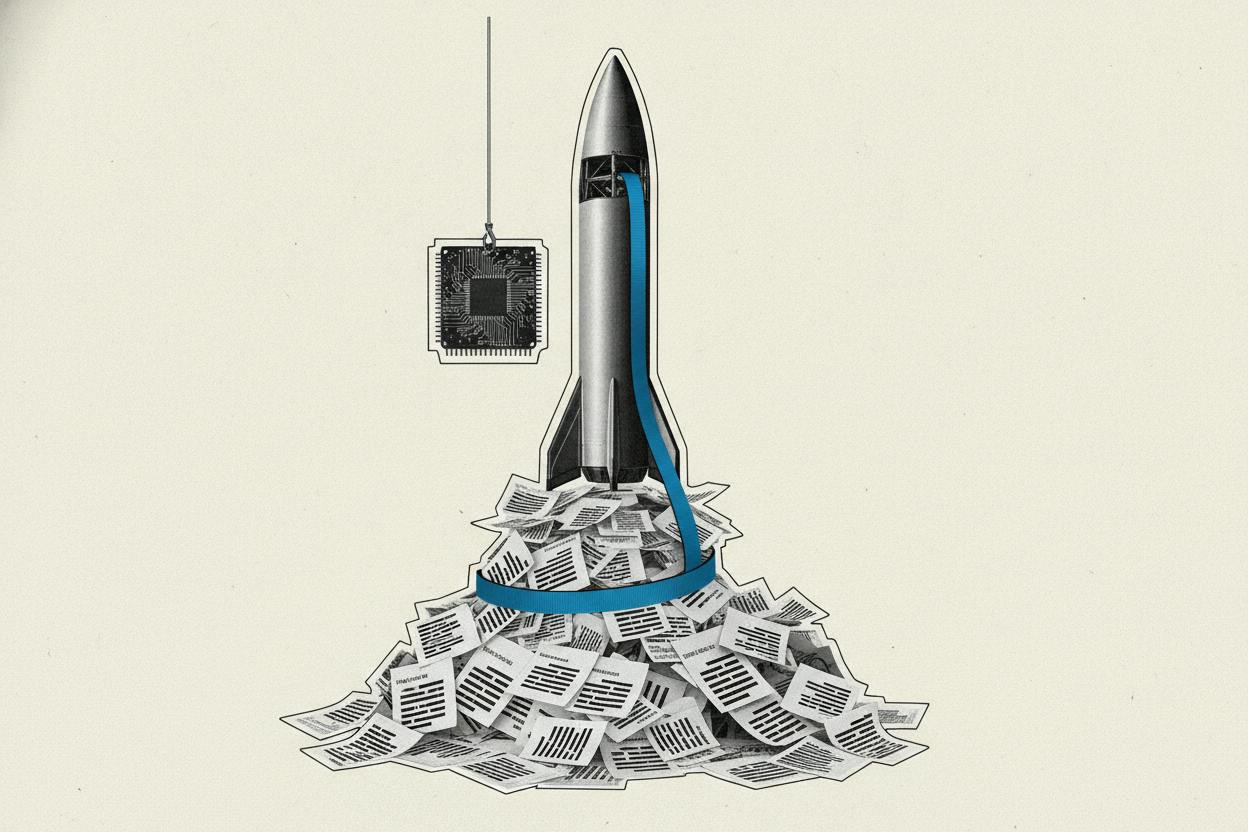
SpaceX, the private space company founded by Elon Musk, is reportedly assembling a massive $40 billion financing package to secure a supply of Nvidia's artificial intelligence chips, according to the Financial Times. The deal, which could close as late as 2027, would be led by Apollo Global Management, a major alternative asset manager.
The report says the package would include roughly $10 billion in bank loans and about $30 billion in investment-grade corporate bonds. Apollo would organize the fundraising, with bond giant PIMCO among the firms in talks to provide financing. The structure is notable because it blends traditional bank lending with the corporate bond market, a sign of how large and complex AI-related capital needs have become.
Why SpaceX needs AI chips
SpaceX is best known for its rockets and satellite internet service, Starlink. But the company has been expanding into AI infrastructure, and Musk has said that AI computing demand is growing rapidly. Nvidia's graphics processing units (GPUs) are the industry standard for training and running large AI models, and demand for them has far outstripped supply.
By locking in a large order of Nvidia chips, SpaceX would be positioning itself to build or operate AI data centers, potentially for its own use or to offer computing services to other companies. The move echoes a broader trend: tech giants and startups alike are spending billions to secure the physical hardware needed for AI, from chips to data centers.
The AI buildout is turning into an old-school capital markets problem. The biggest costs are physical, and they require huge upfront financing. This is why we're seeing increasingly large debt packages, like the one SpaceX is reportedly pursuing.
What the deal structure tells us
The reported mix of bank loans and bonds is typical for a financing of this size. Bank loans are often used for the shorter-term, more flexible portion, while bonds provide longer-term, fixed-rate funding. Investment-grade bonds are a sign that lenders view the borrower as relatively low-risk, even if the debt load is large.
Apollo's involvement is notable because the firm has been a major player in private credit and direct lending, but here it's leading a syndicated loan and bond package. This shows how the lines between traditional banking and private capital are blurring. PIMCO, one of the world's largest bond investors, being in talks to provide financing suggests there's strong appetite from institutional investors for AI-related debt.
The fact that the deal may not close until 2027 is also telling. It suggests that the financing is being arranged well in advance, possibly to secure chip supply over a multi-year horizon. It also reflects the long lead times in both chip manufacturing and large-scale infrastructure projects.
What it means for investors
For everyday investors, this story is a reminder that the AI boom is not just about tech stocks. It's also a massive capital expenditure cycle that is reshaping debt markets. Companies are borrowing heavily to build the physical backbone of AI, and that has implications for interest rates, credit markets, and the broader economy.
If you own bonds or bond funds, large debt issuances like this can affect yields and prices. More supply of corporate bonds can put upward pressure on yields, all else being equal. For equity investors, the news underscores how much money is flowing into AI infrastructure, which could benefit companies like Nvidia and the lenders and investors who finance these deals.
It also highlights the growing role of private credit and alternative asset managers like Apollo in funding major projects. As Apollo's involvement in other large financings shows, these firms are increasingly competing with traditional banks.
For those watching the AI trade, the demand for AI computing is clearly not slowing down. But the scale of borrowing needed to meet that demand is a double-edged sword. It could fuel growth, but it also adds to corporate debt loads, which could become a risk if the economy slows or if AI revenues don't materialize as quickly as expected.
As with any major financing, the details matter. Investors will be watching to see if the deal closes, at what interest rates, and whether other companies follow suit with similar mega-financings. The AI buildout is still in its early innings, and the capital markets are just starting to feel its weight.