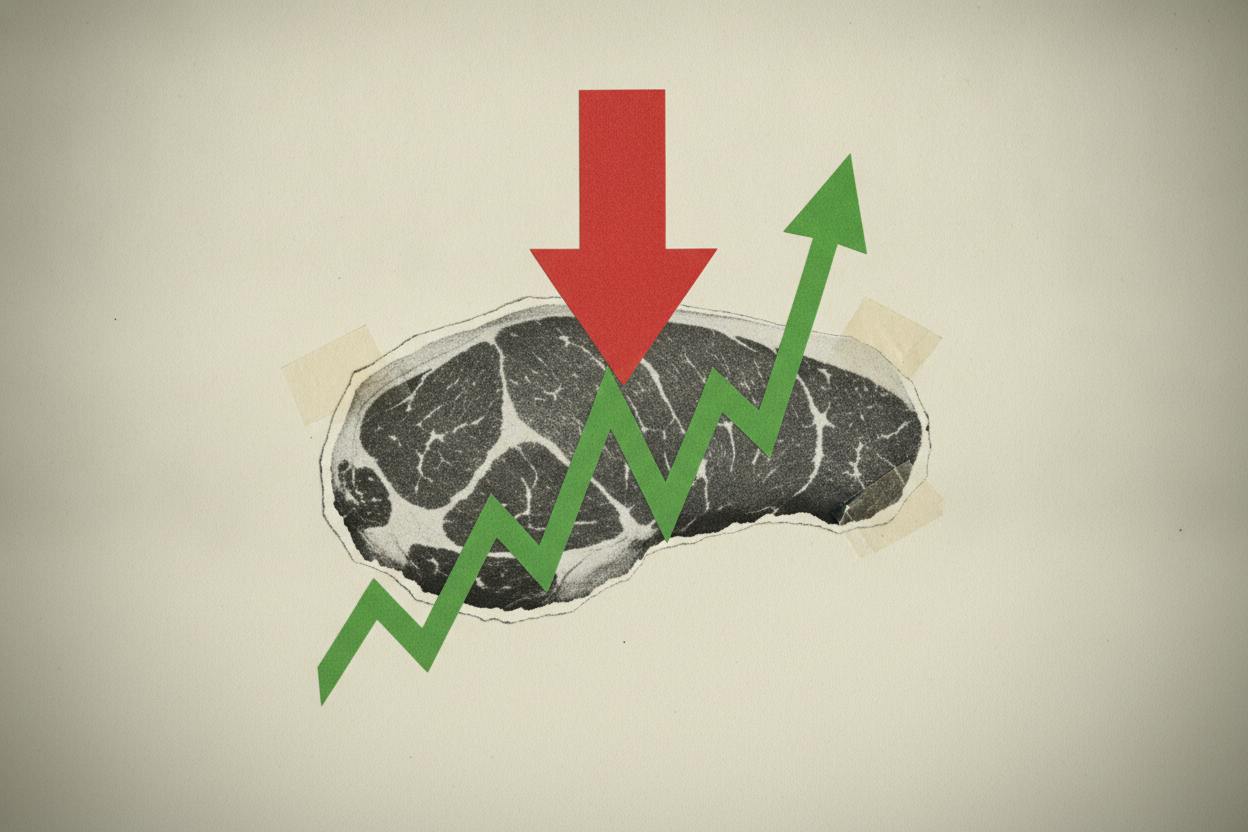
CME live cattle and feeder cattle futures slipped again on Monday, extending last week's pullback as traders sold on technical signals. The decline came even as wholesale beef prices climbed and lean hog futures bounced back from recent lows, according to Reuters.
The moves highlight a market caught between two forces: a tight supply of cattle that keeps a floor under prices, and nagging questions about whether consumers will keep paying up for beef.
Supply is tight, but demand is the question
On the supply side, the number of cattle available for slaughter remains historically low. Independent livestock trader Dan Norcini described the situation as “low, low, low” numbers of cattle, which typically supports prices by limiting how much beef can be produced.
But demand is the wildcard. If beef stays expensive, buyers can balk—especially when higher interest rates and energy costs squeeze household budgets. That tension was on full display in Monday's pricing.
The US Department of Agriculture's boxed-beef cutout—a benchmark for what packers receive for wholesale beef—rose, with Choice up $4.07 to $378.26 per hundredweight and Select up $4.08 to $358.57. Futures moved the other way: December live cattle fell 1.500 cents to 219.975 cents per pound, and November feeder cattle slid 1.025 cents to 330.125 cents.
Hogs were a reminder that futures can swing on positioning as much as fundamentals. December lean hogs rose 0.825 cent to 70.950 cents per pound as traders bought back bets against the market—a move known as short-covering—after last week's selloff.
What this means for your grocery bill
For everyday investors, the key takeaway is that your grocery-store beef bill won't track live cattle futures at 219.975 cents in real time. The number that tends to feed into what supermarkets and restaurants pay first is the boxed-beef cutout, not the cattle futures quote.
So when Choice jumps to $378.26 per hundredweight on the same day live cattle futures slip, it can signal that wholesale beef is getting pricier right now, even if futures are wobbling on chart-driven trading.
Because grocers and food-service companies often buy through contracts and update shelf or menu prices less frequently than futures trade, changes in wholesale prices usually hit your bill with a lag. That's why a down day in cattle futures doesn't necessarily mean quick relief at the checkout.
Why futures and wholesale prices can diverge
Futures markets are driven by traders' expectations about future supply and demand, as well as technical factors like chart levels and momentum. Wholesale prices, on the other hand, reflect what packers are actually getting for beef in the cash market right now.
When futures fall on technical selling, it doesn't always reflect a change in the physical beef market. Instead, it can be a sign that traders are adjusting positions based on price charts or broader market sentiment.
That disconnect is common in commodity markets, and it's why investors should look at both futures and cash prices to get a fuller picture.
What investors should watch next
For those following the cattle market, the key indicators to watch are the boxed-beef cutout, weekly cattle slaughter numbers, and any signs of slowing consumer demand. If wholesale prices keep climbing while futures stay weak, it could signal that the market is pricing in a future demand slowdown.
On the other hand, if demand holds up and supply remains tight, cattle prices could find support again. The tug-of-war between supply and demand is likely to continue, and that means volatility for cattle futures and potentially higher beef prices at the grocery store.
For context on how other commodity markets are moving, soybean futures ticked up recently as Midwest rains raised crop quality worries, showing how weather and supply concerns can move agricultural markets.
And for a broader view of how consumer demand is shaping up, Ford's F-Series led Q3 sales as pickup demand stayed strong, a sign that some big-ticket spending remains resilient.
Ultimately, for everyday investors, the cattle market is a reminder that commodity prices can be volatile and that the price you pay at the store often lags what's happening in futures markets. Keeping an eye on wholesale prices and demand trends can help you understand where beef prices might be headed next.