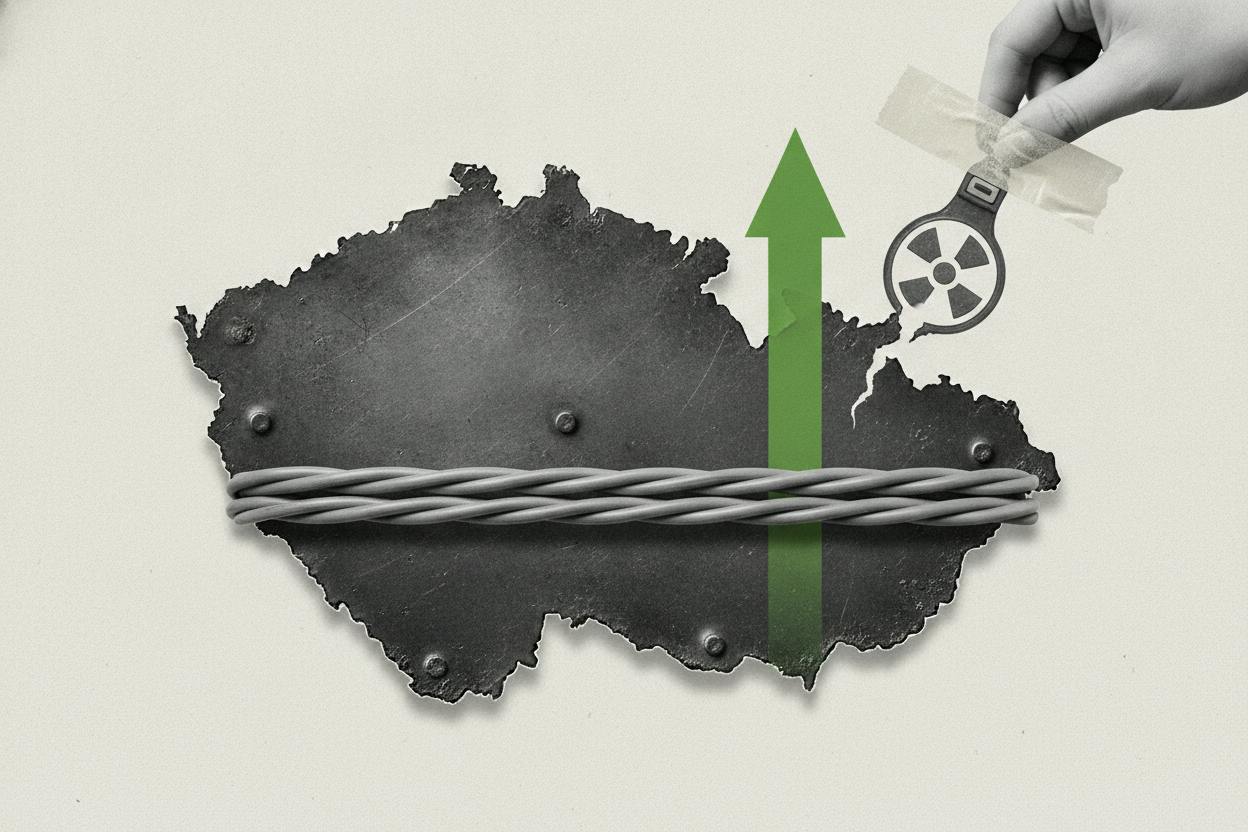
Czech state-backed power producer CEZ delivered a third-quarter profit that beat analyst expectations and raised its full-year profit outlook for the third time this year, even as a key earnings measure declined. The company's adjusted net profit jumped 55% to 8.5 billion Czech crowns ($386 million), above the 7.8 billion crowns that analysts polled by Reuters had expected. The beat was driven by its coal, trading, and other segments, even as electricity prices cooled compared with a year earlier.
CEZ also lifted its adjusted net-profit guidance for 2025 to a range of 34 to 37 billion crowns, up from its previous forecast. That figure is important because it is the metric the company uses to set its dividend. The upgrade partly reflects an expected 2.2 billion-crown gain in the fourth quarter from selling its 49% stake in Slovak nuclear firm JESS.
Core earnings still normalizing
Despite the upbeat profit outlook, the underlying picture shows a business still adjusting after the energy price shock of 2022. CEZ's earnings before interest, taxes, depreciation, and amortization (EBITDA) fell 8% in the quarter, and the company kept its 2026 EBITDA outlook unchanged at 109 to 114 billion crowns. That is down from 137.0 billion crowns expected for 2025, reflecting the broader decline in wholesale power prices from the crisis-era peaks.
The company also guided to an average realized power price of €108 to €111 per megawatt-hour for 2025, below the €124 it expects for 2024. That decline is a direct result of softer market prices, which have fallen as European energy markets have stabilized and demand has moderated.
Hedging means higher prices arrive slowly
One key detail for investors: CEZ has already pre-sold about 80% of its 2027 electricity output at an average price of €91 per megawatt-hour. Current market prices are “tens of euros” higher, but because most of that output is locked in, the benefit of today's higher prices will only show up gradually as the company sells the remaining volumes at newer, higher levels.
This is the nature of hedging. It smooths out cash flows and reduces exposure to price swings, but it also means that when market prices rise, the upside is delayed. Investors should not expect CEZ's results to jump immediately just because wholesale prices are currently higher. Instead, the benefit will filter through over time as the company re-hedges its future output.
What it means for investors
For shareholders, the raised profit guidance is a positive signal, but it comes with a caveat. The 34 to 37 billion-crown target includes the one-off gain from the JESS stake sale, so part of the increase is not from repeatable operations. Investors will likely focus on whether the company can maintain its core earnings power as power prices normalize and as it sells more of its future output at current, higher prices.
The unchanged 2026 EBITDA outlook suggests management sees the current environment as a period of stabilization rather than a new growth phase. The company's ability to beat expectations in the third quarter, however, shows that its diversified portfolio—including coal, trading, and other segments—can still deliver in a softer price environment.
CEZ's situation is not unique. Across Europe, utilities are navigating the transition from the energy crisis to a more normal pricing environment. Companies that locked in hedges at high prices are now seeing those contracts roll off, while those that sold forward at lower prices are waiting for the market to catch up. For investors, the key is to watch how quickly realized prices adjust and whether one-off gains can be replaced by sustainable earnings.
As always, past performance is not a guarantee of future results, and individual investment decisions should be based on your own financial situation and risk tolerance.