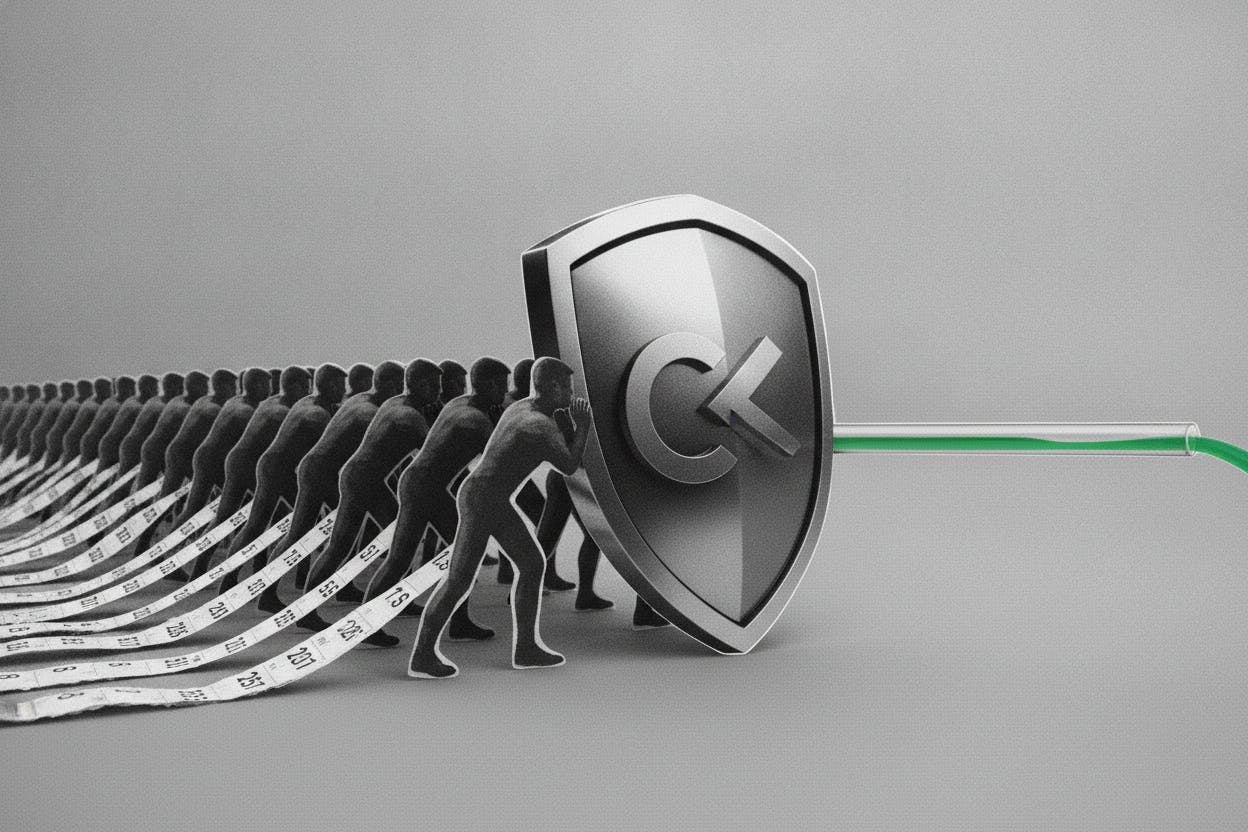
Check Point Software Technologies is still working through the fallout of a major sales reorganization, and investors may have to wait a while for the payoff. According to RBC Capital Markets, the cybersecurity company's plan to add roughly 300 sales representatives is unlikely to show up in its financial results in a meaningful way until 2027.
The warning comes after Check Point's latest quarterly report showed the company is still feeling the effects of changes in which salespeople cover which customers. Revenue came in slightly below expectations, and product revenue—a key measure of new business—fell 14% year over year.
What's behind the sales shake-up?
Check Point, a veteran in the cybersecurity space, has been reorganizing its go-to-market strategy. That means changing how its sales force is structured, which territories and accounts each rep handles, and how the company approaches customers. Such overhauls are common in tech companies looking to align sales efforts with new products or market conditions, but they often come with short-term disruption.
When a company reshuffles its sales team, existing relationships can be disrupted. Customers may suddenly be dealing with a new representative, and deals that were in the pipeline can stall or slip to a later quarter. That appears to be exactly what happened at Check Point, as the latest quarter's numbers show the disruption is still weighing on growth.
The company's response has been to add about 300 sales reps to rebuild its sales capacity. But RBC notes that hiring and training new salespeople takes time. New reps typically need months to ramp up, build relationships, and start closing deals. That's why the investment bank expects the benefits to be delayed until 2027.
What this means for investors
For everyday investors, the key takeaway is that Check Point's growth is under pressure in the near term, and the company's own fix—hiring more salespeople—won't provide an immediate boost. This is a classic case of a company investing for the future while enduring short-term pain.
Investors should also note that the 14% drop in product revenue is a red flag. Product revenue is often seen as a leading indicator for a company like Check Point, because it reflects new deals and customer wins. A decline suggests that the sales disruption is not just a cosmetic issue but is hitting the company's ability to generate new business.
That said, Check Point is not a startup. It's a well-established player in the cybersecurity market, with a large installed base and recurring revenue from subscriptions and maintenance. That recurring revenue provides a cushion, but it can't fully offset the weakness in new product sales.
RBC's view is that the company's growth will remain under pressure until the sales force is fully rebuilt and productive. For investors, that means patience is required. The stock may continue to face headwinds in the coming quarters as the market waits for the sales overhaul to bear fruit.
Broader context
Check Point's situation is not unique. Many technology companies go through sales reorganizations as they try to adapt to changing market conditions or new product strategies. The pattern is often the same: disruption first, recovery later. For example, other companies have seen their sales forecasts slip during transitions, as Colgate held its sales forecast despite a North America slump, showing that companies can sometimes manage through disruptions without cutting guidance.
In the cybersecurity sector, competition is intense, and companies like Check Point are under pressure to innovate and grow. The company's decision to add sales reps is a bet that more feet on the street will eventually translate into more deals. But as RBC points out, that bet may not pay off until 2027.
Investors should also keep an eye on how Check Point's management communicates about the progress of the sales overhaul in upcoming earnings calls. Any signs that the disruption is lasting longer than expected could put further pressure on the stock. Conversely, early signs of improvement could provide a boost.
What to watch next
For those following Check Point, the key metrics to watch are product revenue growth, which should eventually stabilize and turn positive as the new sales reps become productive, and overall revenue growth, which should return to more normal levels. RBC's timeline of 2027 suggests that investors should not expect a quick fix.
In the meantime, Check Point's stock may remain under pressure, and investors should be prepared for continued volatility. As with any company going through a transition, the risk is that the disruption lasts longer than expected, or that the new sales force doesn't deliver the hoped-for results. On the other hand, if the plan works, the company could emerge with a stronger sales engine and better growth prospects.
For now, the message from RBC is clear: Check Point's growth is under pressure, and the payoff from its sales overhaul is a long way off. Investors should weigh that against the company's long-term potential and their own investment horizon.