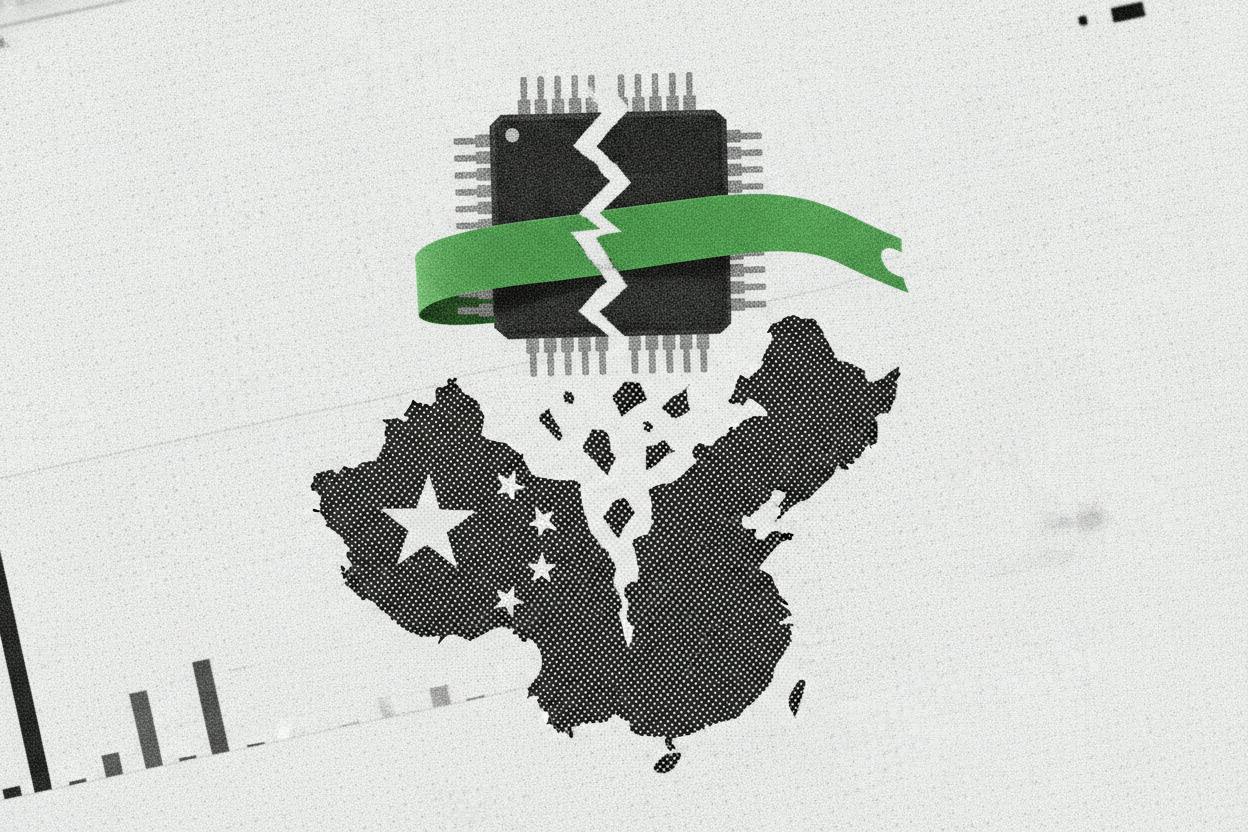
China's benchmark CSI 300 index fell 1.3% by Friday's lunch break, hitting its lowest level since August 2025, as investors dumped shares of companies tied to the artificial-intelligence supply chain and moved money into more defensive corners of the market like coal and consumer staples, according to Reuters.
The slide was led by recent winners. A 5G-focused index dropped as much as 6%, and Shanghai's STAR 50—a tech-heavy benchmark that lists many semiconductor and AI-related firms—fell nearly 4%. The broader Shanghai Composite was down 1.2% by midday. In contrast, Hong Kong stocks rose, underscoring a divergence between mainland and offshore markets.
Why AI supply-chain shares are under pressure
The sell-off in AI-related shares comes after a long run-up that had made them some of the most crowded trades in China's market. When a trade becomes too popular, any hint of bad news can trigger a rapid unwind, as investors rush to lock in profits or cut losses. The sharp drops in the 5G and STAR 50 indexes suggest that many of these positions were held by momentum-driven funds that are now exiting quickly.
This kind of rotation is common in markets. After a period where one sector dominates gains, investors often take profits and move into areas that are seen as safer or cheaper. Coal and consumer staples—which include food, beverages, and household goods—are classic defensive plays because their earnings are less tied to the economic cycle and they tend to pay steady dividends.
The move also reflects a broader reassessment of what "growth" in China is worth right now. With the economy still recovering unevenly and global trade tensions simmering, investors are questioning whether the high valuations of tech and AI stocks are justified. Recent reports of cooling AI hype have added to the caution.
What this means for investors
For everyday investors, the key takeaway is that market leadership can shift quickly. The same stocks that drove gains for months can suddenly become the biggest drags when sentiment turns. This is especially true in sectors like AI and tech, where valuations often run ahead of actual earnings.
The rotation into coal and consumer staples suggests that some investors are looking for stability rather than high-octane growth. Coal companies, for instance, benefit from steady demand for electricity and industrial use, while consumer staples are less sensitive to economic swings. These sectors may not offer the same upside as tech, but they can provide a cushion during turbulent times.
It's also worth noting that the CSI 300's drop to an eight-month low is a significant technical signal. When a major index breaks below previous support levels, it can trigger further selling from algorithmic and trend-following funds. However, such moves can also create buying opportunities for long-term investors who believe the underlying companies are sound.
The divergence between mainland and Hong Kong stocks is another point to watch. Hong Kong's rise suggests that international investors may be more optimistic about Chinese assets than domestic ones, or that they are rotating into different sectors. Trade barriers from the US and EU have been a persistent overhang on Chinese stocks, and any escalation could weigh further on sentiment.
What to watch next
Investors will be watching whether the sell-off in AI shares spreads to other tech-heavy markets. Fears about AI chip financing have already rattled global markets, and a continued slide in Chinese tech could have ripple effects.
Also on the radar is whether the rotation into defensive sectors lasts or is just a temporary pause. If economic data improves or trade tensions ease, investors may return to growth stocks. Conversely, if the outlook darkens, the shift toward coal and staples could deepen.
For now, the message is clear: in China's market, the pendulum can swing fast. Diversification across sectors and regions remains a prudent strategy for those who want to weather such swings without overreacting to daily headlines.