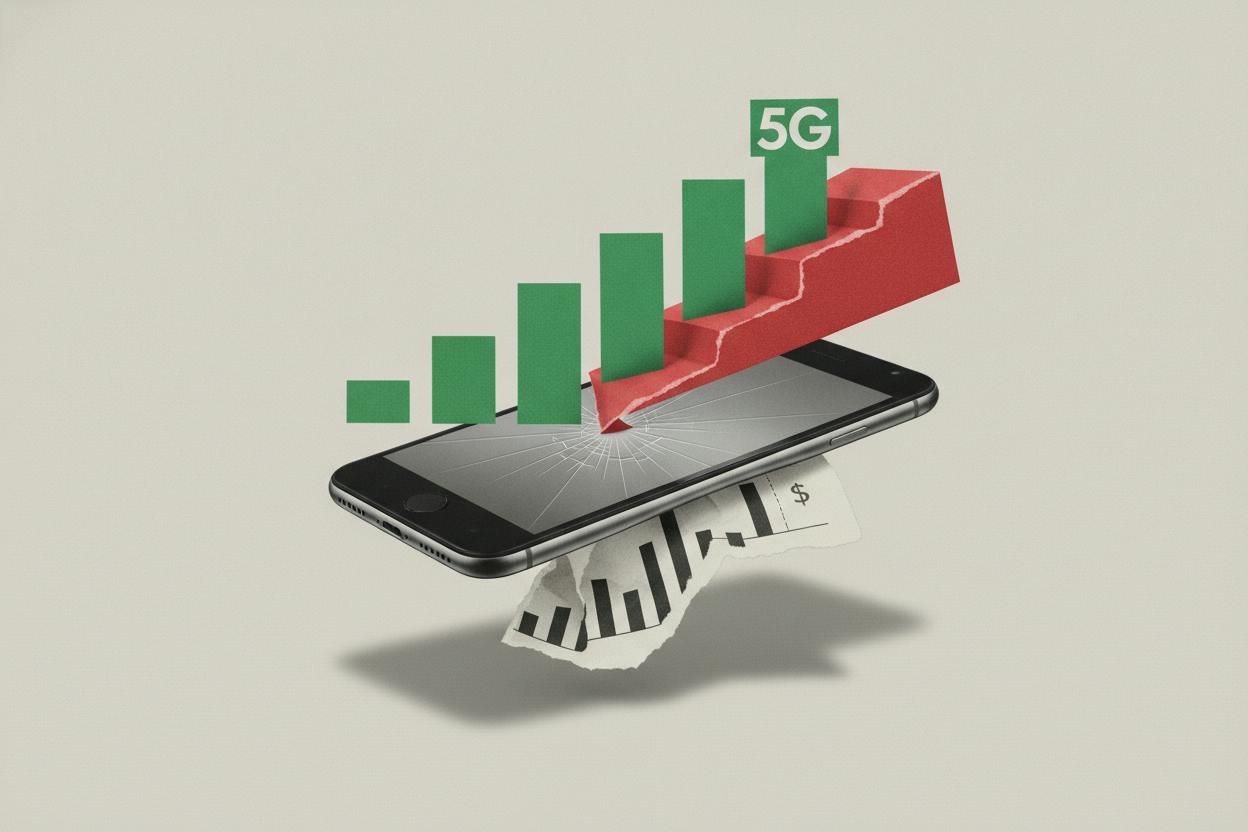
China Mobile, the world's largest wireless carrier by subscribers, reported a 7.9% decline in nine-month profit, even as its 5G customer base swelled to 702.3 million by September 30. The state-owned telecom giant's revenue also slipped 1.8%, while product costs climbed, underscoring the pressures facing even the most dominant players in mature markets.
What the numbers show
The results, released this week, cover the first nine months of the year. Profit fell to a level not disclosed in the brief, but the percentage drop is notable for a company that has long been a cash-generating powerhouse. Revenue dipped 1.8%, a modest decline but a reversal from the growth investors have come to expect. The company attributed the profit slide partly to rising product costs—expenses tied to selling devices and equipment, which often carry thin margins.
Meanwhile, 5G subscribers grew to 702.3 million, a figure that represents a large chunk of China Mobile's total customer base. The company has been aggressively rolling out 5G networks and signing up users, but the financial payoff is proving elusive. In many mature telecom markets, carriers spend heavily on network infrastructure and customer acquisition, only to see average revenue per user (ARPU) stagnate or decline as competition intensifies and data prices fall.
Why 5G growth isn't boosting profits
5G has been a major growth story for telecoms globally, but the economics are tricky. Building out 5G networks requires massive capital expenditure, and carriers often subsidize handsets to lure customers. At the same time, consumers have shown limited willingness to pay a premium for faster data speeds, especially when 4G already meets most daily needs. This dynamic is not unique to China Mobile; telecom operators in other markets, such as America Movil, have also seen subscriber growth fail to translate into proportional profit gains.
China Mobile's experience mirrors broader trends in the industry. As markets reach saturation, growth shifts from adding new customers to squeezing more value from existing ones. That often means pushing higher-margin services like cloud computing, enterprise solutions, and digital content—areas where telecoms face stiff competition from tech giants.
What it means for investors
For everyday investors, China Mobile's results are a reminder that subscriber counts alone don't tell the full story. A company can add millions of customers and still see profits fall if the cost of serving them rises or if pricing power weakens. This is a common theme across sectors, as seen in CATL's experience, where revenue surged but costs ate into battery profits.
Investors should watch how China Mobile manages its cost base and whether it can find new revenue streams beyond traditional voice and data plans. The company's vast scale gives it advantages, but it also faces regulatory oversight and political expectations as a state-owned enterprise. Its ability to maintain dividends—a key draw for many shareholders—will depend on stabilizing profits.
The broader lesson is that mature industries often reward operational efficiency over raw growth. Companies that can control costs and innovate in services tend to fare better than those that simply chase subscriber numbers. For those holding telecom stocks, the focus should be on metrics like ARPU, capital expenditure efficiency, and free cash flow, rather than headline customer counts.
Looking ahead
China Mobile's next earnings report will be closely watched for signs of whether the profit decline is a blip or a trend. The company may also provide guidance on 5G monetization strategies, such as enterprise services and fixed-wireless access. In the meantime, investors in the broader telecom sector can take note: even giants with hundreds of millions of users are not immune to margin pressure.
As Netflix's recent guidance showed, market reactions can be harsh when growth fails to meet expectations. China Mobile's stock has been relatively stable, but sustained profit declines could eventually weigh on sentiment. For now, the company remains a dominant player, but its latest numbers highlight the challenges of turning technological leadership into financial returns.