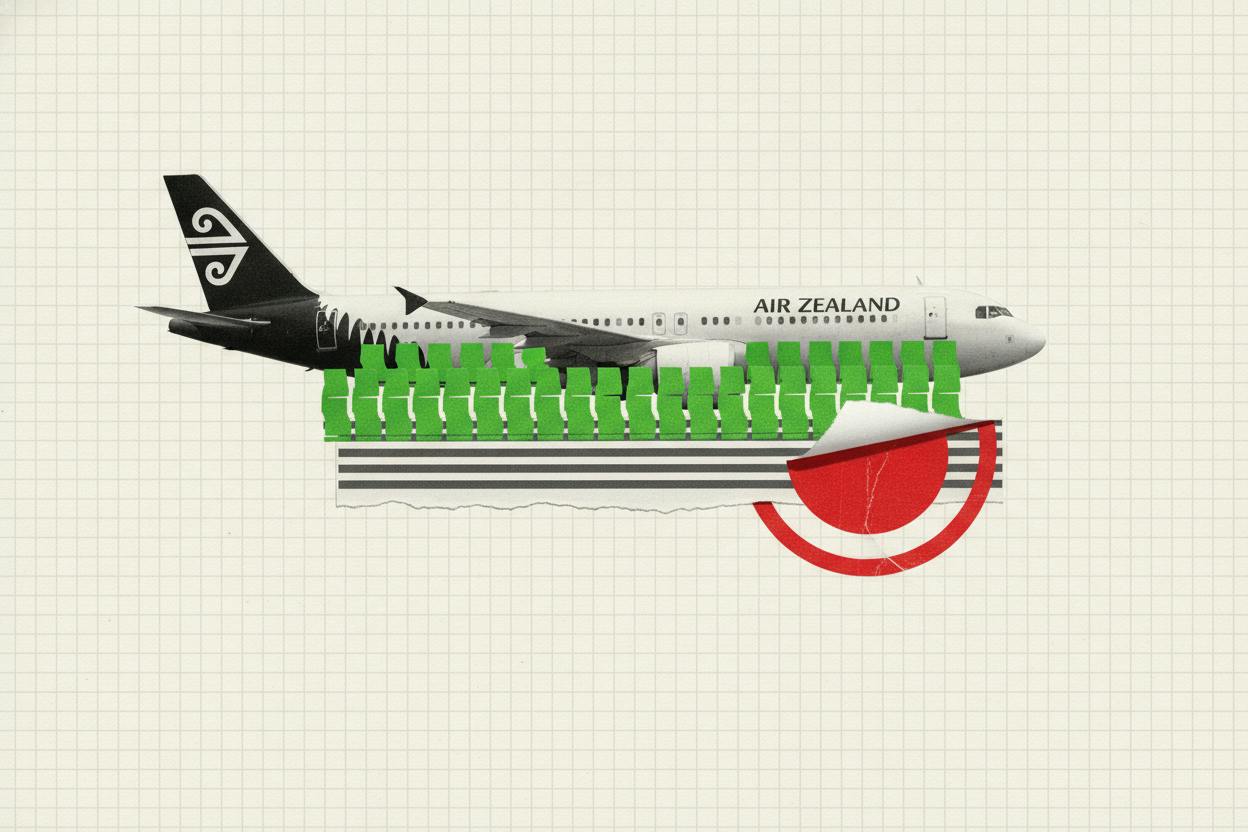
Air New Zealand reported a solid start to its fiscal year, with fuller planes and fewer avoidable disruptions. In an update to the Australian and New Zealand stock exchanges, the carrier said its load factor—the share of available seats filled—rose 1.8 percentage points to about 85% in the fiscal first quarter. At the same time, controllable cancellations, those within the airline's control, dropped to just 1%.
The numbers point to an airline that is getting more out of the flights it already operates, rather than chasing growth by adding lots of new capacity. That approach is especially relevant right now, as jet fuel costs remain elevated and pressure airline margins across the industry.
What's driving the improvement?
Air New Zealand said it has been managing capacity to reflect higher fuel costs. By trimming or adjusting schedules where it makes sense, the airline has kept supply in check while still filling more seats. That combination helped lift underlying revenue per available seat kilometer—a key measure of how much money the airline makes for each seat it flies—by nearly 13% from a year earlier, excluding the impact of foreign exchange moves.
Reliability also improved. On-time arrivals were up 7.2 percentage points to above 85%, and the drop in avoidable cancellations means fewer passengers left stranded or rebooked at the last minute. For travelers, that's a tangible improvement in service quality. For the company, it's a cost saver.
Cancellations are expensive in ways that don't show up on a ticket price. When a flight is scrapped, the airline often has to rebook passengers, pay compensation, arrange hotel nights, and reposition aircraft and crew. Those costs can pile up quickly. Fewer avoidable cancellations mean fewer of those one-off hits, which helps steady results even when fuel prices are volatile.
Why the load factor matters for profits
A higher load factor is a direct margin lever. Once a flight is scheduled, many costs—aircraft leases, crew salaries, airport fees—are largely fixed. Filling a few more seats adds relatively little to those expenses, so the extra revenue from those seats flows more directly to the bottom line. With underlying revenue per available seat kilometer up nearly 13% year on year, more of that incremental revenue can translate into earnings, especially while the airline keeps capacity in check.
This is a familiar theme across the airline industry. Carriers have been wrestling with high fuel costs for months. United Airlines recently warned that fuel costs could erase $1 per share from its fourth-quarter profit, and LATAM Airlines trimmed its growth outlook for similar reasons. Delta's fourth-quarter outlook lifted hopes for US carriers, but fuel costs still loom over the sector.
Air New Zealand's approach—managing capacity rather than expanding aggressively—is one way to protect margins when input costs are high. It's a strategy that many airlines adopt in such conditions, and the early results here suggest it's paying off.
What it means for investors
For investors, the key takeaway is that Air New Zealand is improving its operational efficiency. A higher load factor and lower cancellation rate are signs that the airline is running a tighter, more profitable operation. That can support earnings even if fuel prices stay high.
The drop in controllable cancellations is particularly encouraging because it suggests the airline is managing its schedule and resources well. Fewer disruptions mean lower non-fuel costs and fewer unpleasant surprises in the financial results. That can help smooth out earnings, which is valuable in an industry known for its volatility.
Investors will likely watch whether the airline can sustain these improvements. Fuel prices remain the big wild card, and any sharp move in oil could offset some of the gains. But for now, Air New Zealand's first-quarter update offers a positive signal: it's filling more seats, running on time more often, and keeping avoidable cancellations to a minimum.
For everyday investors, this is a reminder that airline profitability often hinges on operational details as much as on big-picture demand. A carrier that can fill its planes and avoid costly disruptions is better positioned to weather high fuel costs than one that relies on rapid capacity growth.