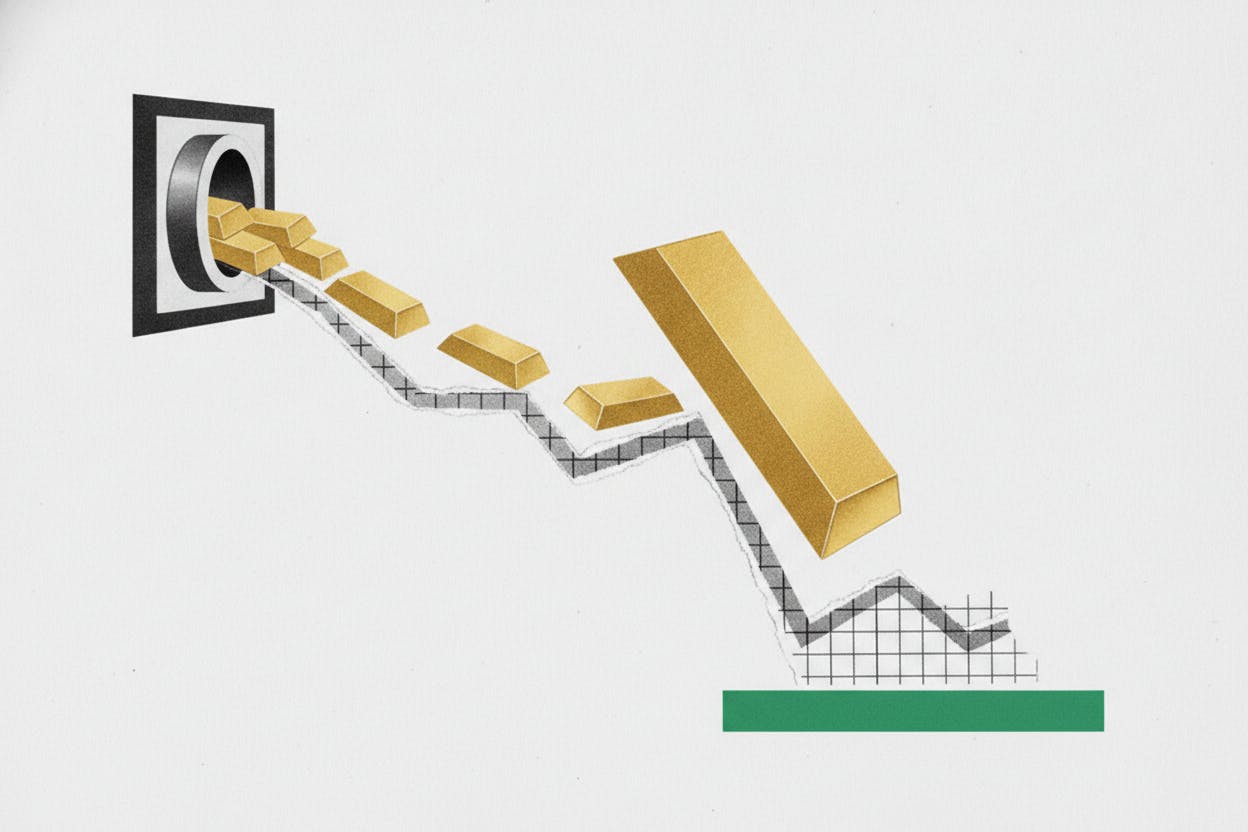
China's central bank added 480,000 ounces of gold to its reserves in June, marking its 20th consecutive month of purchases and its largest monthly addition since October 2023. The move came even as spot gold prices tumbled 11.65% during the month, their worst June performance since the financial crisis of 2008.
Official data from the People's Bank of China (PBoC) showed total gold holdings rose to 75.44 million ounces, up from 74.96 million ounces in May. The central bank's steady accumulation stands in sharp contrast to the broader market, where bullion briefly dipped below $4,000 an ounce during the month.
Why Central Banks Buy Gold
Central banks like the PBoC typically buy gold for strategic, long-term reasons rather than short-term price movements. Gold serves as a diversification tool, helping reduce reliance on US dollar-denominated assets like Treasury bonds. It also acts as a crisis hedge, providing a store of value during geopolitical or economic turmoil.
China's buying spree is part of a broader trend among central banks worldwide, particularly in emerging economies, to increase gold reserves. This shift accelerated after Western sanctions froze Russia's central bank assets following its invasion of Ukraine, highlighting the risks of holding large dollar reserves.
The PBoC's continued purchases also signal confidence in gold's long-term value, even as prices face headwinds from rising interest rates and a stronger US dollar. Higher rates make non-yielding assets like gold less attractive, but central banks are less sensitive to such factors than private investors.
What It Means for Investors
For everyday investors, China's persistent gold buying offers a few takeaways. First, it underscores that major institutional players see gold as a strategic asset, not a short-term trade. This can provide a floor under prices during selloffs, as central bank demand absorbs some of the selling pressure.
Second, the disconnect between central bank buying and falling spot prices highlights the difference between long-term and short-term market dynamics. While gold suffered its worst June in over a decade, the PBoC saw the dip as an opportunity to add to its holdings at lower prices.
Investors should also note that gold's price weakness in June was driven by factors like a stronger dollar and expectations of further Federal Reserve rate hikes. These headwinds may persist, but central bank demand could help limit downside risk.
Broader Market Context
China's gold buying comes amid a mixed picture for Chinese markets. China stocks have slid recently, dragged down by property sector weakness ahead of key US data and Fed decisions. Meanwhile, China's economic growth slowed to 4.6%, though the yuan is expected to remain stable near 6.73 against the dollar.
The PBoC's gold accumulation also reflects a broader de-dollarization trend among central banks. Countries like Russia, India, and Turkey have also been increasing gold reserves, reducing their exposure to the US financial system. This trend could support gold prices over the long term, even if short-term volatility persists.
For investors holding gold or gold-related assets, the key question is whether central bank buying can offset headwinds from higher interest rates. While no one can predict prices, the PBoC's actions suggest that at least one major buyer sees value at current levels.
As always, gold should be viewed as part of a diversified portfolio rather than a standalone investment. Its role as a hedge against inflation and currency risk remains relevant, especially in an environment where central banks are actively reshaping their reserve strategies.