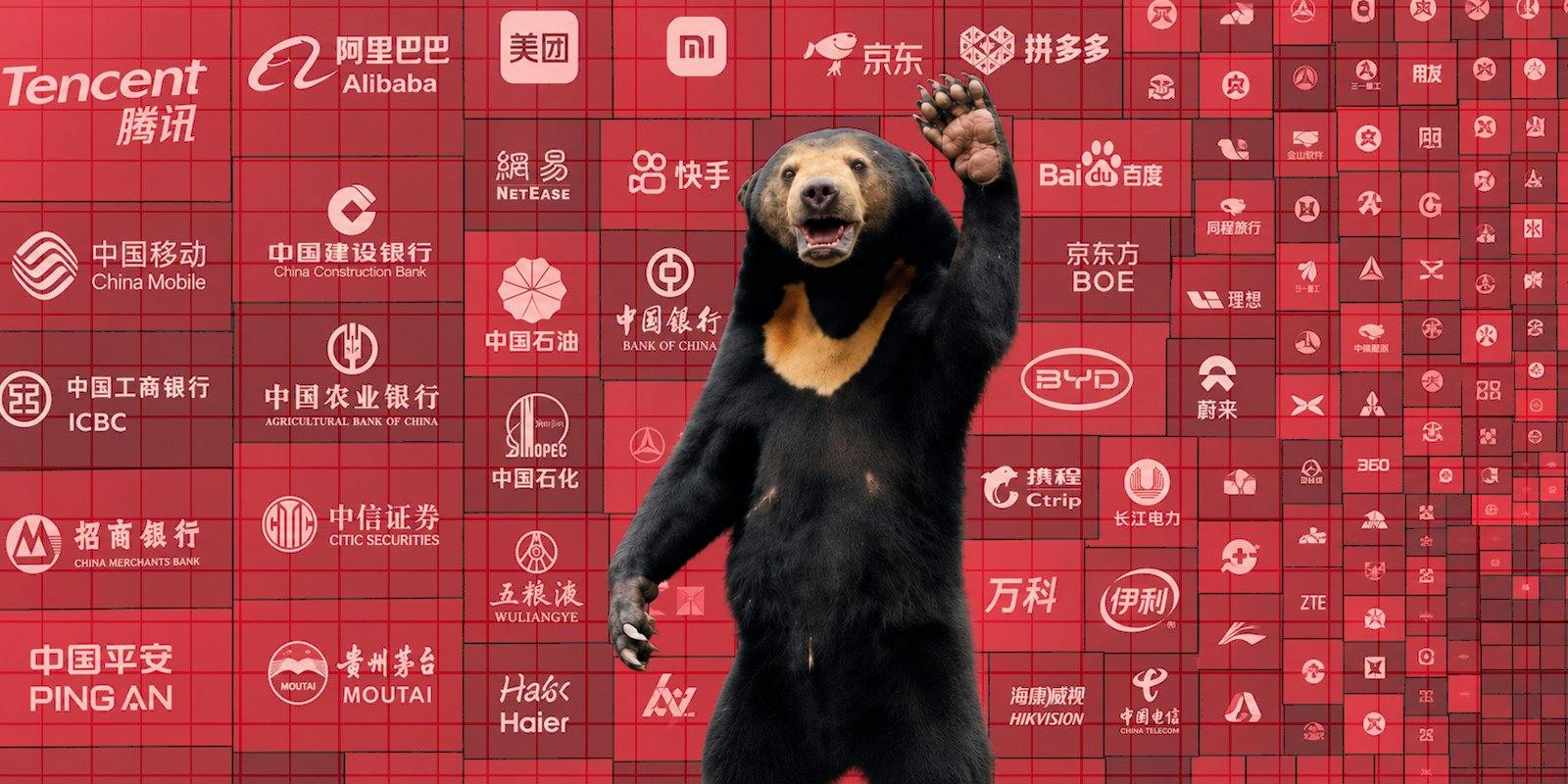
It's official: Chinese stocks are in a bear market. The CSI 300 Index, which tracks the country's largest listed companies, fell 1.8% on Thursday, pushing it 20% below its June high and crossing the technical threshold that defines a bear market. The Hang Seng Tech Index, which tracks major Chinese tech firms listed in Hong Kong, is now down 31% this year.
For everyday investors, the term "bear market" can sound alarming, but it's simply a way of describing a prolonged decline in stock prices—typically a drop of 20% or more from a recent peak. It's the opposite of a bull market, which is a sustained rise. Think of a bull market as the party and a bear market as the hangover. Right now, China's market might need an aspirin.
What's behind the slide?
Two main forces are weighing on Chinese equities. First, domestic consumption has been weak for years. Despite government efforts to encourage shoppers back to stores with subsidies and other incentives, consumer spending has remained sluggish. This is a critical issue because China's economy has long relied on domestic demand as a key growth engine. When consumers aren't spending, companies that sell goods and services to them see lower revenues, which hits their stock prices.
Second, a global tech selloff has added to the pressure. Technology stocks, which make up a significant portion of the CSI 300 and the Hang Seng Tech Index, have been hit hard by concerns about valuations, interest rates, and supply chain issues. The selloff has been particularly acute in the semiconductor and artificial intelligence sectors, as investors worry about the sustainability of recent gains and the impact of export controls. For example, Lam Research shares slid 8% after its guidance flagged supply-chain and China drag, highlighting the broader challenges facing the tech industry.
The combination of weak domestic demand and a tech downturn has created a perfect storm for Chinese stocks. Even as the government has tried to stimulate the economy, investors remain skeptical about the effectiveness of these measures. Stocks have slid to August lows as stimulus hopes fade, and the recent bear market entry is a stark reminder of the challenges ahead.
What does this mean for investors?
For investors with exposure to Chinese equities, this bear market is a signal to review their portfolios and understand the risks. It's important to remember that bear markets are a normal part of the investment cycle. They can be painful, but they also create opportunities for long-term investors who are willing to ride out the volatility.
However, it's crucial to note that not all Chinese stocks are in the same boat. While the CSI 300 and Hang Seng Tech have fallen sharply, other sectors may be more resilient. For instance, China's state ore buyer has signed an annual supply deal with Rio Tinto, indicating that some industrial and commodity-related companies are still operating normally. Similarly, Fortescue's China contract standoff is starting to show in its sales, but that's a specific company issue rather than a broad market trend.
For those considering investing in China, it's essential to do thorough research and consider the broader economic backdrop. The Chinese government has been trying to support the economy, but the effectiveness of these measures remains uncertain. Hermes has noted that China demand has turned "very difficult", a sentiment echoed by many luxury and consumer goods companies. This suggests that the consumption weakness is not just a temporary blip but a structural issue.
What to watch next
Investors will be watching several key indicators in the coming weeks. First, any new government stimulus measures could provide a short-term boost to stocks. Second, the trajectory of the global tech selloff will be crucial, as it directly impacts Chinese tech stocks. Third, economic data releases, such as retail sales and industrial production, will give clues about the health of domestic demand.
It's also worth noting that the bear market in China is not happening in isolation. Global markets are facing their own challenges, from inflation to geopolitical tensions. TSMC is exploring rare-earth-free motors to shield its chip output from China export curbs, a sign of how interconnected and fragile the global supply chain has become.
In the end, a bear market is a reminder that investing always involves risk. While it's tempting to panic, history shows that markets eventually recover. The key is to stay informed, diversify your holdings, and focus on the long term. As always, it's wise to consult with a financial advisor to tailor your investment strategy to your individual goals and risk tolerance.