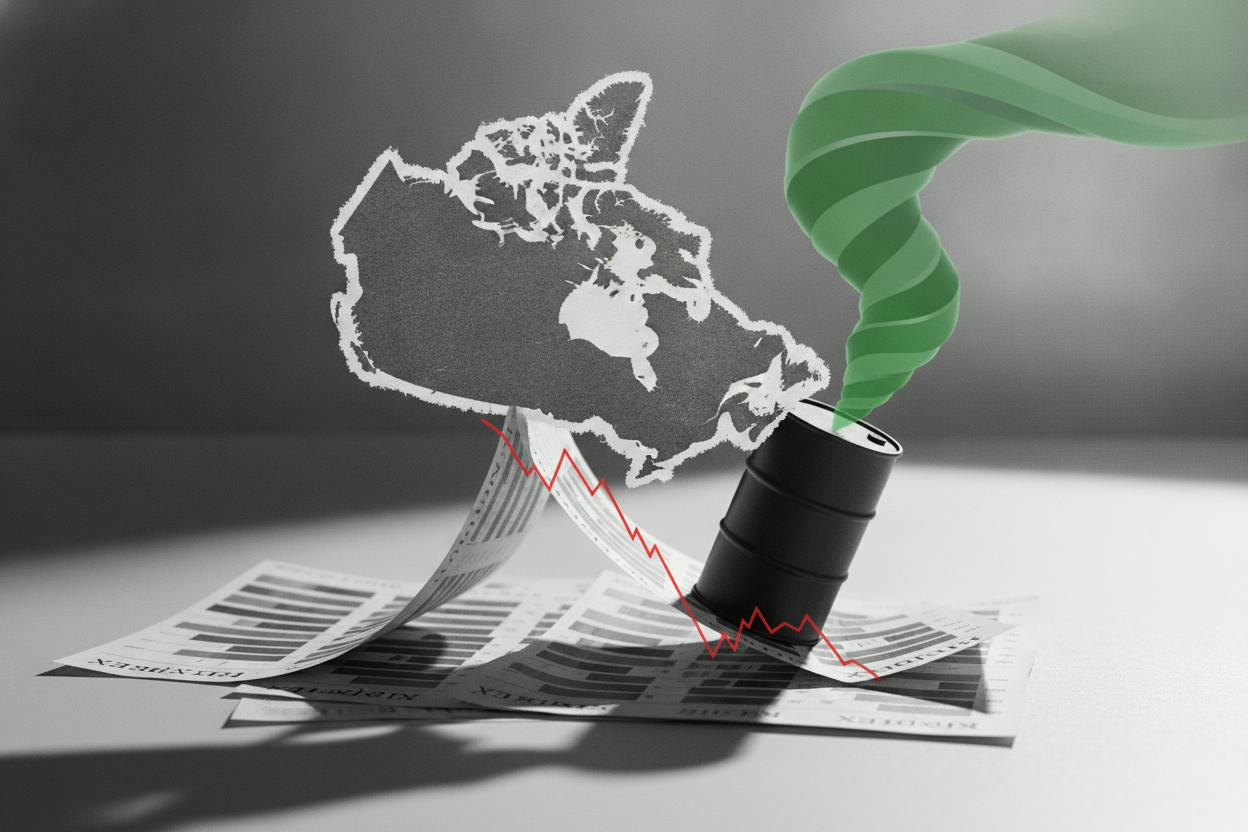
Oil prices surged on renewed Middle East supply worries, but that wasn't enough to keep Canada's main stock index in positive territory. The S&P/TSX Composite fell 0.5% on Friday, as declines in telecom and financial stocks more than offset a solid gain in the energy sector.
Energy stocks rose 2.1% after crude rallied sharply. December West Texas Intermediate (WTI) settled up 3.8% at $103.27 a barrel, while December Brent climbed 3.5% to $117.18. The move wasn't driven by stronger demand, but by fresh anxiety about supply disruptions from the Middle East—a classic 'risk shock' that tends to hit markets broadly rather than being a clean win for oil producers.
Why a crude spike can hurt more than it helps
When geopolitical tensions flare, investors typically demand a higher 'equity risk premium'—essentially, a bigger potential reward to justify owning stocks at all. That shift shows up quickly in rate-sensitive sectors like telecom and financials, and even faster in higher-risk pockets that depend on steady funding and upbeat growth expectations.
Friday's action made that split clear. While big energy names did their job as an oil hedge, Canada's Battery Metals Index—which tracks many smaller TSX and TSX Venture miners tied to electric vehicle supply chains—slid 7.7%. That's a sharp drop, and it suggests investors are pricing in more uncertainty and tighter financing conditions, not just a simple commodity upswing.
The TSX is heavily weighted toward banks and telecom companies, and those groups can fall when investors turn defensive. That's why a crude spike can lift oil producers while still dragging the broader index lower. The breadth of the market matters: if only one sector is rallying, it's hard for the whole index to stay green.
Local data couldn't change the mood
Even decent economic news wasn't enough to turn sentiment around. Canadian retail sales rose 1.2% in August, a solid reading that suggests consumers were still spending. But with oil prices climbing on geopolitical fears, investors were more focused on the potential for higher inflation and slower growth than on a single month of retail data.
This pattern isn't unique to Canada. Oil's jump above $100 on Middle East fears has dragged stocks lower in other markets too, as investors weigh the risk of supply shocks against the impact on consumer spending and corporate margins. The same dynamic played out in the U.S., where oil's jump to $103 rattled stocks and pushed Treasury yields higher.
What it means for investors
For everyday investors, the key takeaway is that not all oil rallies are good for the stock market. When crude rises because of strong demand, it can signal a healthy economy. But when it rises because of geopolitical risk, it often acts like a tax on growth—raising costs for businesses and consumers while increasing uncertainty.
That's why the TSX's decline makes sense. The index is heavy in banks and telecoms, which are sensitive to interest rates and economic sentiment. When investors get nervous, they tend to sell those groups first, even if energy stocks are doing well.
The sharp drop in battery metals stocks is another warning sign. These smaller, higher-growth companies often rely on easy financing and optimistic outlooks. When they fall hard, it suggests the market is becoming more risk-averse and less willing to pay up for speculative growth.
For those with a diversified portfolio, this kind of day is a reminder that sector concentration can cut both ways. A portfolio heavy in energy might have benefited, but one tilted toward banks or telecoms likely felt the pain. Financial stocks have been under pressure lately as inflation jitters weigh on sentiment, and Friday was no exception.
Looking ahead, investors will be watching whether oil prices stay elevated and whether the geopolitical tensions that sparked the rally ease or escalate. If crude remains high, energy stocks could continue to outperform, but the broader market may struggle if risk appetite keeps fading. Risk appetite has already been fading across global markets, and Friday's action in Canada fits that pattern.
In the end, Friday's session was a textbook example of how geopolitical risk can muddy the waters for investors. A big move in one commodity doesn't always translate into a rising stock market—sometimes it's just a reminder of how interconnected and fragile market sentiment can be.