China's humanoid-robot industry is entering a new phase. After years of showcasing robots that can walk, jump, and flip, the focus is now on the software that makes these machines useful in real workplaces. This shift comes as US export controls on advanced chips tighten, adding a layer of difficulty for Chinese developers.
According to Reuters, investors are backing this software-first approach. In the first half of 2026, companies working on 'embodied AI'—AI that interacts with the physical world—raised 93.5 billion yuan (about $13 billion) across 322 deals. Several software-focused startups, including X Square, Galaxea, and Spirit AI, are reportedly valued at around $3 billion each.
Why the brain is the hard part
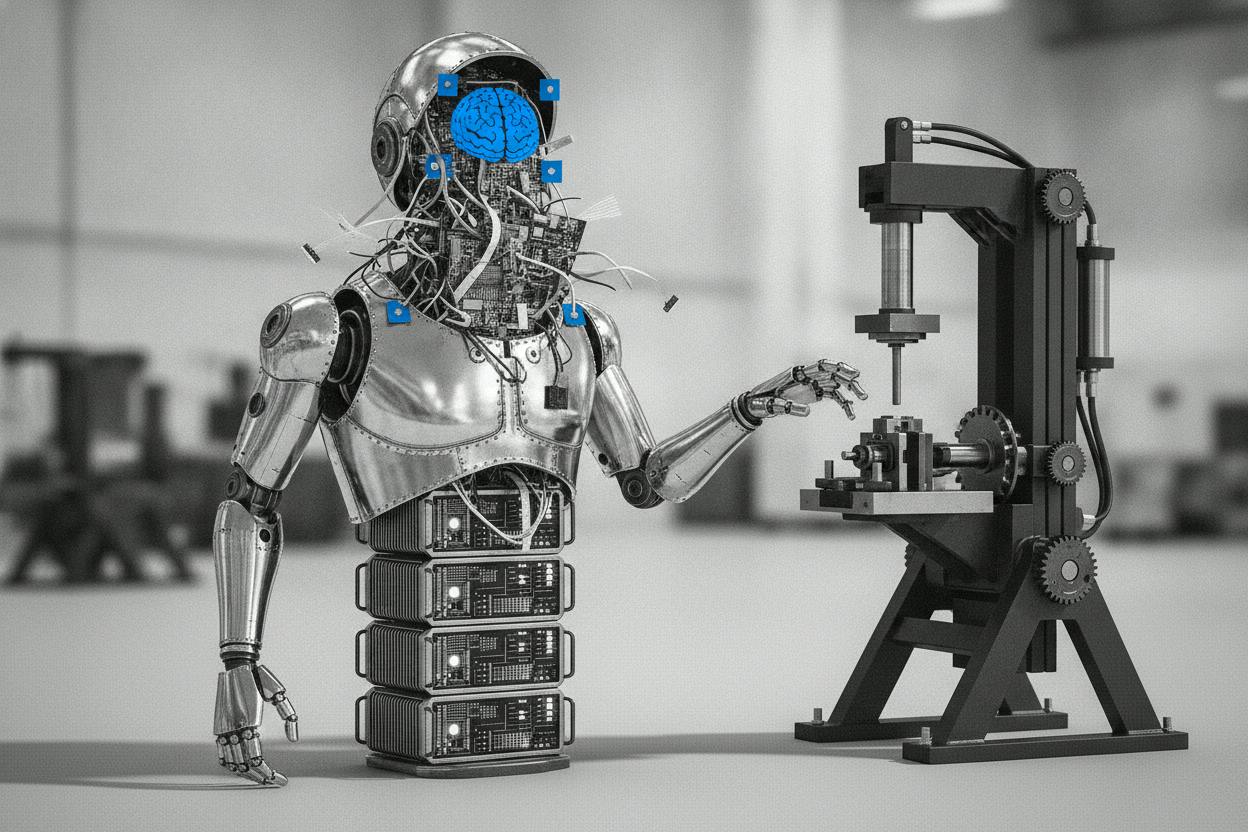
For a robot to be useful in a factory or warehouse, it needs to do more than just move. It has to grip objects, insert parts, and adapt to slight variations—all without human supervision. That requires a 'robot brain' trained on countless examples of physical actions, which is far more complex than training a chatbot that only processes text.
Chinese robotics teams are tackling this data problem in different ways. Some are using large workforces to manually collect demonstration data. Others are building massive video libraries or using simulations to generate training examples. The goal is to create a single model that can control many different robot designs, rather than one that only works on a specific machine.
Early results are encouraging. CATL, the world's largest battery maker, says Spirit AI robots achieved a wire-insertion success rate of over 99% at a plant in Zhongzhou. That kind of reliability is crucial for industrial customers who cannot afford errors.
The scale challenge
But moving from a successful pilot to widespread deployment is a different story. Factory and logistics customers, as Reuters notes, 'leave no room for improvisation.' That means suppliers face long validation cycles and must integrate their systems site by site before they can roll out broadly. A 99% success rate at one factory does not guarantee quick acceptance elsewhere; each new site requires months of testing, safety checks, and customer-specific tuning.
This reality slows revenue growth and increases cash burn. For startups, that is a serious concern, especially when funding may not be as easy to secure as it was in the first half of 2026.
Hardware constraints and IPO headwinds
Adding to the pressure is the hardware side. Advanced Nvidia chips, which are essential for training large AI models, are subject to US export controls. If these chips are harder to obtain, training bigger and better models becomes more expensive and time-consuming. That could push back the timeline for achieving 'general-purpose' robot intelligence—the kind that can handle a wide variety of tasks without retraining.
There is also a tighter IPO market. Regulators in China are reportedly worried about inflated valuations in the robotics sector, making it harder for these startups to go public. That means private valuations for names like X Square, Galaxea, and Spirit AI may depend less on impressive demo metrics and more on whether investors are willing to keep funding them through longer rollout cycles.
What it means for investors
For everyday investors, the key takeaway is that 93.5 billion yuan in funding does not automatically make a $3 billion robot-brain startup IPO-ready. In industrial automation, reliability matters more than flashy one-off results. Even if a system hits 99%+ success at a single factory, getting it accepted across new sites usually means months of testing, safety checks, and customer-specific tuning. That slows revenue scaling and stretches cash burn.
Now layer on hardware constraints. If advanced Nvidia chips are harder to get, training bigger models can cost more and take longer, pushing out timelines for 'general-purpose' performance. With the IPO squeeze tied to regulatory concerns, private valuations may hinge less on demo metrics and more on whether funding stays available through those longer rollout cycles.
Investors should watch how these companies manage their cash reserves and whether they can secure new funding rounds. The race is no longer just about who has the most agile robot; it's about who can build a reliable brain and survive the long road to profitability.
For more on China's tech landscape, see our coverage of Enflame's AI chip sales growth and MetaX's swing to profit. Also, check out China's factory activity slipping back into contraction for broader economic context.