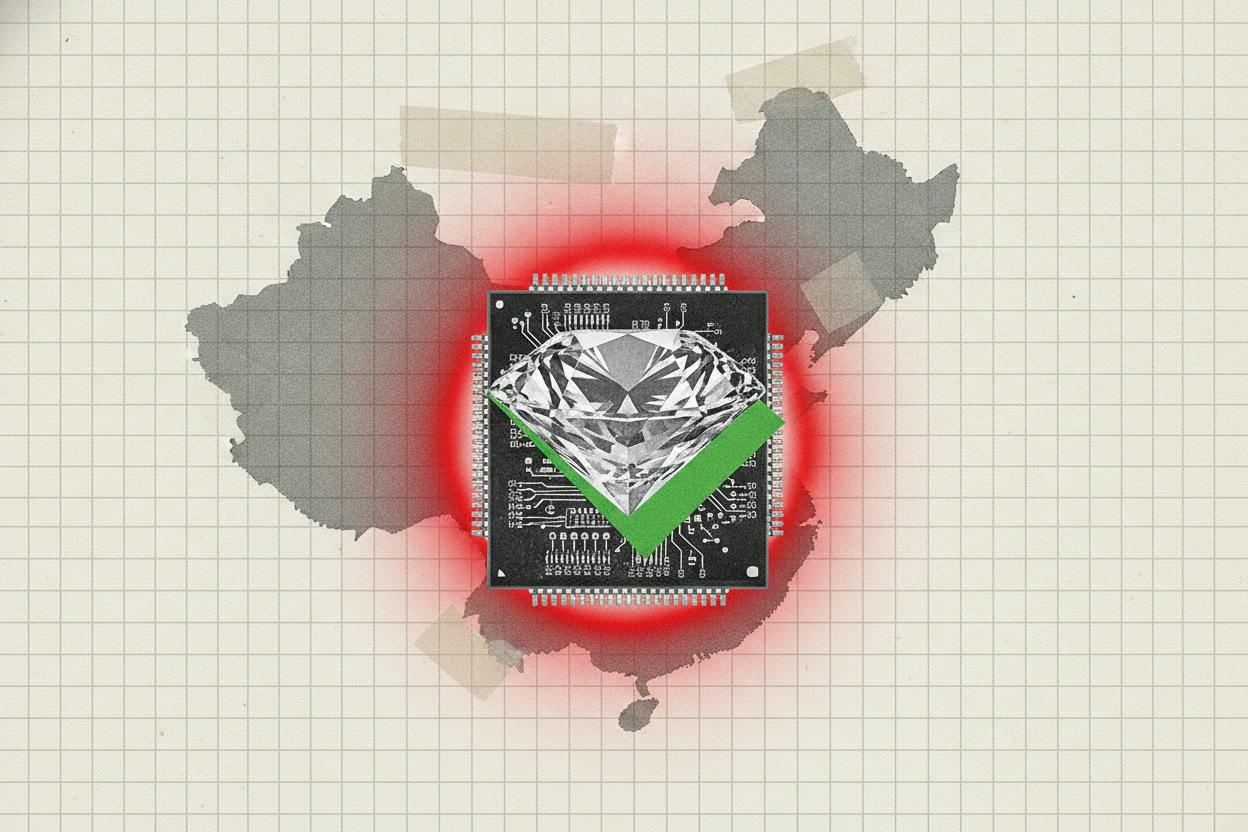
China's lab-grown diamond makers, facing a squeeze in the jewelry market, are now setting their sights on a very different customer: the artificial intelligence industry. According to a Reuters report, these manufacturers are pitching synthetic diamonds as a solution for cooling AI servers, chips, and other advanced electronics, where the material's exceptional thermal conductivity could be a game-changer.
The move comes as the market for lab-grown diamonds in jewelry has become crowded, with more producers chasing the same buyers and driving prices down. By shifting focus to industrial applications, these companies hope to find higher margins and more stable demand.
Why diamonds for cooling?
Diamonds are not just a girl's best friend; they are also one of the best conductors of heat known to science. In the world of high-performance computing, managing heat is a critical challenge. As AI chips become more powerful, they generate more heat, and traditional cooling methods are struggling to keep up.
Diamond-copper composites, which combine the thermal properties of diamond with the electrical conductivity of copper, can act as 'heat spreaders,' pulling heat away from hot-running chips. This can improve performance and reliability. The Reuters report cites research claiming significant gains in heat transfer and chip performance from using such materials. Lenovo has already launched a laptop in China that uses a diamond-copper cooling material, signaling that the technology is moving from the lab to real products.
China's dominance and the geopolitical angle
China supplies about half of the world's lab-grown diamonds, with much of that production concentrated in the Henan province. This dominance gives Beijing significant leverage if diamond-based cooling becomes standard in AI hardware.
The geopolitical dimension is hard to ignore. Reuters notes that Beijing placed some related machinery and components under export restrictions in 2024, and added more synthetic-diamond products to the list in 2025, though implementation was postponed for a year under a US-China deal reached last October. If diamond cooling becomes a must-have for AI data centers, a country that controls the supply could influence costs and lead times far beyond the jewelry aisle.
What it means for investors
For investors, the key question is whether diamond cooling moves from niche pilots to mainstream adoption. If it does, these materials could become 'must-qualify' inputs. Once a chip or server design is validated with a specific material, engineers are often reluctant to swap it out quickly, as any change could require extensive re-testing and re-certification. This creates a 'sticky' supply chain, where trade restrictions could translate into real supply-chain risk.
That's why smaller, early projects outside China could matter more than their current volumes suggest. For example, Element Six and Orbray are planning diamond-wafer work in Oregon, and Diamond Foundry has proposed a €753 million plant in Trujillo, Spain. If the industry has to diversify fast, the tight links in the chain—whether machines, components, or wafers—may gain pricing power during the transition.
This story is part of a broader trend of China's role in the AI supply chain. While China's AI stock boom has recently reversed, the country's manufacturing might remains a key factor in the global tech race. Similarly, the AI server supplier Dongshan's Hong Kong IPO shows how intertwined the region is with AI hardware.
For everyday investors, the takeaway is to watch how this niche material evolves. If diamond cooling becomes a standard in AI data centers, it could create new investment opportunities in companies that produce or use these materials, as well as in those that provide alternatives. But it also highlights the importance of supply-chain resilience, a theme that has become increasingly prominent in the tech sector.
As with any emerging technology, there are risks. The market for lab-grown diamonds is still relatively small, and the shift to industrial uses is not guaranteed. But the potential is significant, and the implications for the AI industry—and for global trade—are worth keeping an eye on.